
😎 Trifle Meaning Slang
- In slang, “trifle” means something small, unimportant, or not serious
- Example: “It’s just a trifle, don’t worry.”
- Can also mean treating something lightly
- Used in casual conversation
- Slightly old-fashioned slang tone
- Suggests lack of importance
- Sometimes used humorously
- Not very common in modern slang
- Keeps close to original meaning
- A mild, informal expression
🔄 Trifle Synonym
- Small thing
- Trivial matter
- Minor issue
- Insignificant item
- Little amount
- Slight thing
- Detail
- Triviality
- Tiny bit
- Negligible matter
📘 Trifle Meaning in English
- Trifle means something of little value or importance
- Can also mean a small amount
- Example: “It’s only a trifle.”
- Used as noun and verb (rarely)
- Common in formal and literary English
- Suggests something minor
- Also refers to a dessert (see below)
- Easy to understand word
- Slightly formal tone
- Widely used in writing
🍰 Trifle Meaning in Food
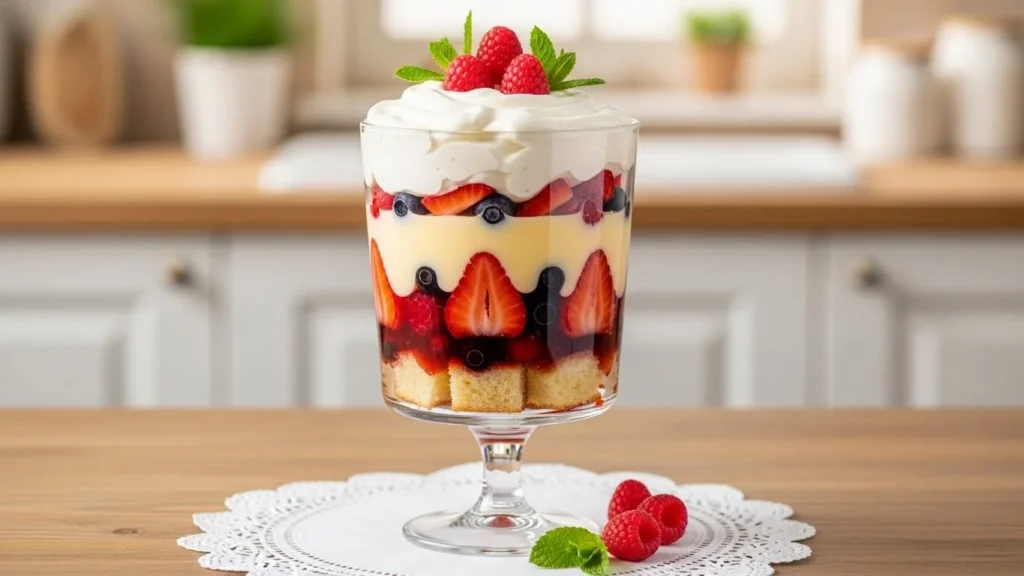
- A trifle is a layered dessert
- Made with sponge cake, cream, custard, and fruit
- Popular in British cuisine
- Served in a glass bowl
- Often includes jelly or syrup
- Sweet and decorative dessert
- Common at celebrations
- Easy to customize
- Loved for its rich taste
- A traditional sweet dish
✏️ Trifle Meaning Adjective
- As an adjective (rare use), trifling is more common than “trifle”
- Means unimportant or minor
- Example: “a trifling matter”
- Used in formal English
- Describes something small or insignificant
- Slightly old-fashioned
- Used in writing and speech
- Expresses low importance
- A descriptive term
- Not commonly used in daily talk
🍓 Fruit Trifle Meaning
- A fruit trifle is a dessert made with layers of fruit, cake, and cream
- Includes fresh or canned fruits
- Often mixed with custard and jelly
- Served chilled
- Popular in parties and holidays
- Colorful and attractive dish
- Sweet and refreshing
- A variation of traditional trifle
- Easy to prepare
- A favorite dessert option
💬 Trifle Meaning in Chat
- In chat, trifle means something not important or very small
- Example: “It’s just a trifle issue.”
- Used in informal messages
- Not very common in modern texting
- Sounds slightly formal
- Used to downplay a situation
- Can be polite or dismissive
- Context matters
- Easy to understand
- A simple expression
✍️ Trifle Definition in a Sentence
- “The mistake was just a trifle.”
- “She spent a trifle too much money.”
- “It’s a trifle compared to bigger problems.”
- “He treated the issue as a trifle.”
- “The cost is only a trifle.”
- “They argued over a trifle.”
- “The delay was a trifle annoying.”
- “He added a trifle of sugar.”
- “It may seem a trifle, but it matters.”
- “She dismissed it as a trifle.”
What Does “Trifle” Meaning?
Trifle can be used as a noun or a verb, depending on context:
As a Noun
-
Something of Little Value or Importance:
-
Example: “Don’t worry about such a trifle.”
-
Meaning: A small or insignificant matter.
-
-
Dessert:
-
Example: “She served a delicious trifle at the party.”
-
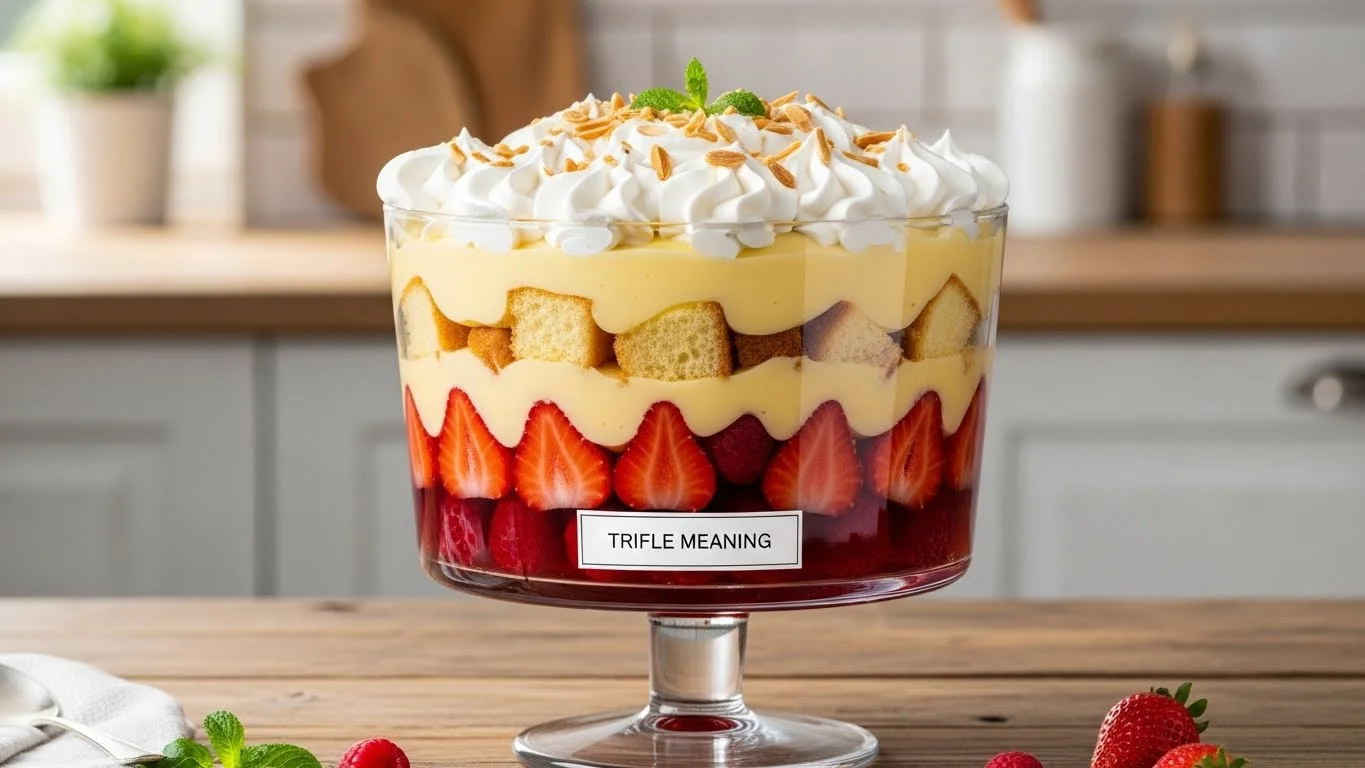
Meaning: A layered dessert typically made with sponge cake, custard, fruit, and cream.
-
As a Verb
-
To treat someone or something without seriousness or respect:
-
Example: “He trifled with her feelings.”
-
Meaning: To toy with or handle casually without care.
-
Origin of the Word
-
Comes from Middle English “trufle”, meaning jest or mockery.
-
Over time, it evolved to describe insignificant things or lighthearted actions, and also became the name for the dessert in the 16th century.
How People Use “Trifle” in Real Life
Everyday Conversation
-
“It’s just a trifle; don’t make a big deal out of it.”
-
Refers to something unimportant.
-
Literature & Formal Writing
-
“He trifled with the opportunity, and it was lost forever.”
-
Means he treated it carelessly.
-
Food Context
-
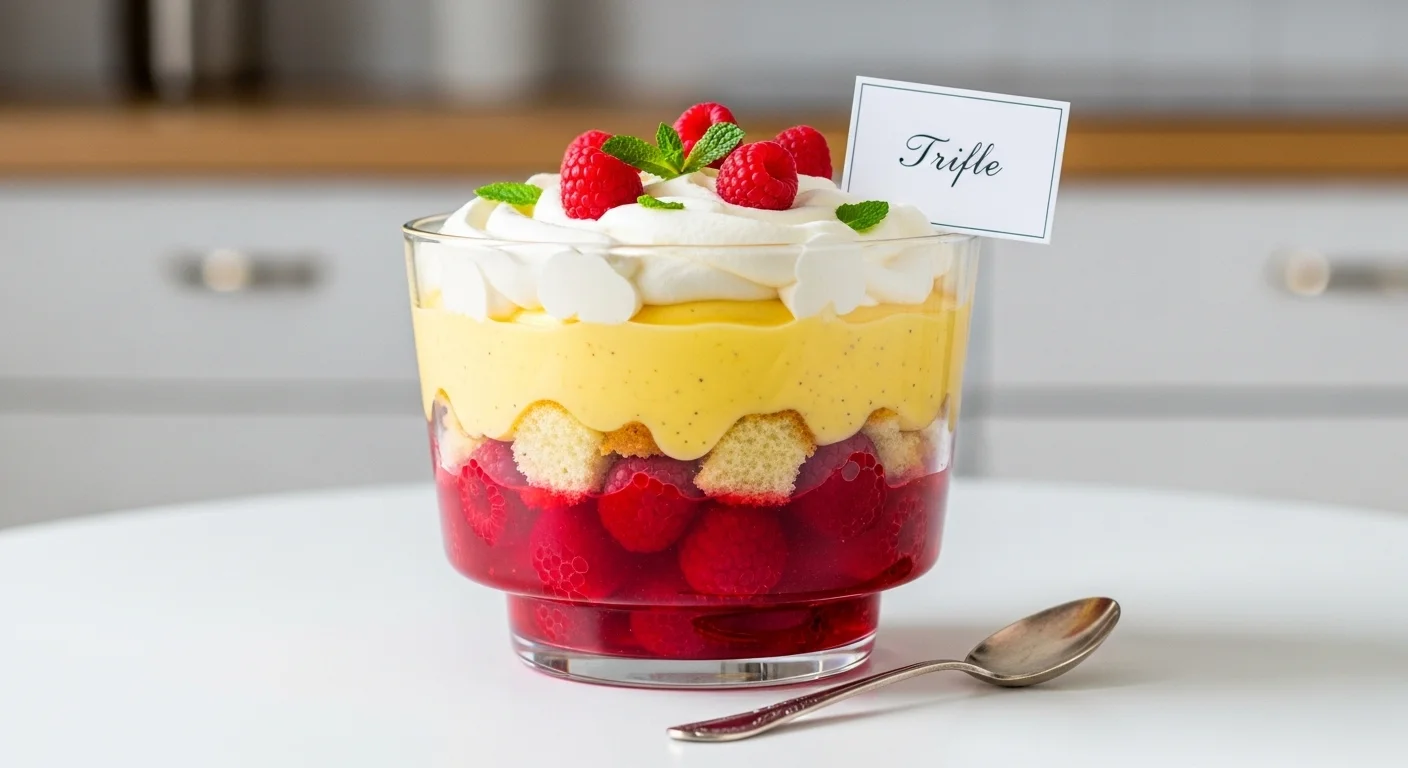
“I made a chocolate trifle for dessert.”
-
Refers to the layered dessert, common in British cuisine.
-
Real-Life Examples
Example 1 (Insignificant Matter):
-
Sentence: “The argument was over a mere trifle.”
-
Explanation: The disagreement was about something small or unimportant.
Example 2 (Dessert):
-
Sentence: “The birthday party had a strawberry trifle.”
-
Explanation: Refers to a sweet layered dessert with cake, custard, and fruit.
Example 3 (Verb – Careless Action):
-
Sentence: “Don’t trifle with other people’s trust.”
-
Explanation: Means don’t treat trust casually or disrespectfully.
Common Mistakes & Misunderstandings
-
Confusing trifle as always a dessert: It can also mean something insignificant.
-
Misusing the verb form: “He trifled the money” is incorrect; it should be “He trifled with the money.”
-
Overuse in casual conversation: Using “trifle” for ordinary small matters may sound old-fashioned; simpler words like “small matter” work too.
Tip: Identify context—dessert, minor issue, or careless behavior—before using “trifle.”
Related Words & Synonyms
-
Insignificant: Minor or unimportant.
-
Toy with: To handle lightly or casually.
-
Mock: To treat lightly or disrespectfully.
-
Pastry: Related to dessert context.
-
Small matter: Simple synonym for minor importance.
Internal Linking Opportunity: Could link to articles like insignificant meaning, mock meaning, or dessert terms.