
What Does Jason Name Meaning?
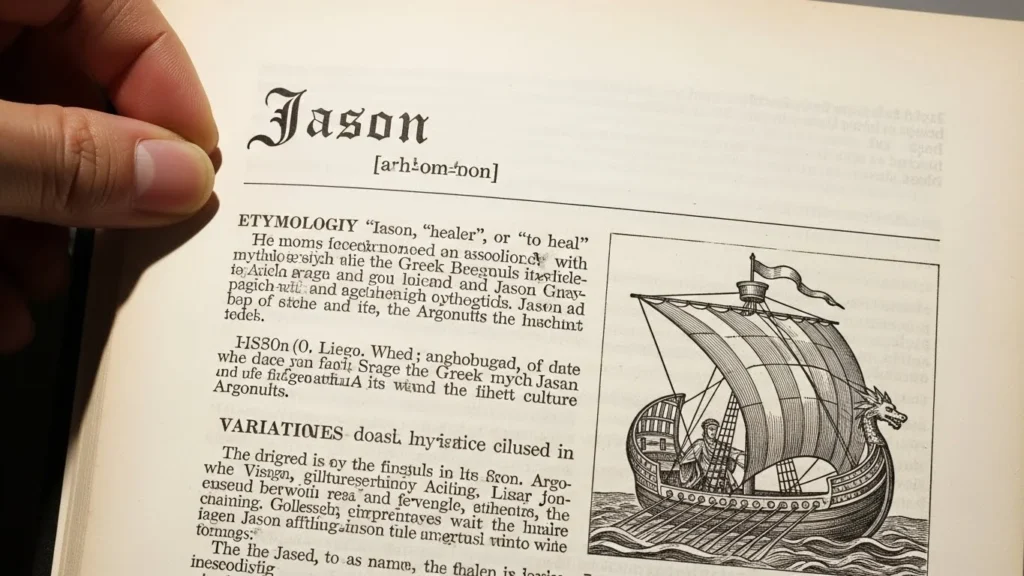
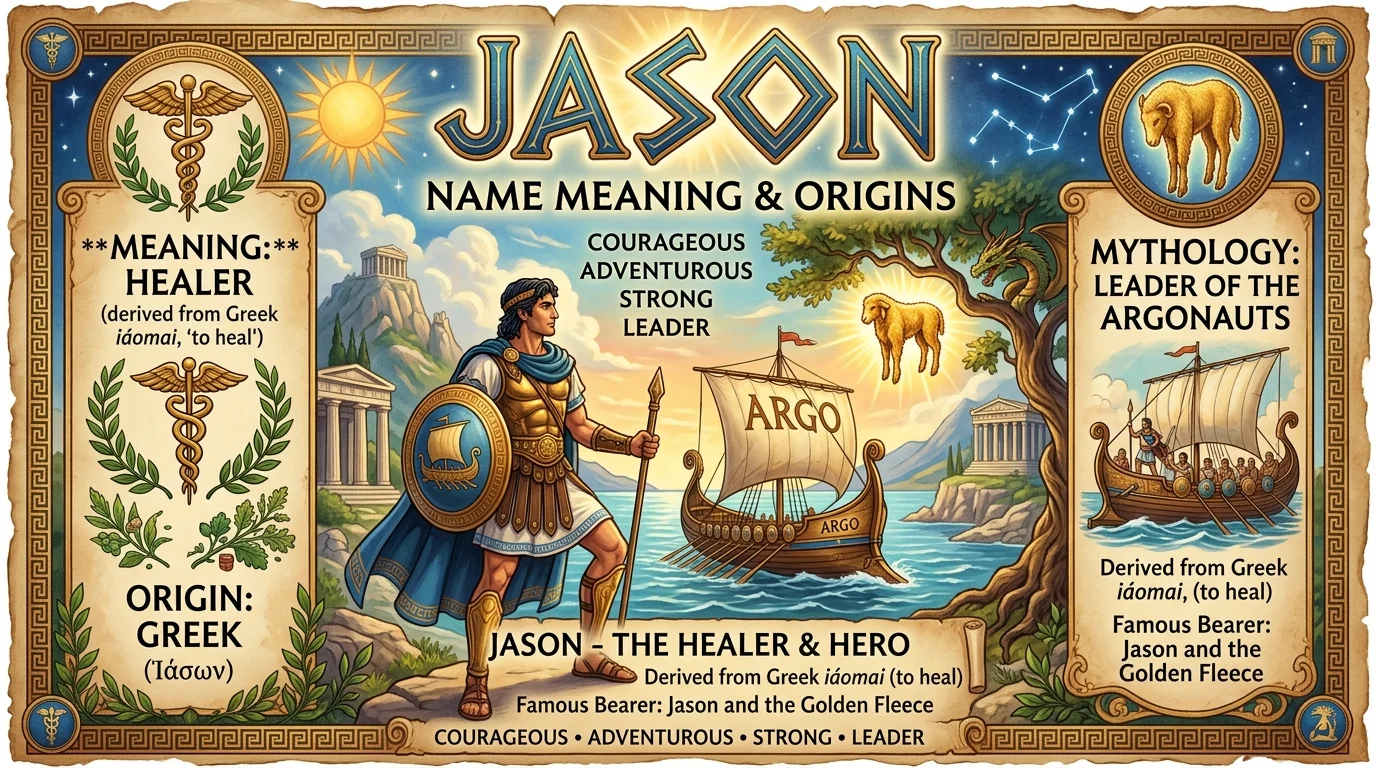
Jason is a masculine name that means “healer” or “to heal”.
Key Points:
-
Originates from Greek mythology.
-
Associated with help, rescue, and leadership.
-
Traditionally a male given name.
Example: “Jason” symbolizes someone who brings help, guidance, or positive change to others.
Origin and History
-
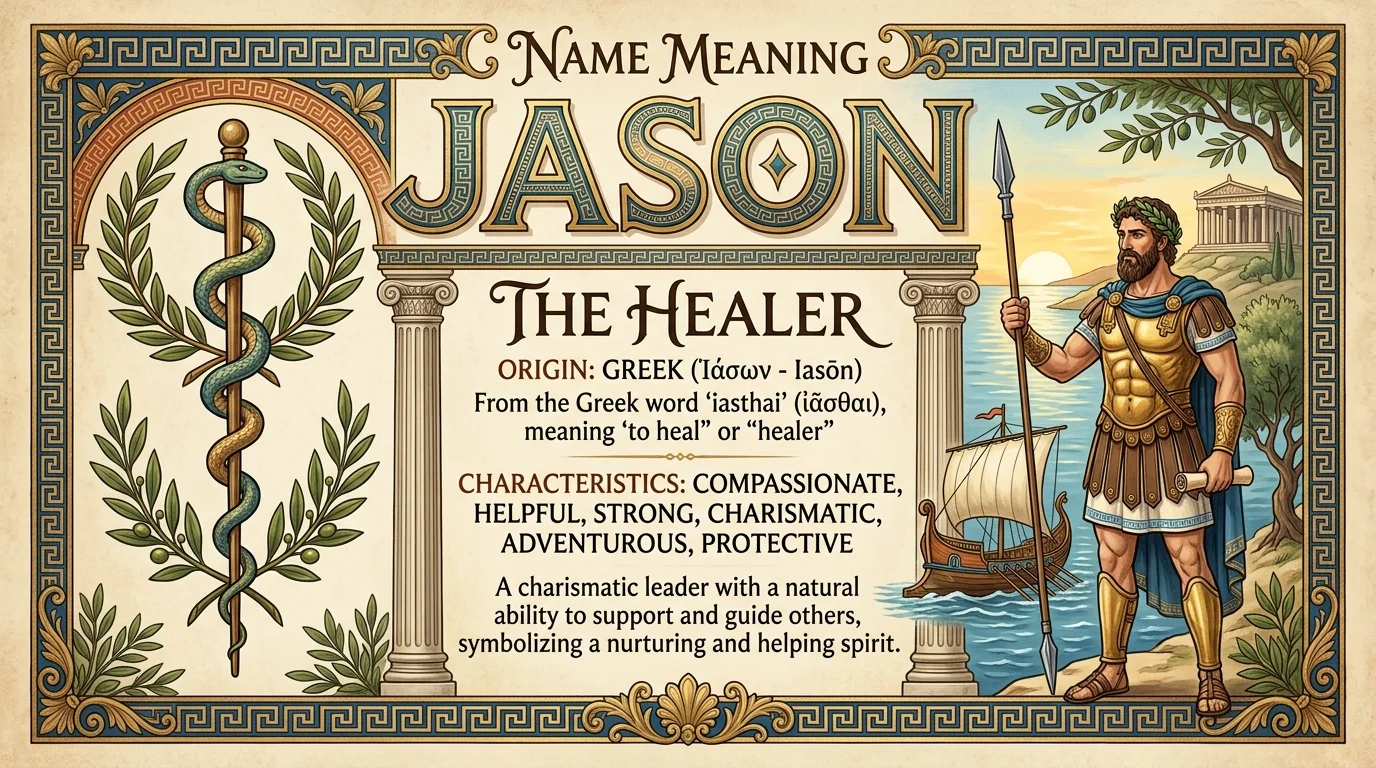
Comes from the Greek name Iásōn (Ἰάσων), derived from the verb “iaomai”, meaning “to heal.”
-
Famous in Greek mythology: Jason, leader of the Argonauts, who embarked on a quest for the Golden Fleece.
-
The name has been used in Western cultures since ancient times, gaining popularity in the 20th century.
Popularity of the Name
-
United States: Jason peaked in popularity in the 1970s and 1980s.
-
Europe: Common in English-speaking countries and Greece.
-
Modern usage continues due to its classic sound and mythological roots.
Personality Traits Associated with Jason
People often associate the name Jason with traits like:
-
Leadership: Inspired by the mythological hero Jason.
-
Helpful and caring: Reflects the meaning “healer.”
-
Determined and adventurous: Willing to face challenges, like the quest for the Golden Fleece.
-
Charismatic: Often seen as approachable and charming.
Famous People Named Jason
-
Jason Momoa: Actor known for Aquaman
-
Jason Statham: British actor famous for action movies
-
Jason Bateman: Actor and director
-
Jason Aldean: Country music singer
These examples show the name’s association with talent, charisma, and leadership.
Real-Life Examples
Example 1 (Personal Name):
-
Sentence: “Jason helped organize the community fundraiser.”
-
Explanation: Reflects the helping or healing nature of the name.
Example 2 (Historical/Mythological):
-
Sentence: “Jason of the Argonauts led a daring quest for the Golden Fleece.”
-
Explanation: Represents courage, leadership, and adventure.
Example 3 (Modern Use):
-
Sentence: “Jason won the competition through determination and teamwork.”
-
Explanation: Highlights traits like determination and leadership.
Common Misunderstandings
-
Jason ≠ Just a modern name: It has ancient Greek roots.
-
Meaning isn’t negative: Some assume names are just labels; Jason carries positive connotations like healing and leadership.
-
Not tied only to mythology: The name is used widely in real-life modern contexts.
Tip: Embrace the historical, mythological, and modern significance of the name Jason.
Related Names and Variations
-
Jayson: Modern spelling variant
-
Iason: Original Greek form
-
Jay: Shortened form or nickname
-
Greek Mythology Connection: Related to names of heroes and adventurers
Internal Linking Opportunity: Could link to articles like Greek mythology names, baby name meanings, or popular masculine names explained