
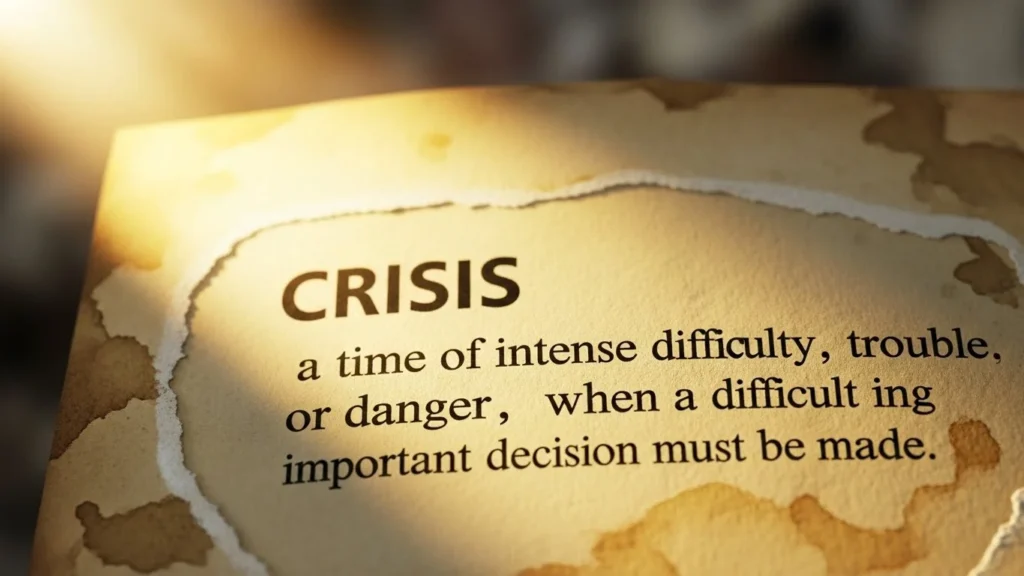

⚠️ Crisis Meaning in English
- A crisis means a time of serious trouble, danger, or difficulty
- It is a situation that needs urgent action
- Example: “The country is facing an economic crisis.”
- Can happen in personal life, business, or government
- Often creates stress and uncertainty
- Requires quick decision-making
- Can be short-term or long-term
- Common in news and daily language
- Indicates a turning point
- A widely used English word
🔄 Crisis Plural
- The plural of crisis is crises
- Pronounced: cry-seez
- Example: “Many crises affected the economy.”
- Used when talking about multiple difficult situations
- Common in formal writing and reports
- Follows Greek-origin plural rule
- Not “crisises” (this is incorrect)
- Used in news and academic English
- Refers to more than one emergency situation
- Important grammar point
🏥 Crisis Meaning in Medical Term
- In medical terms, a crisis means a sudden worsening of a health condition
- Example: asthma crisis or diabetic crisis
- Requires urgent treatment
- Can be life-threatening
- Happens quickly and unexpectedly
- Used in emergency medicine
- Indicates unstable health condition
- Needs immediate medical attention
- Common in hospitals and ER settings
- A serious clinical term
🧠 Crisis Meaning in Psychology
- In psychology, a crisis is a mental or emotional state of extreme stress
- Occurs when a person cannot cope with a situation
- Example: emotional breakdown after trauma
- Can be caused by loss, stress, or change
- Temporary but intense condition
- May affect decision-making
- Requires support or counseling
- Linked with anxiety or depression
- Common in therapy and mental health care
- Focuses on emotional overload
🔄 Crisis Meaning Synonyms
- Emergency
- Disaster
- Breakdown
- Catastrophe
- Conflict
- Difficulty
- Trouble
- Turmoil
- Hardship
- Emergency situation
🇸🇦 Crisis Meaning in Arabic
- In Arabic, crisis means أزمة (azma)
- Refers to a serious problem or emergency
- Used in politics, economy, and daily life
- Example: economic crisis = أزمة اقتصادية
- Indicates urgent situation
- Common in news and media
- Can be social or personal
- Used in formal and informal language
- Means a critical turning point
- Widely understood term
🇨🇳 Crisis Meaning in Chinese
- In Chinese, crisis is 危机 (wēijī)
- Means danger or critical situation
- Used in politics, economy, and health
- Example: economic crisis = 经济危机
- Indicates both danger and opportunity (in some interpretations)
- Common in formal writing
- Used in news and reports
- Refers to unstable situations
- Important modern term
- Widely used in Mandarin
👶 Crisis Meaning for Kids
- A crisis means a very big problem or emergency
- Something that needs quick help
- Example: “A crisis happens when something very serious goes wrong.”
- Can be at home, school, or country
- Means people may feel worried or scared
- Needs adults or experts to fix it
- Not a normal everyday problem
- Happens suddenly
- Important to stay calm
- A simple way to understand big problems

What Does “Crisis” Meaning?
A crisis is a serious, unstable, or dangerous situation that requires immediate attention or action. It often marks a turning point where things can get much better or much worse depending on what happens next.
Simple Definition
Crisis = a critical moment of difficulty, danger, or uncertainty
Example:
“The company faced a financial crisis after losing its biggest client.”
Origin of the Word Crisis
Comes from the Greek word krisis, meaning “decision” or “turning point”
Originally used in medicine to describe a decisive stage of an illness
Later expanded to include social, political, emotional, and global situations
The idea of a decisive moment is still central to the word today.
Types of Crises
Personal Crisis
A situation that deeply affects an individual’s life or emotions.
Examples:
Health emergencies
Sudden loss of a loved one
Major life changes
Social or Community Crisis
Affects a group, community, or society.
Examples:
Housing crisis
Public safety emergencies
Food shortages
Economic or Financial Crisis
Involves money, markets, or economic stability.
Examples:
Inflation crisis
Banking crisis
Job loss on a large scale
Global Crisis
Impacts multiple countries or the entire world.
Examples:
Climate crisis
Global health emergencies
International conflicts
How “Crisis” Is Used in Everyday Language
People often use the word crisis to emphasize urgency or seriousness.
Common Uses
“This is a crisis—we need to act now.”
“She went through a personal crisis last year.”
“The industry is facing a major crisis.”
In casual speech, it can sometimes be used loosely, but its core meaning still implies pressure and urgency.
Real-Life Examples of Crisis
Example 1 (Personal):
“After the accident, the family went through a major crisis.”
Explanation: A sudden, serious life challenge.
Example 2 (Workplace):
“The data breach created a crisis for the company.”
Explanation: An urgent problem needing immediate action.
Example 3 (Global):
“Water shortages have become a global crisis.”
Explanation: A widespread, long-term critical situation.

Common Misunderstandings
Crisis does not always mean disaster: It can be a turning point, not the end
Not every problem is a crisis: A crisis involves high risk and urgency
Can be short or long-term: Some crises happen suddenly; others build over time
Tip: Use the word crisis when the situation truly demands immediate attention or decisive action.
Related Words and Concepts
Emergency: A sudden, dangerous situation
Disaster: A severe event causing major damage or loss
Turning point: A moment when change becomes unavoidable
Critical situation: A state requiring urgent decision-making
Internal linking opportunity: emergency meaning, disaster vs crisis, critical meaning