🔊 Caricature Pronunciation
- Pronounced: /ˈkærɪkətʃʊr/
- Sounds like: KA-ruh-kuh-choor
- Stress on the first syllable
- Commonly pronounced in English art discussions
- Can vary slightly by accent
- Easy with practice
- Three syllables: car-i-ca-ture
- Often mispronounced by beginners
- Used in art and media vocabulary
- A formal English word
🎨 Caricature Maker
- A caricature maker is a tool or artist that creates exaggerated portraits
- Used for fun drawings and cartoons
- Can be digital or hand-drawn
- Popular at events and online apps
- Exaggerates facial features humorously
- Used in entertainment and social media
- Common in graphic design
- Creates artistic and funny images
- Available as websites and mobile apps
- A creative art tool
📘 Caricature Meaning in English
- Caricature means a funny or exaggerated drawing of a person
- Often highlights unusual features
- Used in cartoons and satire
- Can also describe exaggerated imitation
- Example: political caricatures
- Common in art and media
- Usually humorous
- Sometimes critical or satirical
- A creative artistic style
- Widely used English term
🔄 Caricature Synonym
- Cartoon
- Satire
- Parody
- Exaggeration
- Mockery
- Imitation
- Sketch
- Lampoon
- Spoof
- Comic portrait
✍️ Caricature Meaning Example
- Example sentence:
- “The artist drew a caricature of the politician with a huge smile.”
- Another example:
- “Tourists bought funny caricatures at the fair.”
- Shows exaggerated features
- Often humorous or playful
- Common in newspapers and events
- Used in visual storytelling
- Easy to recognize style
- Popular in entertainment
- Can be artistic or critical
- A fun creative expression
🇨🇳 Caricature Meaning in Chinese
- In Chinese, caricature means 漫画肖像 (mànhuà xiàoxiàng)
- Refers to exaggerated portrait drawings
- Common in cartoons and satire
- Used in newspapers and entertainment
- Same meaning as English
- Often humorous or critical
- Popular art style
- Easy to understand translation
- Used in visual media
- A creative term
🇸🇦 Caricature Meaning in Arabic
- In Arabic, caricature means كاريكاتير (kārīkātīr)
- Refers to exaggerated comic drawings
- Common in newspapers and political cartoons
- Used for humor and satire
- Same meaning as English
- Popular in media and art
- Often critical or funny
- Widely recognized word
- Used in visual storytelling
- A common artistic term
✏️ Caricature Drawing
- A caricature drawing is an exaggerated portrait illustration
- Focuses on unique facial features
- Often funny or entertaining
- Drawn by artists at events or digitally
- Popular in cartoons and social media
- Used in political satire
- Can be realistic or playful
- Common at fairs and parties
- A creative form of art
- Easy to recognize style
What Does “Caricature” Mean in Chat or Text?
A caricature is generally:
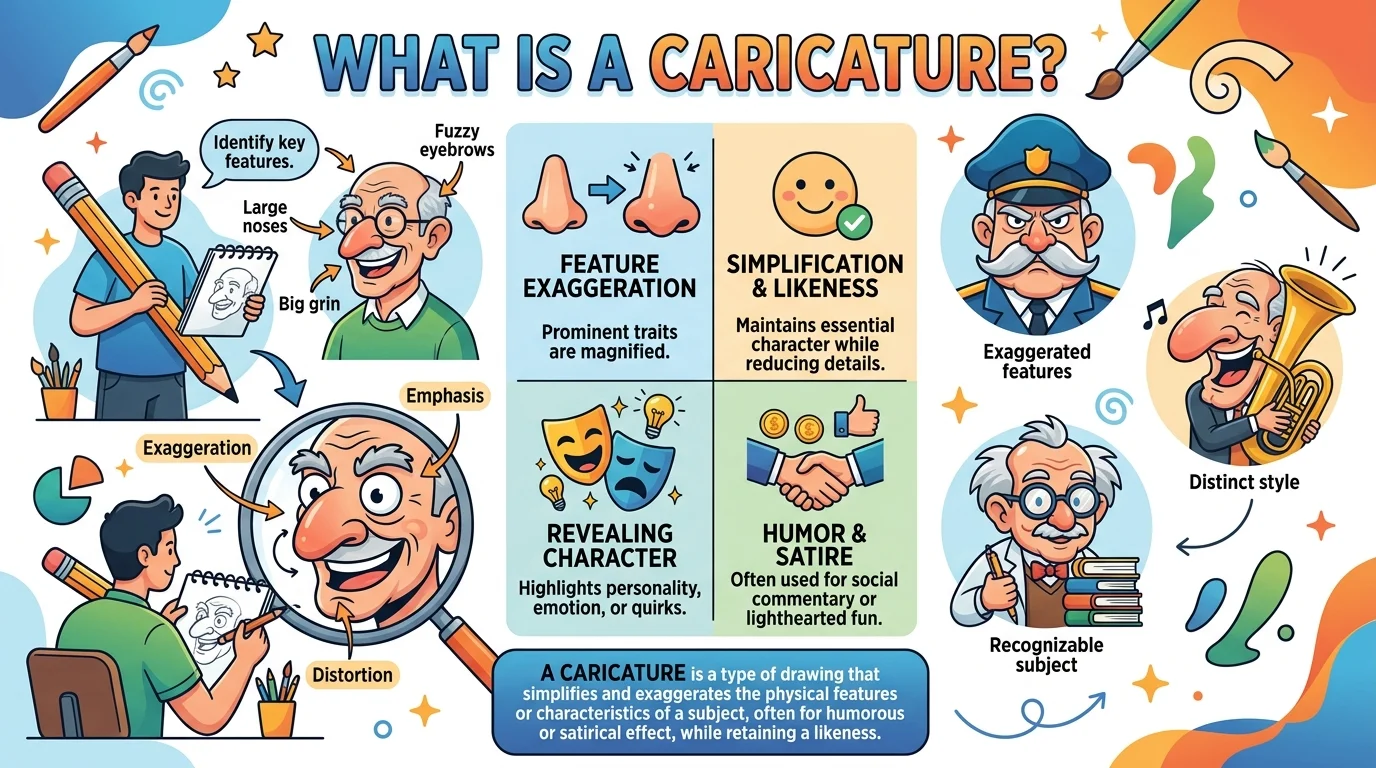
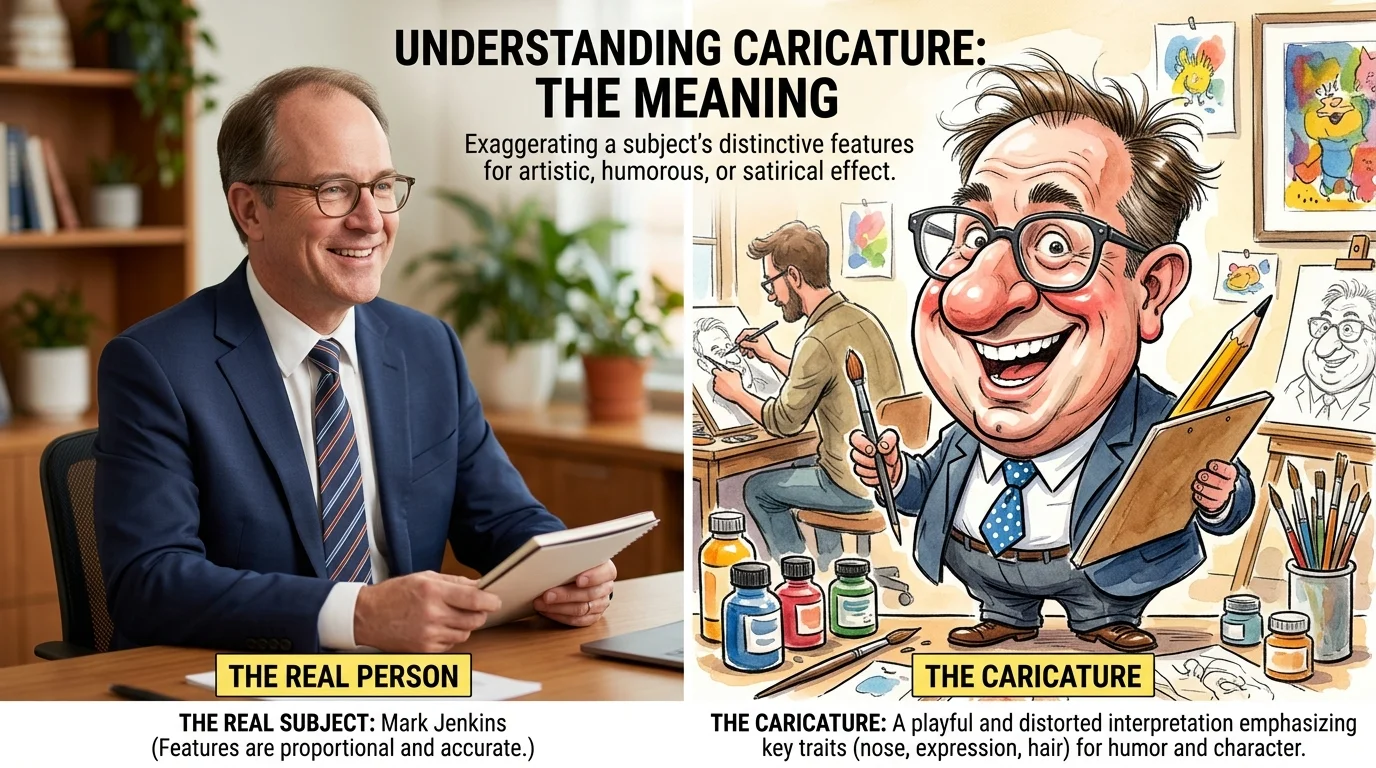
A representation that exaggerates certain features to make someone or something easily recognizable, often in a humorous or satirical way.
In art: A drawing or sketch that emphasizes unique physical traits (like a big nose, big eyes, or distinctive hairstyle).
In conversation: Describing someone’s behavior or traits in an exaggerated, often humorous way.
Different Contexts
Depending on where you see it, caricature meaning can slightly vary:
Artistic context: A hand-drawn cartoon exaggerating a celebrity or politician’s features.
Figurative context: Using language to exaggerate traits, e.g., “He’s a caricature of a boss, always overdramatic.”
Online & Social Media: Memes and GIFs often use caricature-like exaggeration.
Brief Origin/History
The term “caricature” comes from the Italian word “caricare”, meaning “to load” or “to exaggerate.” It became popular in Europe in the 17th century as a form of satirical art, poking fun at politicians, celebrities, or social norms.
How People Use “Caricature” in Real Conversations
Even outside art, people use caricature to describe exaggeration or humor.
Platforms
Texting & Messaging Apps: Someone might say, “You’re being a caricature of yourself,” to mean exaggerating a habit.
Social Media: Posts might call exaggerated drawings or memes “caricatures.”
Forums & Discord: Discussing art, cartoons, or making fun of public figures.
Educational Settings: Teachers or students may reference caricature in art classes or assignments.
Appropriate vs Awkward
Appropriate: Discussing art, humor, exaggeration, or satire.
Awkward: Using it to insult someone personally—it can offend if tone isn’t clear.
Real-Life Examples of “Caricature” in Text Messages
Here are some relatable examples showing how caricature appears in conversation:
Friend A: “Check out this drawing of the mayor—it’s hilarious!”
Friend B: “Wow, that’s a perfect caricature!”Student A: “I made a caricature of my teacher for the art project.”
Student B: “Nice! Which features did you exaggerate?”Casual Chat:
User 1: “He’s such a caricature of a gamer, always talking about wins and scores.”
User 2: “Haha, totally!”
These examples show the word’s use in art, humor, and casual exaggeration.
Common Mistakes & Misunderstandings
Even when widely used, people can misunderstand caricature:
Thinking it’s only an insult: It can be humorous or respectful exaggeration, not necessarily negative.
Confusing with cartoons in general: Caricatures specifically exaggerate features, while cartoons can be any drawing.
Overusing figuratively: Saying someone is a “caricature” of something too often can seem judgmental.
Mispronunciation or spelling errors: Common mistake is spelling it “caricatur” or “caricaturee.”
Related Words & Concepts
Understanding related terms helps clarify usage:
Cartoon: A simplified or humorous drawing, not always exaggerated.
Satire: Using humor, irony, or exaggeration to criticize.
Exaggeration: Making features or traits more prominent than reality.
Portrait: A realistic depiction of someone, opposite of caricature.
Meme: Often uses caricature-like exaggeration for humor.