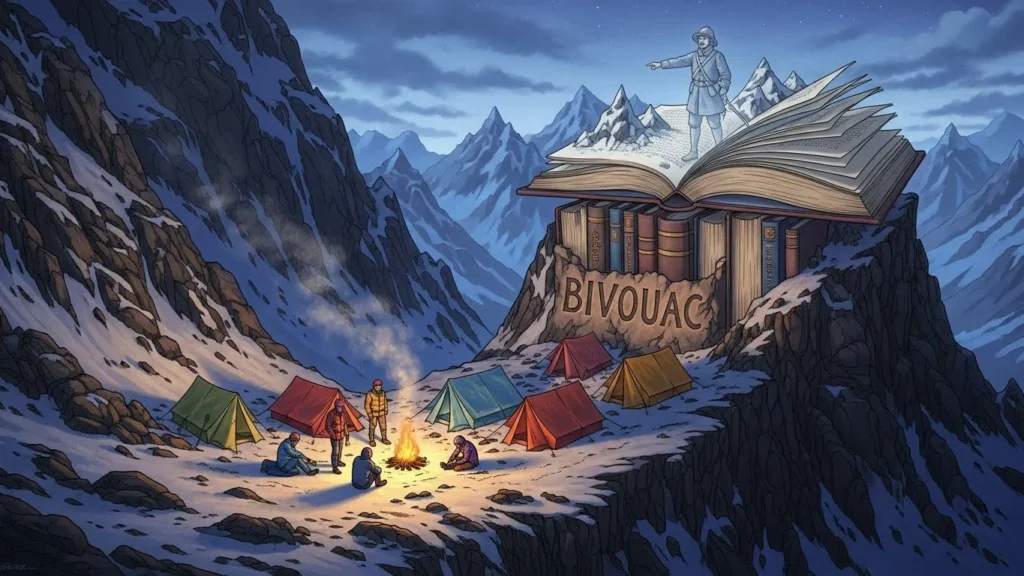
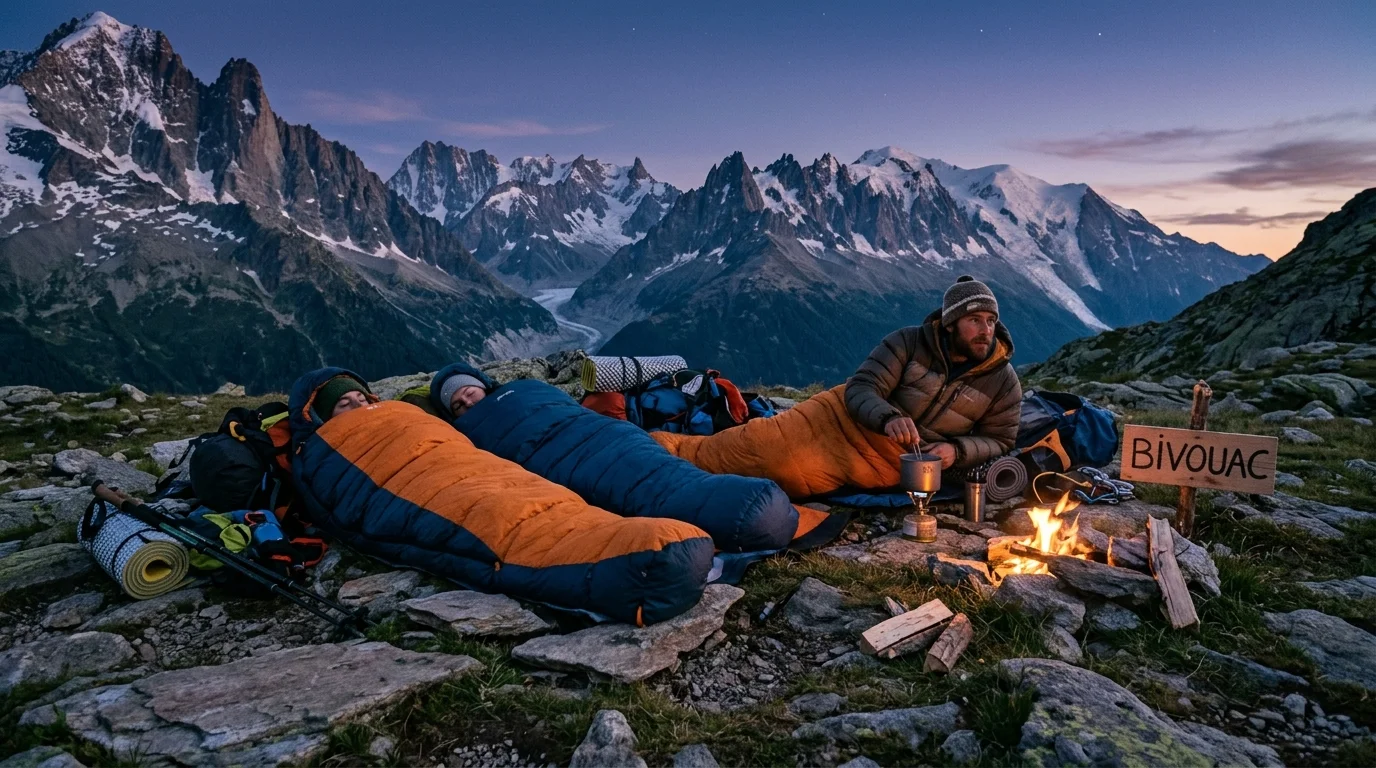
The word bivouac meaning refers to a temporary camp or shelter, especially one used outdoors without permanent tents or structures. It is commonly associated with military settings, hiking, mountaineering, and camping, where people stay overnight in simple or improvised conditions. Understanding the meaning of bivouac is important because the term is widely used in outdoor adventure and survival contexts. A bivouac may involve sleeping under the open sky, using lightweight gear, or creating a quick shelter in remote areas. The word can also be used as a verb, meaning to camp temporarily in the open. In history, soldiers often bivouacked during long marches or military campaigns. This article explores the definition, uses, and examples of “bivouac,” helping you clearly understand how the term is used in outdoor, historical, and practical situations.

🔊 Bivouac pronunciation
- Pronounced: BIH-voo-ak
- Phonetic: /ˈbɪv.u.æk/
- Stress is on the first syllable
- Sounds like “biv-oo-ak”
- Commonly used in military and outdoor contexts
- French-origin word used in English
- Sometimes mispronounced as “biv-wack”
- Three syllables total
- Often heard in camping and army vocabulary
- Correct pronunciation helps in formal speech
🏕️ Bivouac meaning in English
- Bivouac means a temporary camp without permanent shelter
- Often used by soldiers or hikers outdoors
- Can refer to camping in the open air
- Common in military and adventure language
- Usually temporary and simple setup
- May involve sleeping bags or tents
- Used during travel, expeditions, or emergencies
- Can also be a verb meaning to camp temporarily
- Associated with rough outdoor living
- Popular in hiking and survival terminology
🔁 Bivouac synonym
- Camp
- Encampment
- Campsite
- Shelter
- Outpost
- Temporary camp
- Base camp
- Field camp
- Overnight stop
- Outdoor shelter
📜 Bivouac etymology
- “Bivouac” comes from the French word bivouac
- Originally related to military night watches
- Entered English language in the 18th century
- Historically connected with soldiers camping outdoors
- Root linked to temporary military shelter
- Became common in army vocabulary
- Later expanded to hiking and outdoor use
- Reflects rough or emergency camping conditions
- French linguistic influence on military terms
- Widely adopted in modern English
🌍 Bivouac of life meaning
- “Bivouac of life” is a poetic or metaphorical phrase
- Suggests life as a temporary journey or camp
- Symbolizes uncertainty and constant movement
- Can represent struggle, survival, or transition
- Often used in literature or philosophy
- Implies temporary rest before continuing life’s journey
- Reflects human experiences and challenges
- Carries emotional and reflective tone
- May symbolize resilience and adaptability
- A metaphor for life’s impermanent nature
🇫🇷 Bivouac French
- “Bivouac” is originally a French word
- In French, it means a temporary outdoor camp
- Common in military and hiking language
- Used for camping without permanent shelter
- Pronounced similarly in French and English
- Important historical military term in France
- Often associated with soldiers and explorers
- Still commonly used in modern French
- Connected with outdoor survival culture
- Widely borrowed into English vocabulary
🪖 Bivouac military
- In military use, bivouac means a temporary army camp
- Soldiers use bivouacs during missions or travel
- Usually set up outdoors without permanent buildings
- Common during wartime movements
- May include tents or sleeping in open air
- Important for rest and regrouping
- Used in training exercises and operations
- Temporary and mobile military shelter system
- Historical term in army logistics
- Essential part of field operations
⚔️ Bivouac meaning army
- In the army, bivouac means a temporary campsite for troops
- Used when soldiers stop overnight during missions
- Often located in open fields or forests
- Provides short-term shelter and rest
- Can include tents, gear, and sleeping arrangements
- Important in military planning and movement
- Allows troops to remain mobile
- Common term in military history
- Associated with outdoor field conditions
- Symbolizes temporary wartime living conditions

Table of Contents
ToggleWhat Does “Bivouac” Mean?
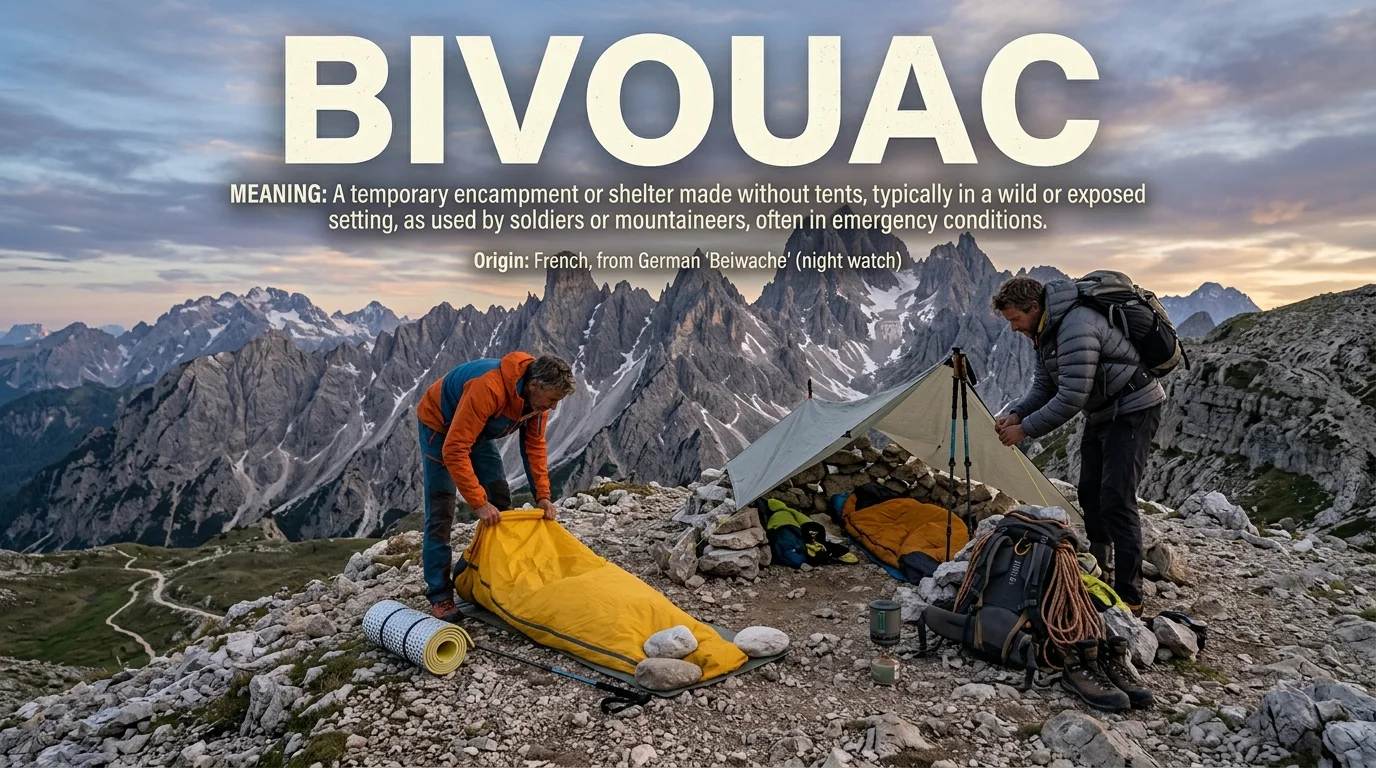
A bivouac is a temporary camp set up without a tent, usually outdoors, often in emergency or military situations.
Simple definition:
A bivouac is a short-term outdoor shelter, often improvised.
In everyday terms, bivouac usually refers to:
Sleeping outdoors without a permanent structure
Using natural materials or minimal gear
Emergency or temporary camping
Example:
“The climbers spent the night in a bivouac on the mountainside.”
This means they camped outdoors, probably with minimal gear.
Origin & History
The word bivouac comes from Swiss German biwacht, meaning “a night guard or watch.” Over time, it became associated with soldiers camping outdoors and later with hikers and adventurers.
How People Use “Bivouac” in Real Life
Bivouac is not slang, but it appears in outdoor, military, and adventure contexts.
Common Places You’ll See “Bivouac”
Military reports: Temporary camps during missions
Hiking & climbing guides: Overnight shelters on trails or mountains
Adventure blogs & forums: Sharing camping experiences
Survival manuals: Instructions for emergency shelter
Natural vs Awkward Use
Natural use:
Describing an improvised campsite
Talking about survival situations
Adventure storytelling
Awkward use:
Casual social media captions without context
Using it to describe luxury camping
Overly formal conversation with friends
Bivouac is serious and practical, not decorative.
Bivouac Meaning in Military vs Outdoor Contexts
Military Use
Soldiers often set up bivouacs during field operations
Usually no tents or permanent structures
Focused on speed and practicality
Outdoor Adventure Use
Climbers, hikers, and survivalists use bivouacs for temporary shelter
Can be improvised with tarps, sleeping bags, or natural cover
Focused on survival and weather protection
Real-Life Examples of “Bivouac” in Sentences
Here’s how bivouac appears in real life:
Example 1: Climbing Adventure
“We had to bivouac on the cliff when the storm hit.”
Meaning: they camped temporarily with minimal shelter.
Example 2: Military Report
“The troops bivouacked in the valley overnight.”
Meaning: soldiers camped temporarily outdoors.
Example 3: Survival Scenario
“He made a bivouac using branches and a tarp.”
Meaning: an improvised outdoor shelter.
Example 4: Hiking Blog
“Bivouac sites are marked along the trail for emergencies.”
Meaning: safe temporary camps for hikers.
Common Mistakes & Misunderstandings
People often misuse bivouac:
Common Errors
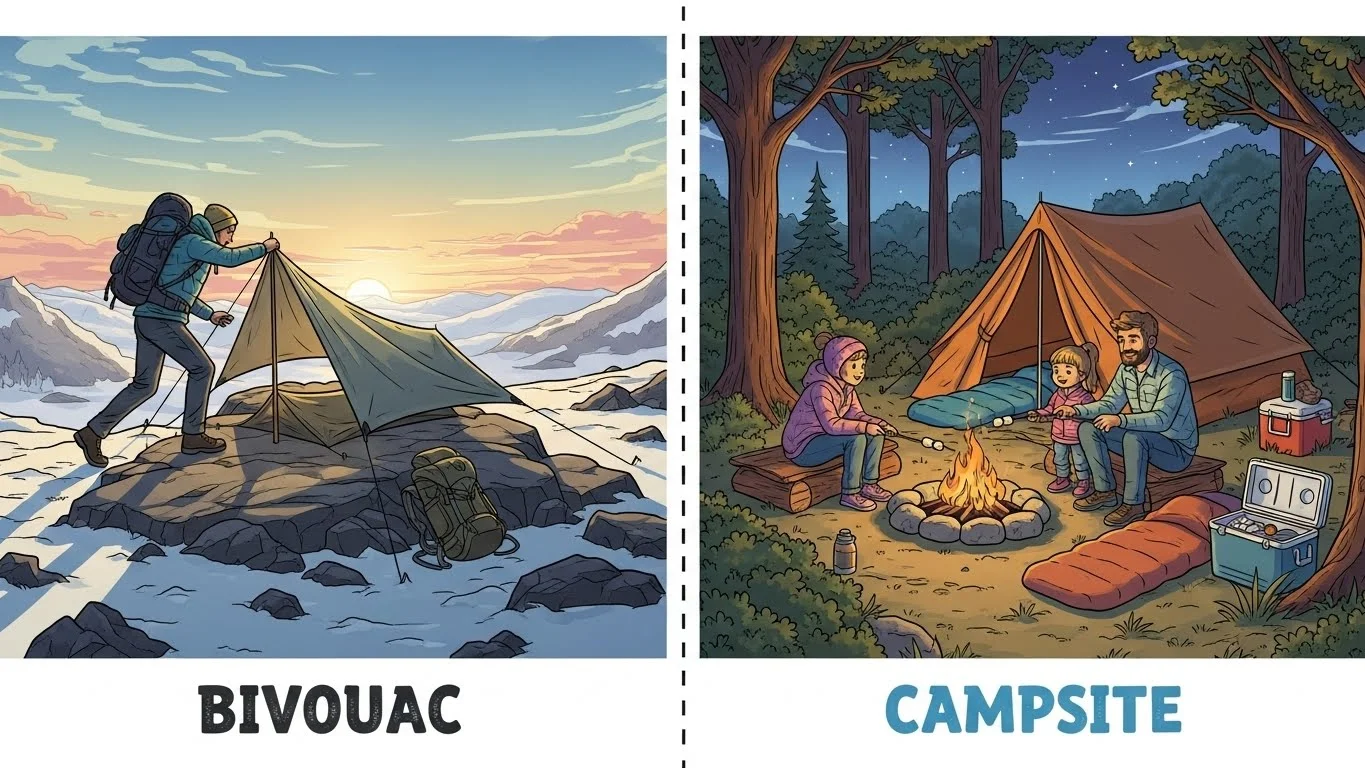
Thinking it means a regular campsite
Bivouac is temporary and usually minimal.Confusing it with camping resorts or cabins
It’s strictly outdoors and often improvised.Assuming it’s only military
Civilians use bivouacs too, especially climbers and hikers.Spelling or pronunciation mistakes
Correct: bivouac (pronounced “BIV-oo-ak”).
Related Words & Concepts
These words are often connected to bivouac:
Camp: More permanent or equipped site
Shelter: General term for protection from elements
Tent: Portable structure, more formal than a bivouac
Outpost: Military term for a remote station
Survival shelter: Emergency outdoor shelter
These can be used in linked content for camping, survival, or military guides.
FAQs
What does bivouac mean in simple words?
A bivouac is a temporary outdoor camp, often improvised and without a tent.
Is bivouac only for soldiers?
No. Hikers, climbers, and survivalists also bivouac.
How is bivouac different from camping?
Camping often uses tents or facilities; bivouac is temporary and minimal.
Can you bivouac anywhere?
Usually in emergencies or designated wilderness areas; some regions have restrictions.
Is bivouac pronounced “BIV-oo-ak”?
Yes, that’s the correct pronunciation.
Conclusion
Understanding the bivouac meaning helps you make sense of survival guides, hiking stories, and military accounts. Whether you’re reading about a stormy night on a mountain or a soldier’s temporary camp, bivouac signals a short-term, practical shelter.
Next time you see the word bivouac, you’ll know it’s about survival, improvisation, and spending the night outdoors safely.