
What Does “Chin Acne” Mean?
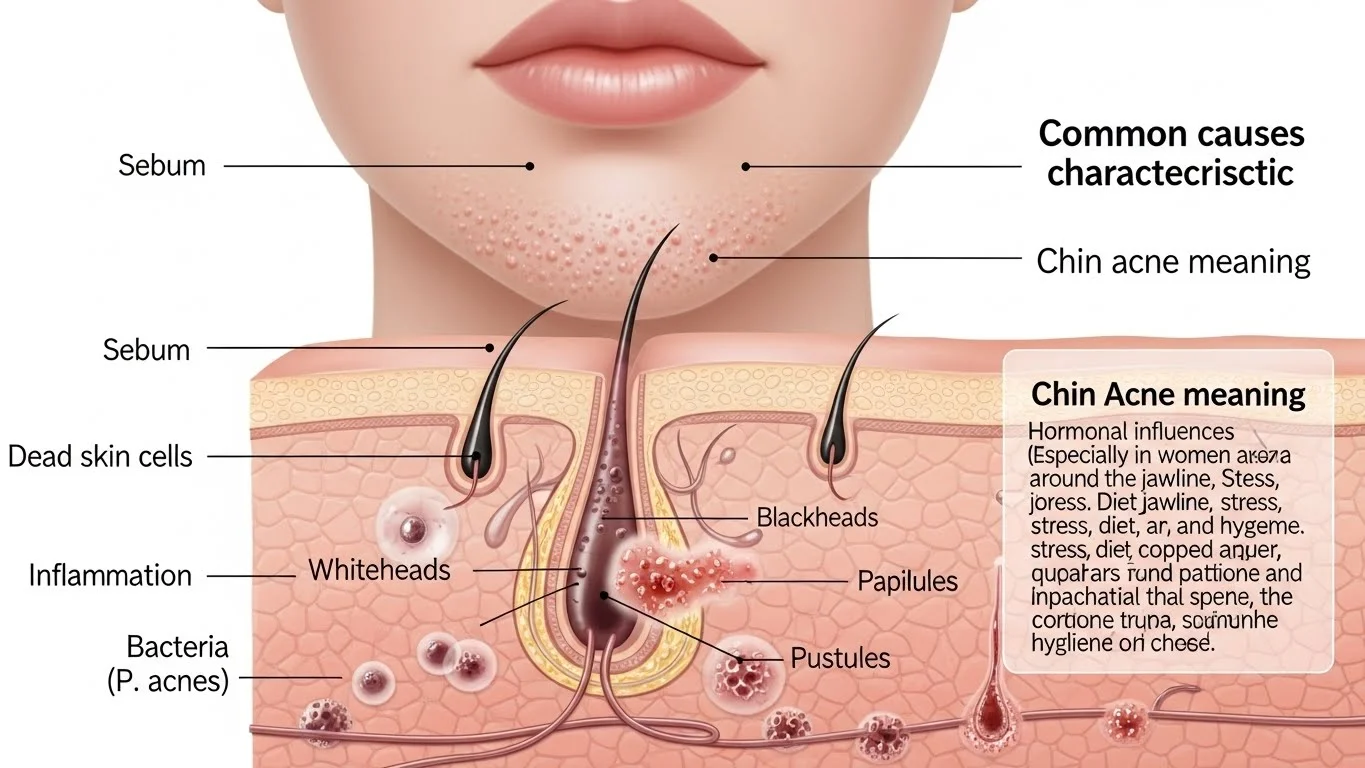
Chin acne is pimples, blackheads, or cysts that appear on the chin area of your face.
Simple definition:
Chin acne is a type of hormonal or stress-related breakouts that occur on the lower face.
Key points about chin acne:
-
Usually hormonal in nature, especially in adults
-
Can be influenced by stress, diet, or skincare routines
-
Often appears in clusters rather than isolated pimples
Example:
-
“I noticed chin acne popping up before my period.”
This indicates hormonal influence.
Common Causes of Chin Acne
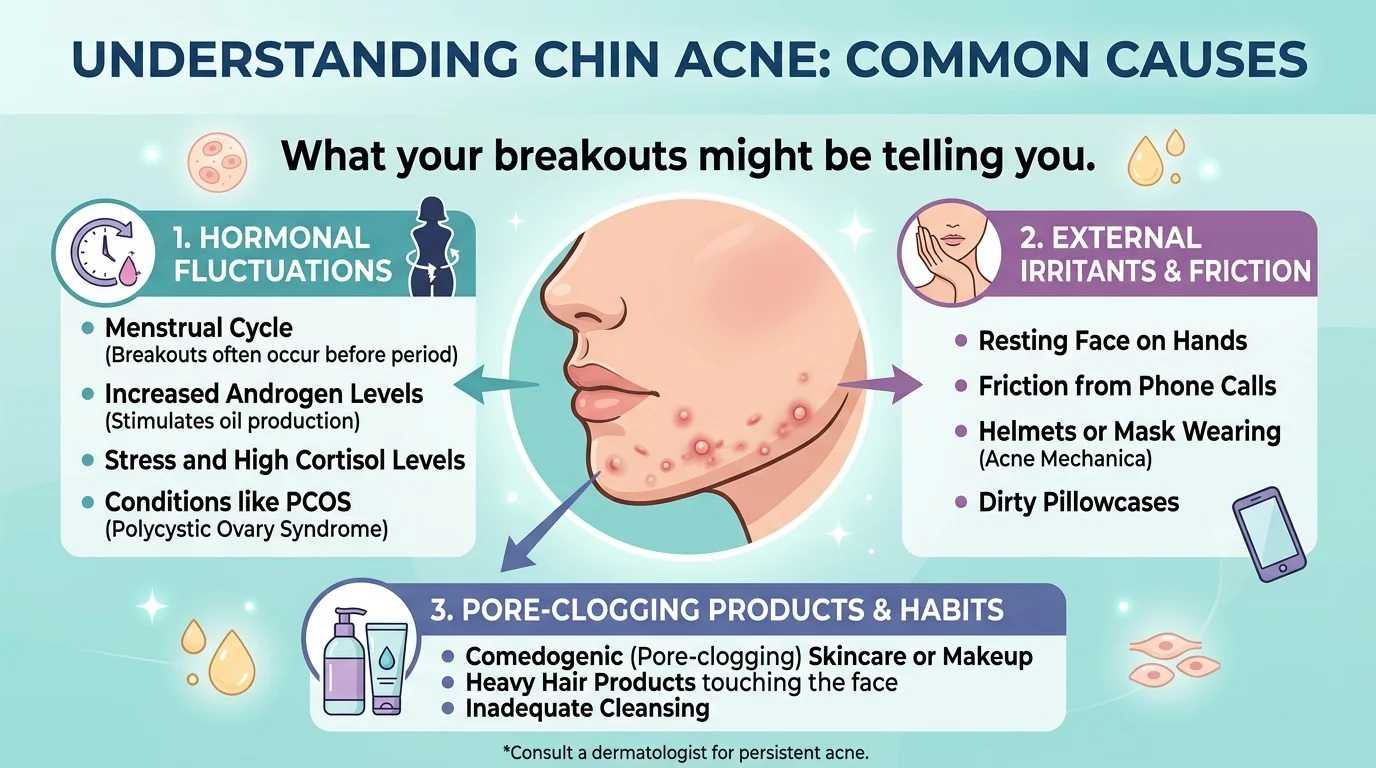
Hormonal Changes
-
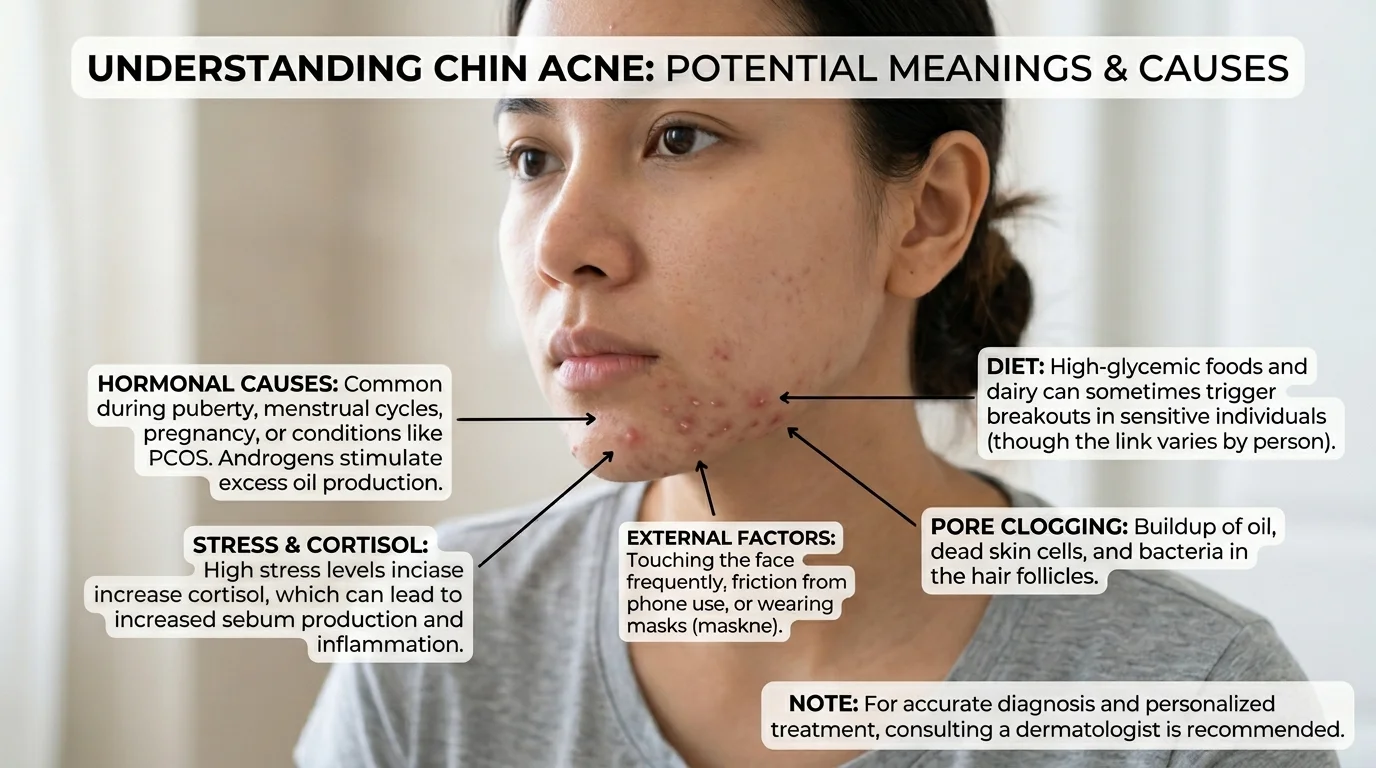
Fluctuations in estrogen, progesterone, and testosterone can trigger oil production
-
Often appears around menstrual cycles, pregnancy, or menopause
Stress and Lifestyle
-
High stress increases cortisol, which can worsen breakouts
-
Poor sleep, unhealthy diet, and lack of hydration contribute
Skincare and Habits
-
Touching or resting your hands/chin on surfaces spreads bacteria
-
Using heavy creams or makeup can clog pores
-
Not cleansing properly at night
Other Factors
-
Certain medications
-
Underlying health conditions like PCOS (Polycystic Ovary Syndrome)
-
Genetics can also make some people more prone
How Chin Acne Differs From Other Acne
-
Often hormonal, whereas forehead or cheek acne is usually linked to oil, dirt, or bacteria
-
Appears more painful or cystic than regular pimples
-
May come in cycles related to hormones
Knowing these differences helps in treatment and prevention.
Real-Life Examples of Chin Acne Meaning
Example 1: Hormonal Breakout
-
“I get chin acne every week before my period.”
Meaning: Hormonal fluctuations trigger the breakout.
Example 2: Stress-Induced Acne
-
“After a stressful week at work, I noticed small bumps on my chin.”
Meaning: Stress hormones affect skin oil production.
Example 3: Lifestyle Factor
-
“My chin acne worsens when I eat too much sugar.”
Meaning: Diet can influence inflammation and oil production.
Example 4: Skincare Habit
-
“I was touching my chin constantly, and acne appeared there.”
Meaning: Bacteria and dirt from hands can worsen acne.
Common Mistakes & Misunderstandings
Common Errors
-
Assuming all acne is caused by food: While diet plays a role, hormones and skincare matter more for chin acne.
-
Using harsh treatments: Over-drying can irritate the skin and worsen acne.
-
Ignoring cycles: Chin acne often returns if hormonal triggers aren’t considered.
-
Thinking it’s permanent: With proper care and treatment, it can improve significantly.
Prevention & Treatment Tips
Preventing and managing chin acne:
-
Maintain good skincare: Cleanse twice daily, use non-comedogenic products
-
Avoid touching your chin: Minimize bacteria transfer
-
Check hormones: Track cycles or consult a doctor for irregularities
-
Healthy lifestyle: Sleep well, reduce stress, eat a balanced diet
-
Topical treatments: Salicylic acid, benzoyl peroxide, or retinoids can help
-
Professional help: Dermatologists can prescribe hormonal therapy or stronger treatments if needed
Related Terms & Concepts
These terms are often linked with chin acne:
-
Hormonal acne: Acne triggered by hormonal changes
-
Adult acne: Breakouts that occur after teenage years
-
Cystic acne: Painful, deep acne often on the chin
-
PCOS acne: Acne linked to Polycystic Ovary Syndrome
-
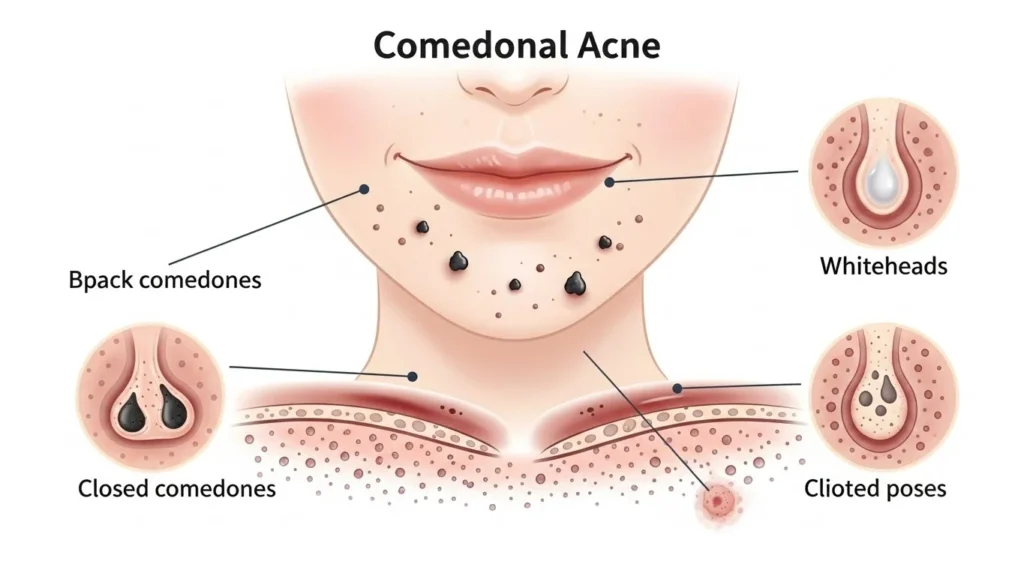
Comedones: Blackheads or whiteheads
These terms are useful for deeper exploration or internal linking.