

📘 Oddity Meaning in English
- “Oddity” means something or someone strange, unusual, or different from normal
- It describes things that stand out because they are uncommon
- Can refer to a weird object, situation, or behavior
- Often used in both formal and informal English
- Suggests something unexpected or unique
- Can be neutral, positive, or slightly negative depending on context
- Common in literature and daily speech
- Indicates “not ordinary”
- Used for curiosity or surprise
- A descriptive noun in English
🔄 Oddity Synonyms
- Unusualness
- Weirdness
- Peculiarity
- Strangeness
- Quirk
- Anomaly
- Abnormality
- Curiosity
- Eccentricity
- Rarity
📝 Oddity Meaning and Examples
- Meaning: something or someone unusual or strange
- “The old house was an oddity in the modern city.”
- “His behavior is an oddity among students.”
- “The animal is a rare oddity in this region.”
- “That machine is an engineering oddity.”
- “Her fashion style is an oddity.”
- “The museum contains historical oddities.”
- “The event was a cultural oddity.”
- “He is considered an oddity in the office.”
- “This plant is an oddity in the desert.”
- “The story has many strange oddities.”
😎 Oddity Meaning Slang
- In slang, “oddity” means someone weird or quirky
- Refers to a person who behaves differently from others
- Can be playful or slightly teasing
- Example: “He’s a total oddity, but funny.”
- Often used among friends
- Can also mean unique or “not normal” in a positive way
- Sometimes used for eccentric personalities
- Not offensive unless used negatively
- Common in informal conversations
- Suggests individuality or uniqueness
👤 Oddity Person Meaning
- An “oddity person” is someone who is unusual or eccentric
- They behave differently from social norms
- May have unique habits or interests
- Can be seen as creative or strange
- Often stands out in a crowd
- Sometimes admired for originality
- May be misunderstood by others
- Can be positive or neutral depending on tone
- Example: “He is an oddity in the group.”
- Represents individuality and uniqueness
🎵 Space Oddity Meaning
- “Space Oddity” is a famous song by David Bowie
- Released in 1969
- Tells the story of astronaut “Major Tom”
- Represents isolation and space exploration
- Symbolizes loneliness and distance from Earth
- “Oddity” here means something strange or cosmic
- Became a cultural and musical classic
- Connected to space-age imagination
- Often interpreted as metaphor for alienation
- One of Bowie’s most iconic songs
🎬 Oddity Meaning Movie
- “Oddity” in movies usually means a strange or unusual theme or character
- May refer to horror, mystery, or indie films
- Focuses on unusual storytelling or visuals
- Can describe quirky characters or plots
- Often used in film reviews or descriptions
- Represents artistic uniqueness
- Can be experimental cinema
- Not a specific mainstream movie title
- Used to describe unconventional films
- Highlights creativity and difference
🔊 How to Pronounce Oddity
- Pronunciation: /ˈɒd.ɪ.ti/
- Sounds like: “OD-ih-tee”
- Three syllables: OD – i – ty
- Stress on the first syllable
- Common English pronunciation
- Easy to say in casual speech
- Used in British and American English
- Similar pronunciation worldwide
- Often confused with “odd” but longer form
- A simple and clear word to pronounce

What Does Oddity Mean?
Oddity is a noun that means something unusual, strange, or out of the ordinary.
In simple words:
An oddity is a person, thing, or situation that is different from what is normal or expected.
It doesn’t automatically mean something bad — it just means uncommon or strange.
Example sentence:
“The old clock was an oddity among modern furniture.”
Meaning: It looked unusual compared to everything else.
Oddity Meaning in Everyday Language
In daily conversation, oddity is used to describe:
Strange behavior
Unusual objects
Rare or unexpected situations
Example:
“His habit of wearing sunglasses at night is an oddity.”
Meaning: It’s a strange or unusual habit.
The tone can be neutral, curious, or lightly critical depending on context.
Oddity Meaning When Describing People
When used for people, oddity usually refers to:
Unusual behavior
Unique personality traits
Someone who doesn’t fit in socially
Example:
“He was seen as an oddity in the small town.”
Meaning: He stood out because he was different.
Important note:
Calling a person an oddity can sometimes feel rude, so tone matters.
Oddity Meaning for Objects and Things
Oddity is commonly used for objects that:
Look strange
Are rare or outdated
Don’t match their surroundings
Example:
“That building is an oddity in the neighborhood.”
Meaning: It looks very different from nearby buildings.
In this case, the word is usually descriptive, not insulting.
Real-Life Examples of Oddity in Sentences
“The discovery was considered an oddity by scientists.”
Meaning: It was unexpected or unusual.
“Her accent was an oddity in the region.”
Meaning: It was uncommon there.
“The tradition is an oddity in modern culture.”
Meaning: It doesn’t match today’s norms.
“He collected oddities from around the world.”
Meaning: Strange or unusual items.
Common Mistakes and Misunderstandings
People often misunderstand oddity because:
They think it always means something negative
They confuse it with “mistake”
They use it too casually for people
Key clarification:
Oddity means unusual, not wrong.
However, when talking about people, it’s better to be careful, as it can sound judgmental.
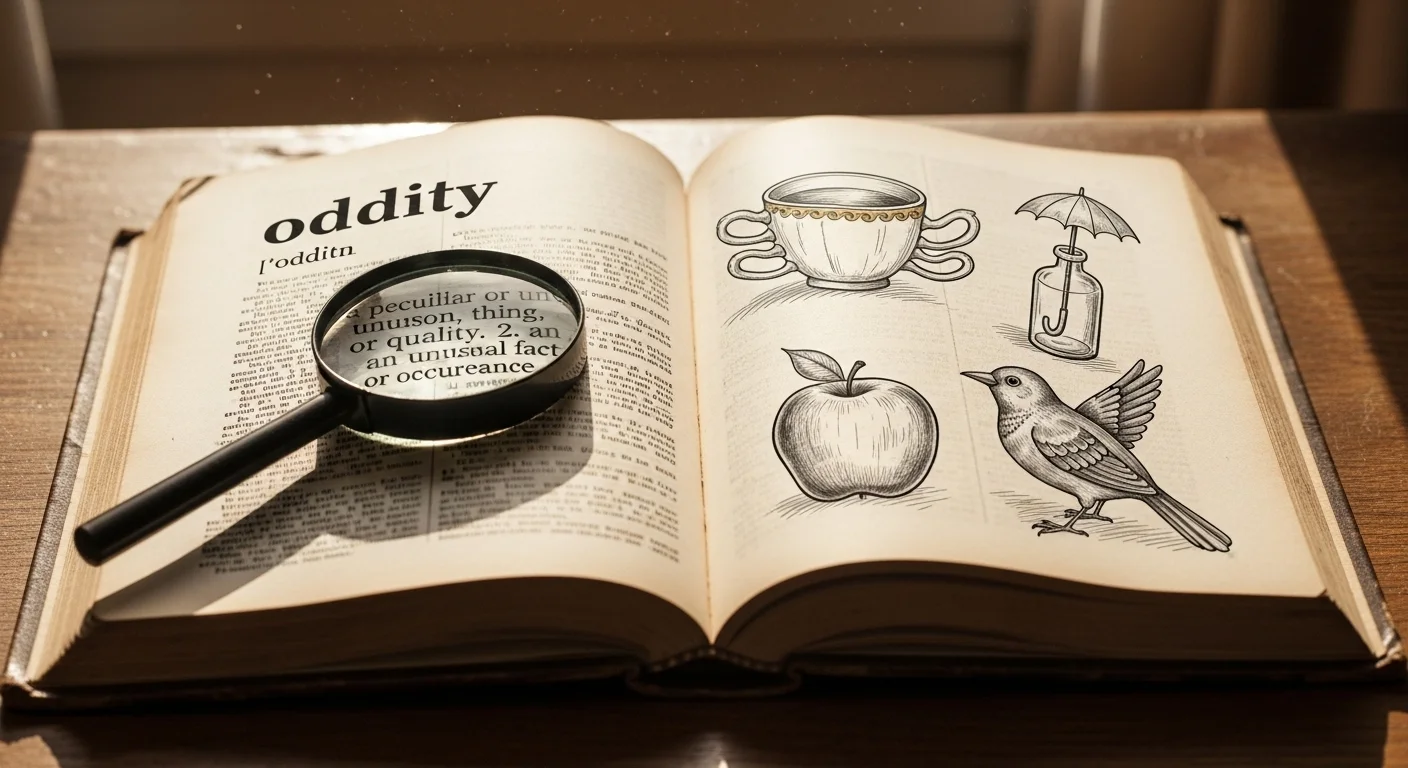
Oddity vs Similar Words
Understanding similar words helps clarify meaning.
Weird: Informal and stronger
Strange: Neutral, commonly used
Peculiarity: Slightly formal, softer
Anomaly: Technical or scientific
Oddity: Mild, descriptive, and general
Oddity sits in the middle — not too harsh, not too technical.
Related Words and Terms
Words often connected to oddity include:
Curiosity
Rarity
Quirk
Anomaly
Peculiarity
These words are useful when describing unusual things in writing or speech.