
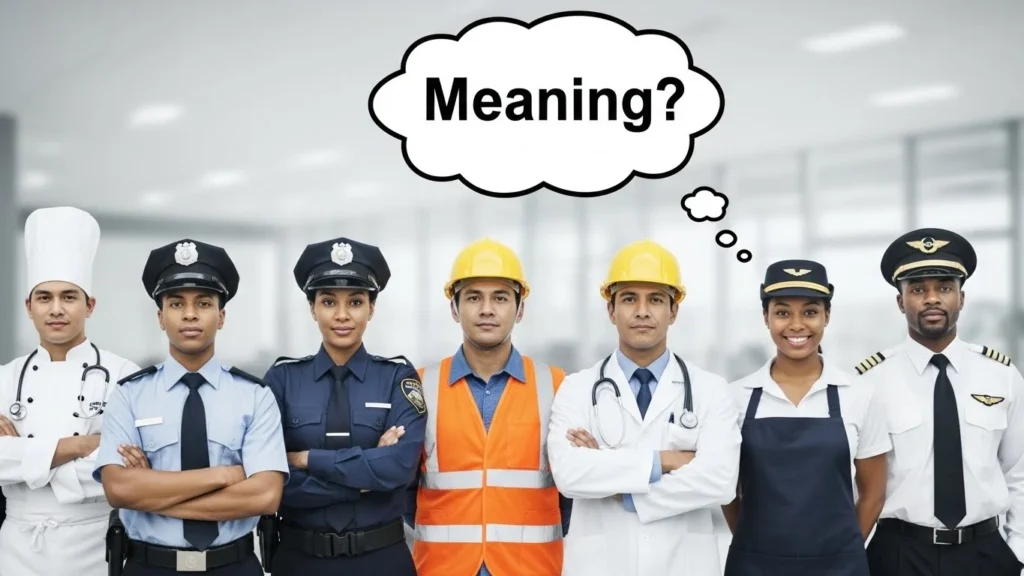

What Uniform Means in Simple Words
A uniform is special clothing worn to show that a person belongs to a particular group or organization.
Example: “Students wore school uniforms every Monday.”
Basic Definition of Uniform
At its core, uniform refers to standardized attire that identifies members of a group.
Key points:
Worn by students, employees, or team members
Promotes equality and unity
Often follows specific rules or designs
Uniform Meaning in Schools
In schools, uniforms are used to:
Promote discipline and equality
Reduce distractions over fashion
Show school identity or pride
Example: “The school uniform includes a white shirt and navy-blue pants.”
Uniform Meaning in Workplaces
In workplaces, uniforms are used to:
Identify employees easily
Present a professional appearance
Promote brand identity
Examples:
Airline staff uniforms
Hospital nurse scrubs
Security guard attire
Uniform Meaning in Sports
In sports, uniforms help:
Differentiate teams
Show team colors and logos
Promote team spirit and unity
Example: “The football players wore matching uniforms with their team logo.”
Uniform Meaning in Military
In the military, uniforms represent:
Rank and position
Branch of service
Discipline and professionalism
Military uniforms often include badges, stripes, and insignia.
Uniform Meaning in Daily Life
Even outside formal settings, uniform can refer to consistent or standard appearance:
Company dress codes
Volunteer organizations
Clubs or associations
Common Misunderstandings About Uniform
Uniform doesn’t always mean identical; it can vary slightly by role or rank
Wearing a uniform doesn’t remove individuality, but it promotes unity
Uniform is not only for work or school; it can be ceremonial or cultural
Uniform Meaning in Fashion
In modern fashion, “uniform” can describe:
Coordinated clothing sets
Minimalist wardrobe style
Signature looks or consistent outfits
Example: “She adopted a uniform style of black t-shirts and jeans.”
How to Recognize a Uniform
Signs include:
Matching clothing for a group
Standardized colors, logos, or patterns
Worn for identification, professionalism, or unity
Uniform Meaning in Culture
Uniforms often symbolize:
Authority (police or military)
Belonging (schools or organizations)
Professionalism (healthcare, hospitality)
They are powerful tools for visual identity.
Benefits of Wearing a Uniform
Promotes equality and reduces social pressure
Enhances professionalism and recognition
Fosters team spirit and belonging
How to Use Uniform Correctly in Sentences
Examples:
“All employees are required to wear the company uniform.”
“The students’ uniform colors were navy blue and white.”
“The soccer team’s uniform made it easy to identify players.”
Uniform Meaning in Safety
Some uniforms are designed for protection or safety:
Firefighter gear
Construction worker vests
Laboratory coats
Uniforms often include functional features for the job.
Uniform Meaning in Identity
Uniforms help show group membership and identity:
Religious or ceremonial attire
Professional badges or insignia
Team or organizational representation
Uniform Meaning in Schools and Equality
School uniforms reduce visible economic differences among students and promote a sense of equality and focus.