
🧠 Gestalt meaning in psychology
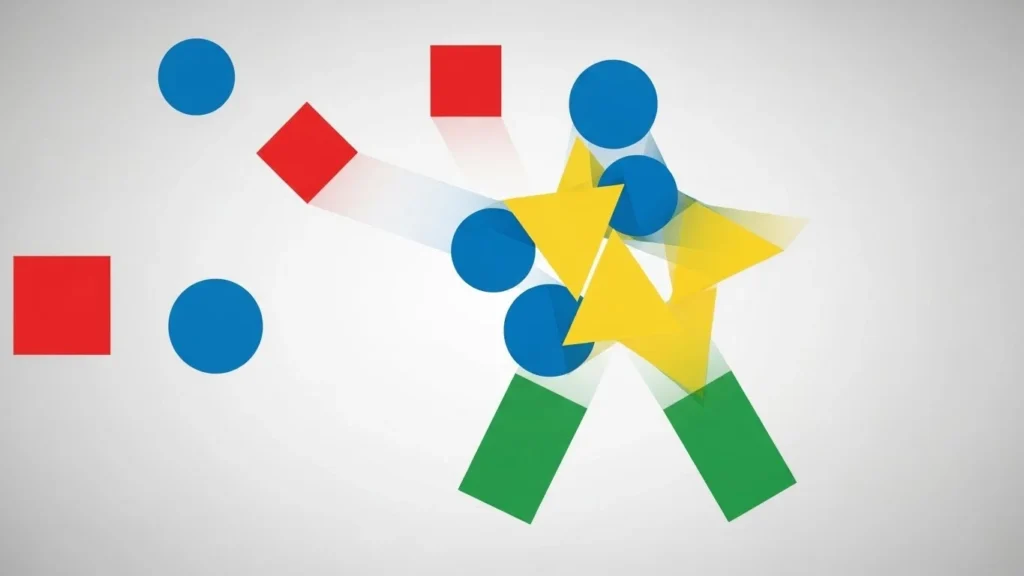
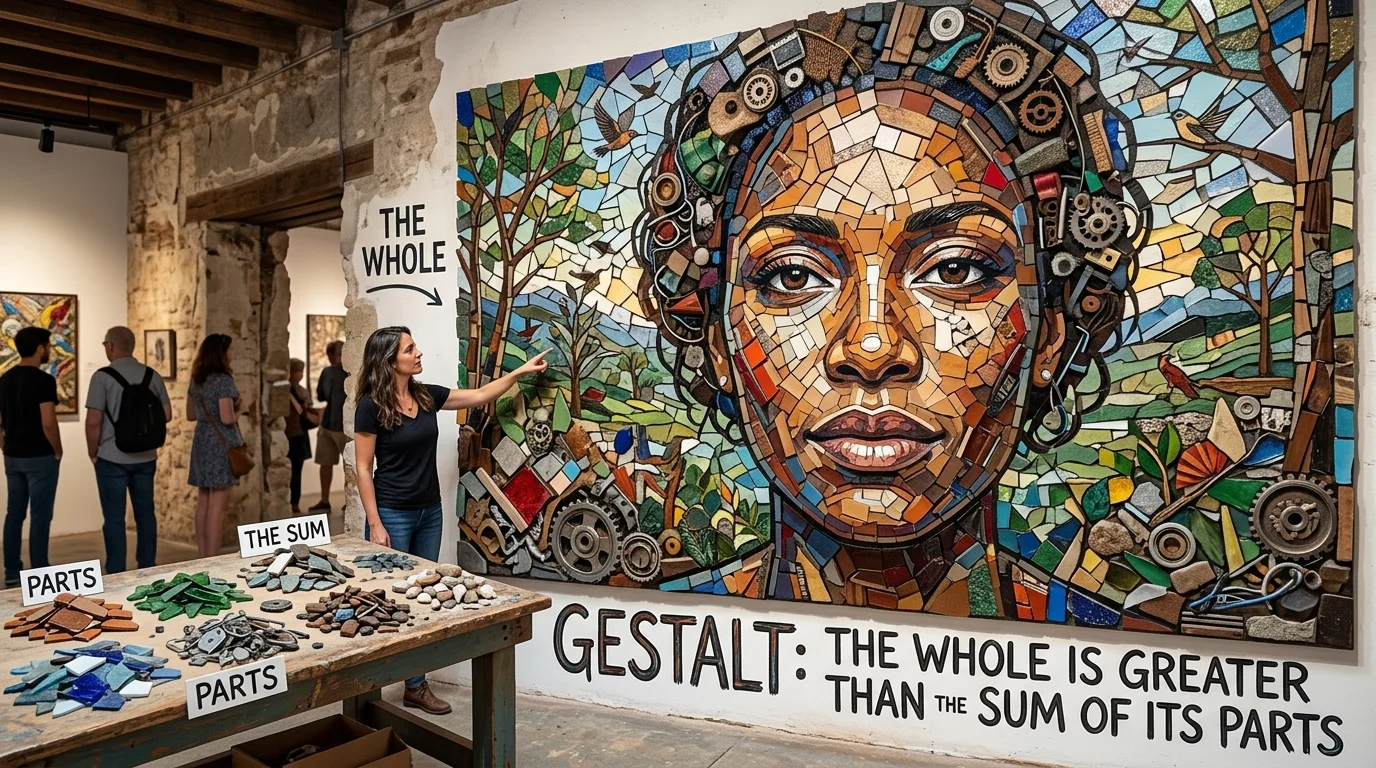
- Gestalt means the idea that the whole is greater than the sum of its parts
- In psychology, it explains how the brain organizes visual and sensory information
- We naturally perceive patterns instead of separate elements
- Example: we see a face, not just eyes, nose, and mouth separately
- Focuses on perception, structure, and pattern recognition
- Developed by Gestalt psychologists in early 20th century
- Important in cognitive psychology and visual perception
- Helps explain how humans understand complex images
- Used in design, learning, and problem-solving
- Key principle: “organized whole perception”
🇮🇷 Gestalt meaning in Farsi
- Gestalt = کلگرایی / ساختار کلی / ادراک کلی
- Meaning: درک یک چیز به صورت “کل” نه اجزای جدا
- Example: دیدن تصویر کامل به جای بخشهای جدا
- Used in psychology and philosophy
- مرتبط با نحوه ادراک ذهن انسان
- Common academic term in Persian psychology texts
- Emphasizes pattern and structure
- Important in cognitive science
- Used in therapy and learning theories
- Concept of “whole perception”
🇩🇪 Gestalt meaning German
- In German, Gestalt means form, shape, or structure
- Can refer to appearance or configuration of something
- Example: “die Gestalt eines Menschen” = a person’s figure/form
- Used in everyday and academic German
- In psychology, adopted to mean “organized whole”
- Common in philosophy and literature
- Original root of Gestalt psychology
- Can describe physical or abstract structure
- Neutral descriptive word in German
- Widely used in historical and modern contexts
📘 Gestalt meaning and example
- Gestalt means a unified whole that is perceived as more than its parts
- Example in psychology: we recognize a melody, not individual notes
- Example in life: a story makes sense as a whole, not separate sentences
- Example in vision: we see a square even if parts are missing
- Emphasizes pattern recognition
- Used in design and art theory
- Important in learning and memory
- Helps explain human perception
- Shows how the brain organizes information
- Core idea: “whole perception matters most”
✍️ Gestalt in a sentence
- The brain uses Gestalt principles to interpret visual information
- We perceive a face as a Gestalt rather than separate features
- Gestalt psychology explains how we see patterns
- The artwork creates a strong Gestalt effect
- Her understanding of the problem formed a clear Gestalt
- Designers apply Gestalt principles in layouts
- The image is understood as a unified Gestalt
- Human perception naturally follows Gestalt rules
- The melody is experienced as a Gestalt
- Gestalt theory influences modern psychology
🏥 Clinical gestalt meaning
- Clinical gestalt refers to a doctor’s overall intuitive judgment of a patient’s condition
- Based on experience, pattern recognition, and intuition
- Not only based on tests or data
- Used in emergency medicine and diagnosis
- Example: “The doctor’s gestalt suggested infection”
- Combines knowledge and instinct
- Important in fast decision-making
- Supports clinical reasoning
- Can be more efficient than waiting for results
- Used in medical practice worldwide
📖 Gestalt meaning philosophy
- In philosophy, Gestalt refers to wholeness and structured perception of reality
- Suggests that systems cannot be understood by parts alone
- Influences phenomenology and cognitive philosophy
- Focuses on experience and perception
- Emphasizes patterns and relationships
- Reality is seen as organized wholes
- Opposes purely reductionist thinking
- Used in aesthetics and epistemology
- Linked with early 20th-century German thinkers
- Important concept in modern philosophy of mind
🔗 Close Gestalt meaning
- “Close Gestalt” usually refers to closure in Gestalt psychology
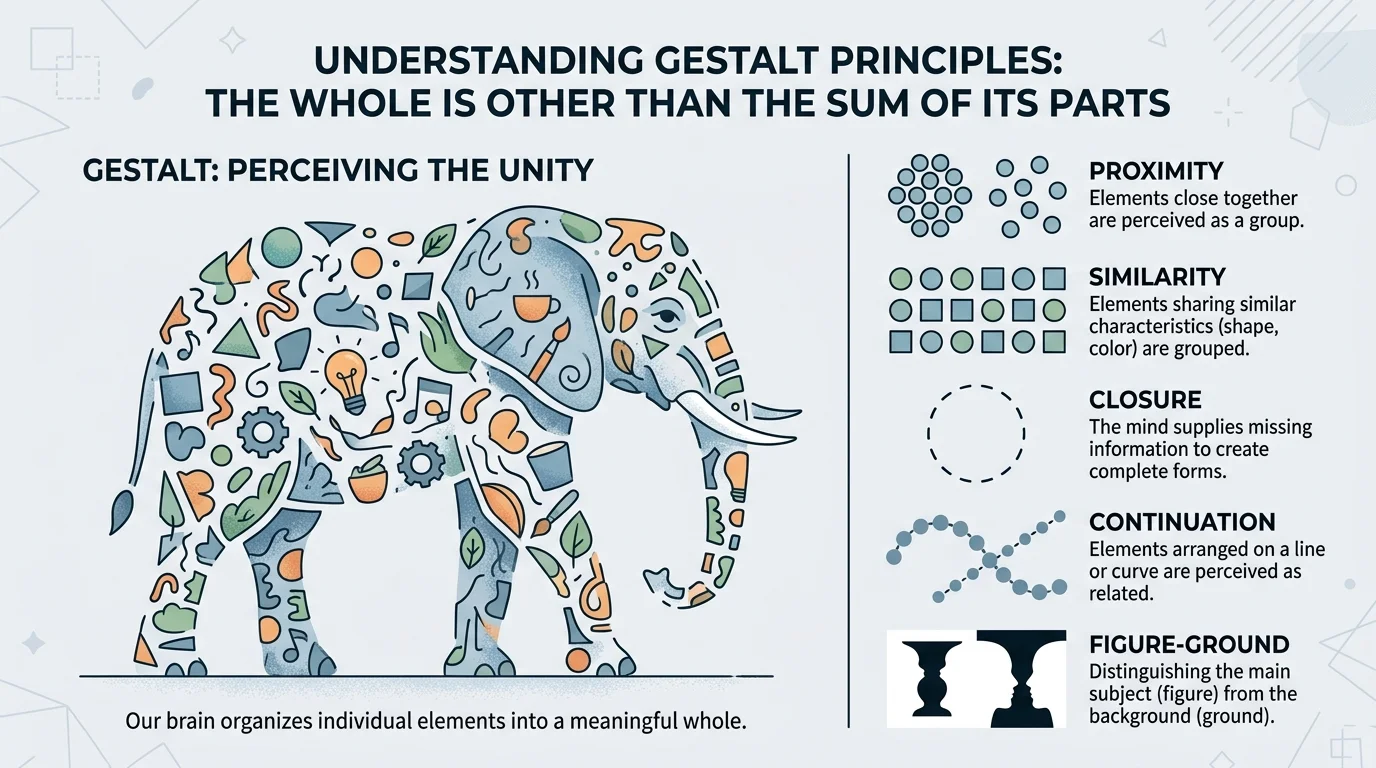
- The mind completes missing parts of a shape or pattern
- Example: seeing a circle even if it is broken
- Called the “principle of closure”
- Brain fills in gaps automatically
- Helps in visual recognition
- Important in design and logos
- Shows how perception works efficiently
- Used in art, psychology, and UX design
- Key Gestalt principle in human cognition
What Does Gestalt Mean?
Gestalt is a German word that roughly translates to “shape” or “form.”
In simple words:
Gestalt refers to the idea that the whole is greater than the sum of its parts.
It suggests that humans naturally perceive objects, experiences, or ideas as complete forms, not just a collection of individual pieces.
Example:
“When looking at a picture, you see a face as a whole, not just eyes, nose, and mouth separately.”
This is gestalt perception in action.
Gestalt in Psychology
Gestalt psychology emerged in the early 20th century and focuses on human perception and experience:
-
Key principle: The mind organizes information into patterns or wholes
-
Common laws of perception include similarity, proximity, closure, and continuity
-
Applications: Problem-solving, therapy, learning, and human behavior analysis
Gestalt therapy, a branch of psychology, emphasizes awareness, personal growth, and seeing the bigger picture in life.
Gestalt Meaning in Everyday Life
Gestalt is not only for psychology—it applies to:
-
Design and art: Creating visuals that are clear and organized
-
User experience (UX): Websites or apps arranged so users understand the whole interface
-
Education: Teaching concepts by showing the full picture instead of isolated details
-
Personal reflection: Understanding life as a series of connected experiences rather than isolated events
In short: gestalt is about seeing patterns and meaning as a whole.
Examples of Gestalt in Daily Situations
-
A music melody is heard as a complete song, not just separate notes
-
A puzzle is understood as a full image, not just individual pieces
-
A team working together is seen as a functioning group, not just individuals
These examples show how gestalt helps humans make sense of the world.
Common Misunderstandings
People often misunderstand gestalt because:
-
They think it only applies to psychology
-
They confuse it with general “shape” or “style”
-
They overlook its application in design, problem-solving, and daily perception
Important clarification:
Gestalt is about perceiving and understanding wholes, whether in minds, objects, or experiences.
Related Concepts
Concepts often linked to gestalt include:
-
Gestalt therapy
-
Perception psychology
-
Holistic thinking
-
Pattern recognition
-
Visual design principles
These areas all emphasize the importance of seeing the complete picture.