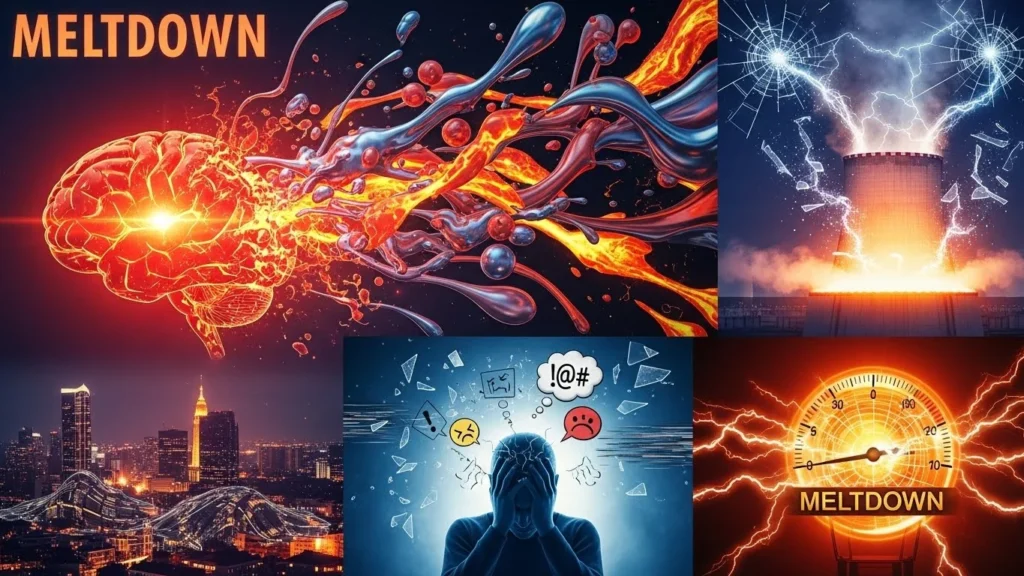
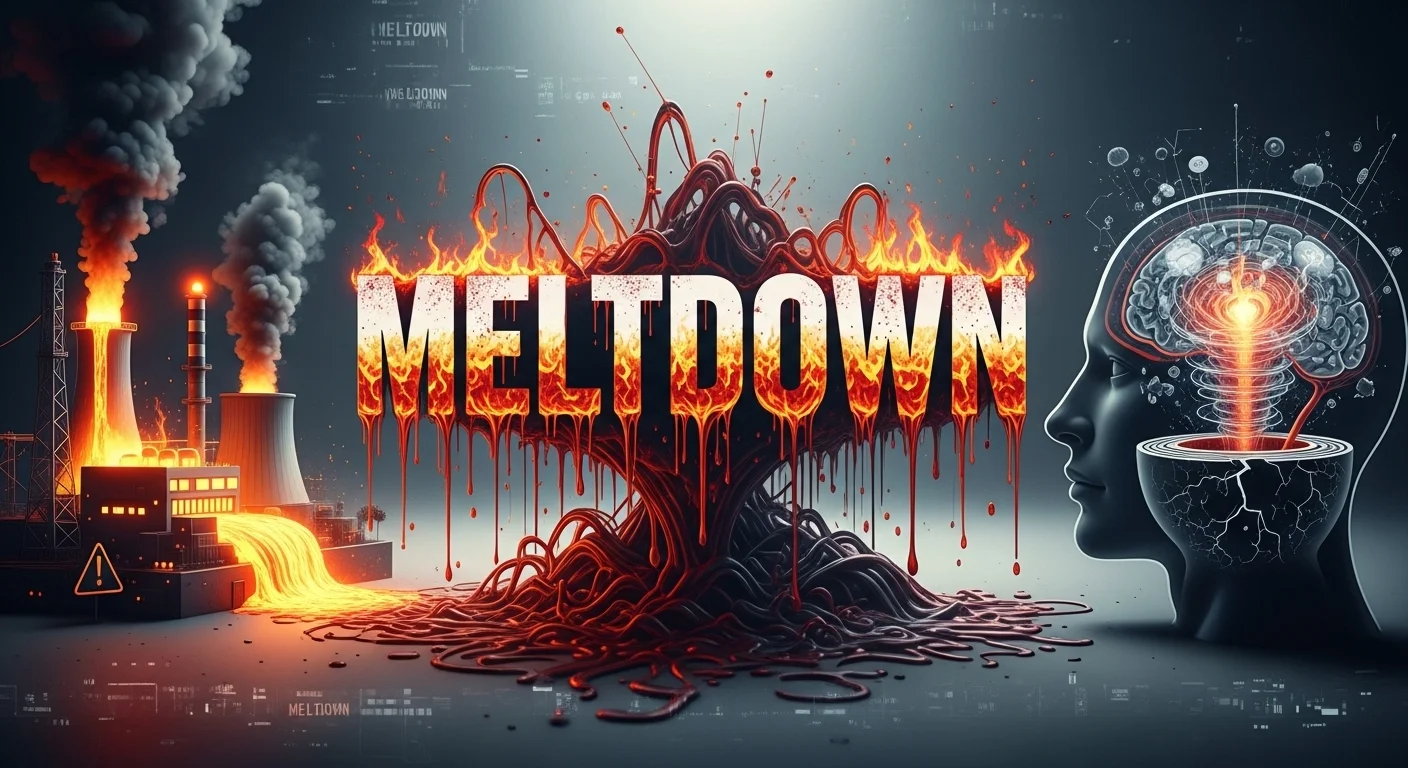
🧠 Emotional Meltdown Meaning
- An emotional meltdown is a moment when someone feels overwhelmed and loses control of their emotions
- Can include crying, anger, panic, or shutdown
- Often caused by stress, frustration, or overload
- Temporary but intense reaction
- Happens to both children and adults
- Example: “She had an emotional meltdown after too much pressure.”
- Not a sign of weakness—usually a response to overload
- Can be managed with rest, support, and calming techniques
- Common in high-stress situations
- Important to respond with patience and understanding
🧩 Meltdown Meaning Autism
- In autism, a meltdown is an intense response to sensory or emotional overload
- Not a tantrum—it is not done for attention
- Can include crying, shouting, or withdrawal
- Triggered by loud noise, change, or stress
- Person may lose control temporarily
- Requires a calm, safe environment
- Support should be gentle and non-judgmental
- Recovery may take time
- Common in individuals with Autism Spectrum Disorder
- Understanding triggers helps prevent meltdowns
🧠 Meltdown Meaning Psychology
- In psychology, a meltdown is a breakdown in emotional regulation
- Happens when stress exceeds coping ability
- Can involve crying, anger, or panic
- Linked to anxiety, stress, or trauma
- Temporary emotional overload
- Not a formal diagnosis, but a descriptive term
- Can happen in any age group
- Often followed by exhaustion
- Managed with coping strategies and support
- Important concept in emotional health
🔄 Meltdown Meaning Synonyms
- Breakdown
- Emotional outburst
- Collapse
- Crisis
- Overload
- Outburst
- Panic episode
- Emotional crash
- Distress
- Tantrum (context-specific)
😢 Meltdown Meaning Crying
- A meltdown involving crying is intense emotional release through tears
- Happens when feelings become overwhelming
- Can include sobbing, shaking, or silence
- Often caused by stress, sadness, or frustration
- Not always controllable
- Helps release emotional tension
- Common in both kids and adults
- May need comfort and reassurance
- Usually passes with time
- A natural emotional response
😎 Meltdown Meaning Slang
- In slang, “meltdown” means losing control emotionally or reacting dramatically
- Example: “He had a meltdown over a small problem.”
- Can be used humorously or seriously
- Refers to overreaction in some cases
- Common on social media
- May describe stress, anger, or panic
- Informal usage
- Not always used sensitively
- Meaning depends on context
- Popular modern expression
👶 Meltdown Meaning Baby
- A baby meltdown is intense crying due to unmet needs
- Causes: hunger, discomfort, tiredness, or overstimulation
- Babies cannot express feelings with words
- Crying is their main communication
- May include fussiness or screaming
- Needs quick attention and care
- Comforting helps calm the baby
- Very common in early development
- Not intentional behavior
- Requires patience and care
🧒 Meltdown Meaning Toddler
- A toddler meltdown is a strong emotional reaction due to frustration or overload
- Common in ages 1–4
- Can include crying, yelling, or throwing things
- Often triggered by tiredness or not getting what they want
- Part of normal development
- Toddlers are still learning emotional control
- Needs calm guidance and support
- Not always avoidable
- Helps children learn emotional regulation
- Requires patience and consistency
What Does “Meltdown” Meaning in Chat or Text?
In online and texting contexts, meltdown generally refers to an intense emotional outburst or loss of control.
In simple words:
A meltdown happens when someone loses their cool, gets very upset, or reacts emotionally in an extreme way.
Different Contexts of Meltdown
Emotional: When someone is overwhelmed by stress, anger, or frustration.
Example: “She had a meltdown after seeing the test results.”Humorous or sarcastic: Used to exaggerate minor reactions.
Example: “He had a total meltdown over losing the video game.”Technical/figurative: Can describe computers, apps, or systems failing.
Example: “My laptop had a meltdown and shut down during my presentation.”
Origin:
The word meltdown comes from the physical phenomenon in nuclear engineering, where a reactor core overheats. Over time, it was adapted into everyday language to describe any situation spinning out of control.
How People Use “Meltdown” in Real Conversations
Meltdown is versatile and appears across many platforms:
Texting: Friends might describe someone’s emotional state.
Example: “Don’t mind him, he’s having a meltdown after the game.”Instagram/TikTok: Used to caption videos of someone reacting dramatically or humorously.
Example: “Me when I see my phone battery at 1%… total meltdown.”Discord/Gaming: Players use it to describe rage or frustration during games.
Example: “He had a meltdown after dying for the third time in a row.”Dating apps/Forums: People sometimes mention meltdowns to describe past behavior humorously or as a warning.
When it’s appropriate:
Sharing relatable emotional experiences
Humorously exaggerating reactions
Discussing stress or overwhelming situations
When it’s awkward:
Labeling someone’s real serious emotional crisis casually
Using it in professional or formal chats
Real-Life Examples of “Meltdown” in Text Messages
Example 1:
Friend 1: “Why are you crying?”
Friend 2: “Just had a meltdown over work. Too much stress.”
Explanation: Describes a genuine emotional reaction.Example 2:
“He had a meltdown when his pizza got cold.”
Explanation: Used humorously to exaggerate a minor frustration.Example 3:
“My laptop had a meltdown in the middle of the presentation.”
Explanation: Figurative usage describing technical failure.Example 4:
“She’s having a meltdown because the Wi-Fi is slow.”
Explanation: Describes a small annoyance in an exaggerated way.Example 5:
“I’m about to meltdown if I see one more notification.”
Explanation: Expresses overwhelming stress in a humorous tone.
Common Mistakes & Misunderstandings
Confusing meltdown with tantrum: Tantrums are usually associated with children; meltdown can be adult or humorous.
Assuming all meltdowns are serious: Online, meltdown is often used jokingly or sarcastically.
Mixing meltdown with burnout: Burnout is long-term exhaustion, meltdown is sudden emotional overload.
Literal vs. figurative use: Meltdown can refer to computers or devices failing, not just emotions.
Related Slangs & Abbreviations
Words and slang terms similar to meltdown include:
Ragequit: Leaving a game in frustration (gaming context)
Freak out: Informal expression for losing control
Snap: Sudden loss of patience or calm
Flip out: Another way to describe intense emotional reaction
Triggered: Often used online to describe someone reacting strongly to a topic
Internal linking opportunities: Articles on ragequit meaning, flip out meaning, or triggered meaning provide readers additional context.