

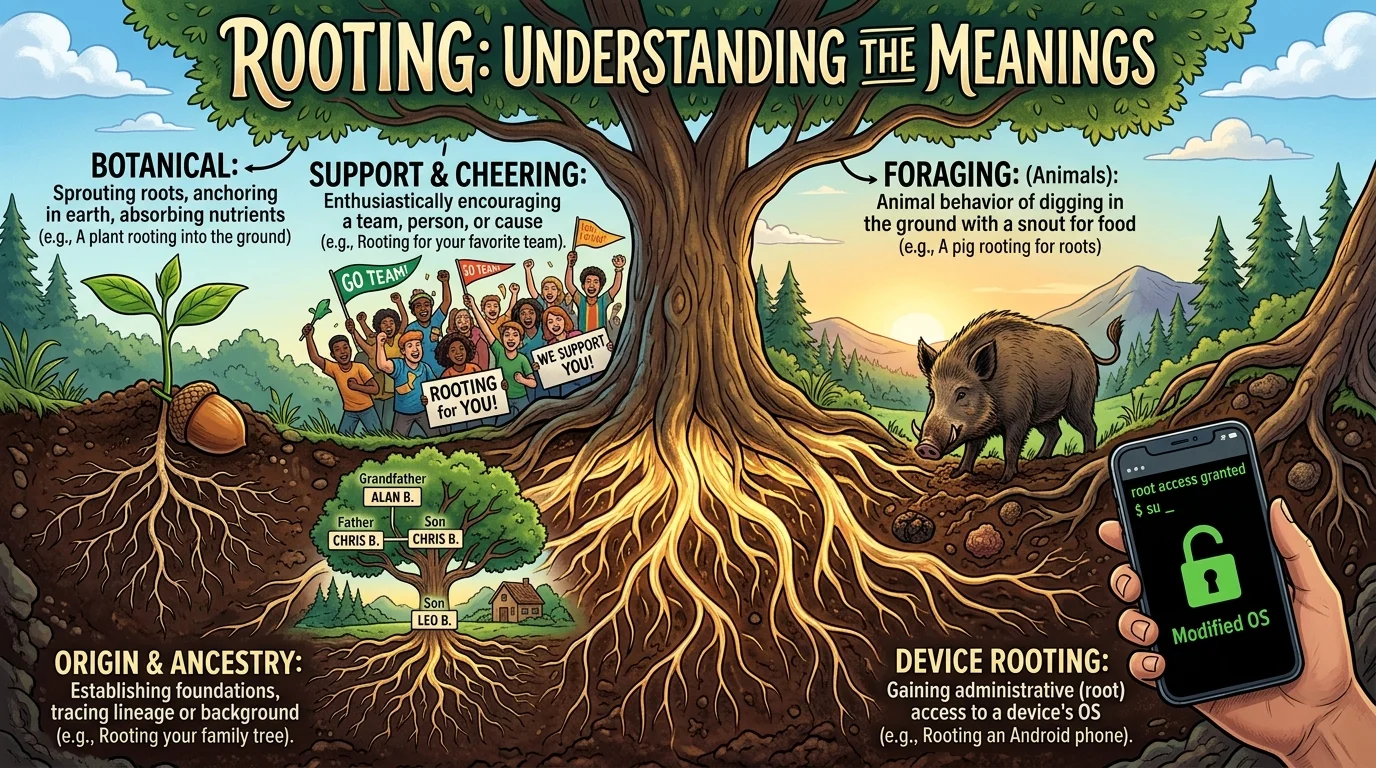
📣 Rooting for You Meaning
- “Rooting for you” means supporting you and hoping you succeed
- Example: “I’m rooting for you in your exams.”
- It expresses encouragement and positive wishes
- Common in American English
- Used in sports, exams, and life goals
- Friendly and supportive phrase
- Means cheering someone on emotionally
- Very positive expression
- Often used in casual conversation
- Shows belief in someone’s success
👏 Rooting for Someone
- To root for someone means to support or cheer for them
- Example: “Everyone is rooting for the team.”
- Used in competitions and challenges
- Shows emotional encouragement
- Common in sports culture
- Can be personal or professional
- Means hoping they win or succeed
- Friendly and motivational phrase
- Widely used in English
- Simple support expression
👶 Rooting Meaning for Baby
- In babies, rooting is a natural reflex
- When a baby turns its head toward touch near the mouth
- Helps baby find breast for feeding
- Called the rooting reflex
- Example: touching cheek makes baby turn toward it
- Important for newborn survival
- A biological instinct
- Common in pediatric science
- Happens automatically
- Normal part of development
📘 Rooting Meaning in English
- Rooting means supporting someone or cheering them on
- Also can mean digging or searching through something (like soil)
- Example: “I’m rooting for my friend.”
- Can also mean plant roots growing
- Common in everyday English
- Has multiple meanings depending on context
- Often used in encouragement
- Friendly and informal term
- Widely understood word
- Simple and flexible meaning
📣 Rooting Meaning (Cheering)
- In cheering context, rooting means supporting or encouraging someone loudly or emotionally
- Example: fans rooting for their team
- Common in sports events
- Means hoping for victory
- Shows excitement and support
- Used in competitions
- Emotional encouragement word
- Popular in American English
- Positive and energetic meaning
- Similar to “cheering for”
❤️ Rooting Meaning in Relationship
- In relationships, rooting for someone means supporting their happiness and success
- Example: “I’m always rooting for you.”
- Shows emotional care
- Can be romantic or friendly
- Means wishing good things for them
- Used in healthy relationships
- Positive emotional support
- Encouraging and loving expression
- Builds trust and connection
- Common in communication
💻 Rooting Meaning in Computer
- In computers, rooting means gaining full access (administrator control)
- Used in Linux systems
- “Root user” has highest permissions
- Allows system-level changes
- Used by developers and IT experts
- Important in cybersecurity
- Gives full control over system
- Can be powerful and risky
- Technical computing term
- Not related to emotional meaning
📱 Rooting Meaning in Phone
- In phones (especially Android), rooting means unlocking full system control
- Allows removing restrictions
- Gives access to hidden features
- Used for customization
- Done by advanced users
- Similar to admin access
- Can void warranty
- Increases control but risk too
- Common in tech community
- Technical modification process
What Does “Rooting” Meaning?
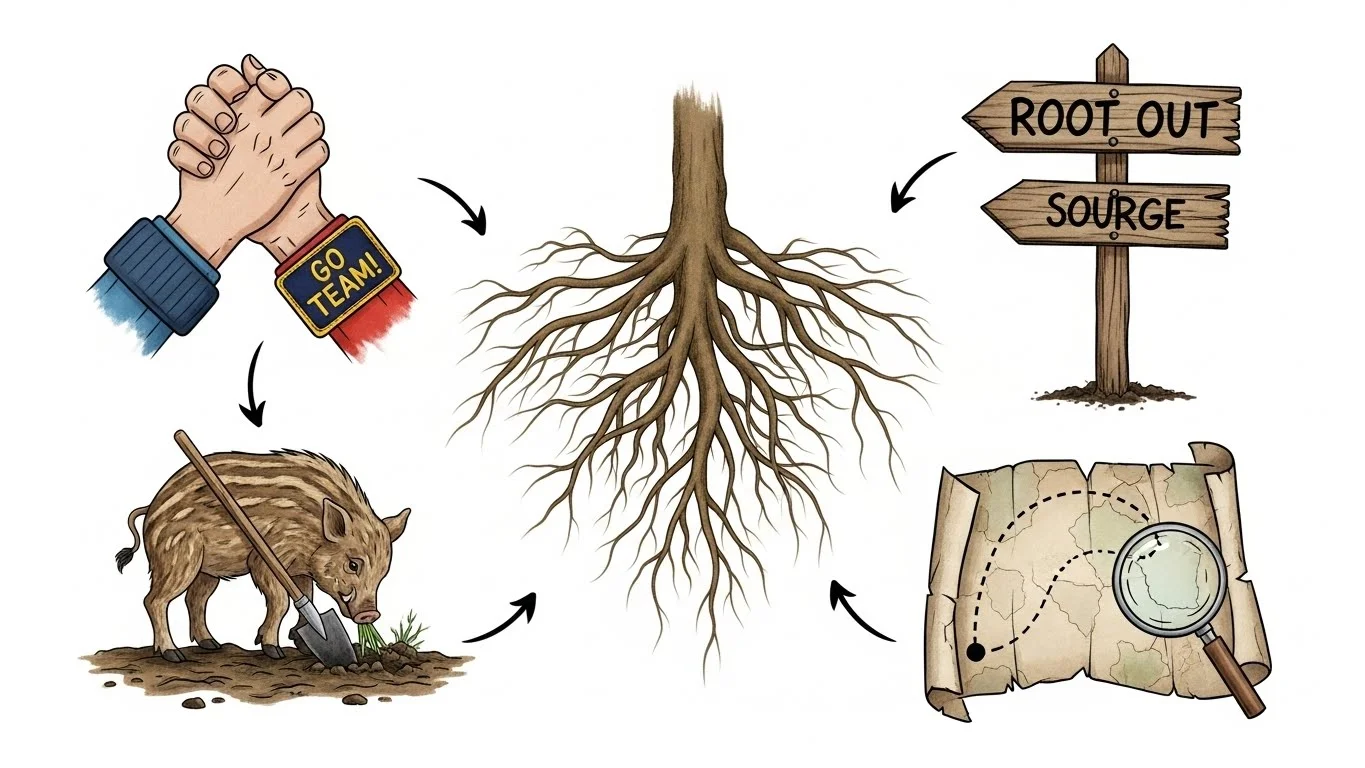
The word rooting has a literal and figurative meaning, and in slang, it can mean something different depending on the region.
Literal Meaning
Derived from “root”, as in plant roots
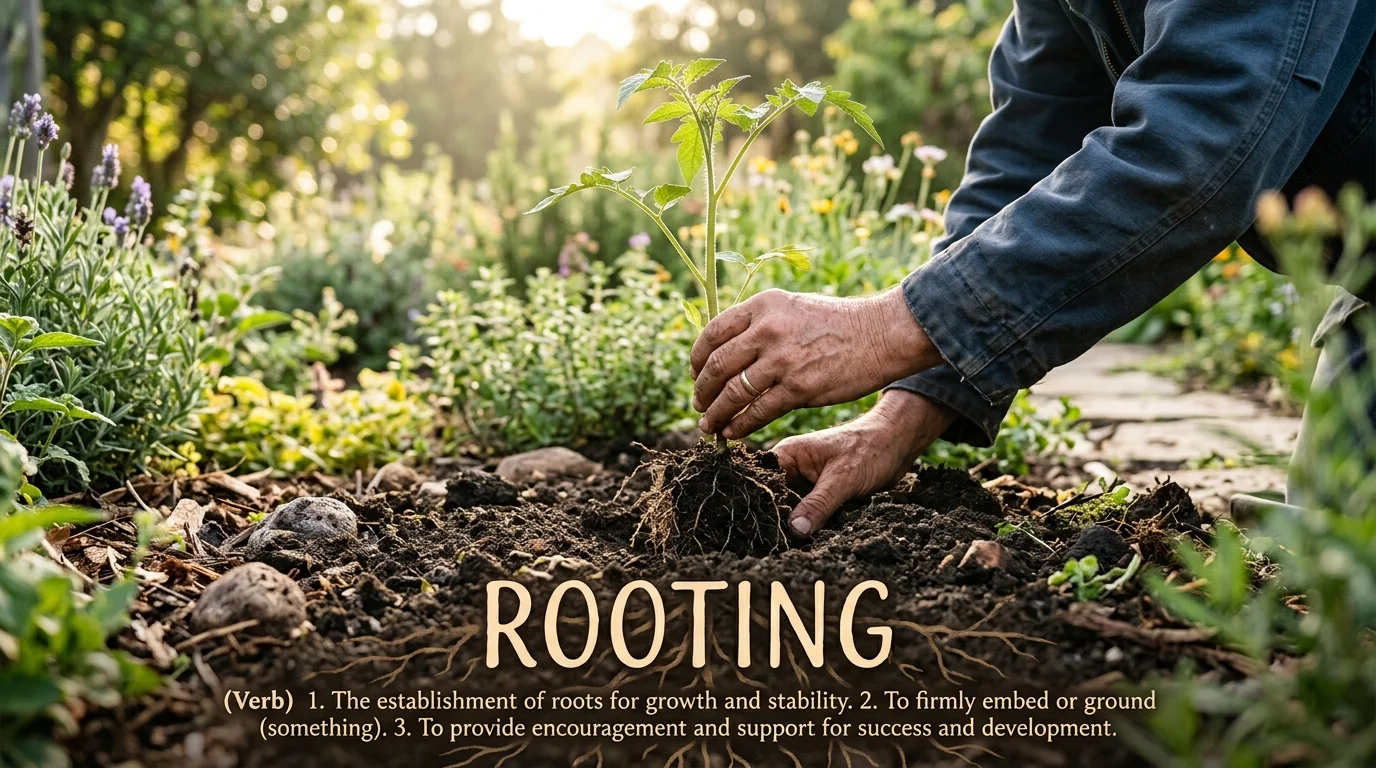
Refers to digging or supporting growth in gardening contexts
Example: “The gardener was rooting the plants carefully.”
Figurative / Common Meaning
To support or cheer for someone or something
Example: “I’m rooting for my favorite team in the finals.”
Slang or Regional Meaning
In some regions, especially Australia and New Zealand, “rooting” can be slang for sexual activity.
Context is crucial to understand which meaning is intended.
How People Use “Rooting” in Real Conversations
Rooting is versatile and appears in sports, casual chat, and slang.
Common Situations
Sports and competitions: Supporting a team or player
Personal encouragement: Cheering someone on in challenges
Casual conversation: Saying you hope something good happens
Examples by Platform
Text messages: “Rooting for you on your exam!”
Social media posts: “Rooting for the underdog team this season.”
Chats with friends: “We’re all rooting for you to win the contest.”
Slang Use
In Australia/New Zealand: “rooting” = sexual intercourse
Be careful with context to avoid misunderstandings
Real-Life Examples of “Rooting” in Use
Example 1
“I’m rooting for you in the competition.”
Explanation: Supporting someone to succeed.
Example 2
“Everyone was rooting for the local team at the match.”
Explanation: Cheering on a sports team.
Example 3
“She said she’s rooting for my project to succeed.”
Explanation: Expressing encouragement or hope.
Example 4 (Slang, Australia/NZ)
“They were talking about rooting last night.”
Explanation: Regional slang meaning sexual activity.
Example 5
“Rooting around in the attic, I found old photos.”
Explanation: Literal meaning: searching or digging through something.
Common Mistakes & Misunderstandings
Rooting can be misused if the context isn’t clear.
Common Errors
Assuming rooting always means support:
In some regions, it can mean sexual activity.Using it formally:
Rooting is mostly informal or conversational.Mixing up with “uprooting”:
Uprooting = removing completely; rooting = supporting or digging.Misunderstanding slang usage internationally:
Especially in Australia/New Zealand, clarify meaning before using.
Related Words and Concepts
Words connected to rooting include:
Cheering: Showing support
Backing: Supporting or standing behind someone
Uplifting: Encouraging or motivating
Encouraging: Giving hope or confidence
Digging: Literal action of rooting plants
Internal linking tip: Pair with articles like cheering meaning, encouraging meaning, or backing meaning slang.