

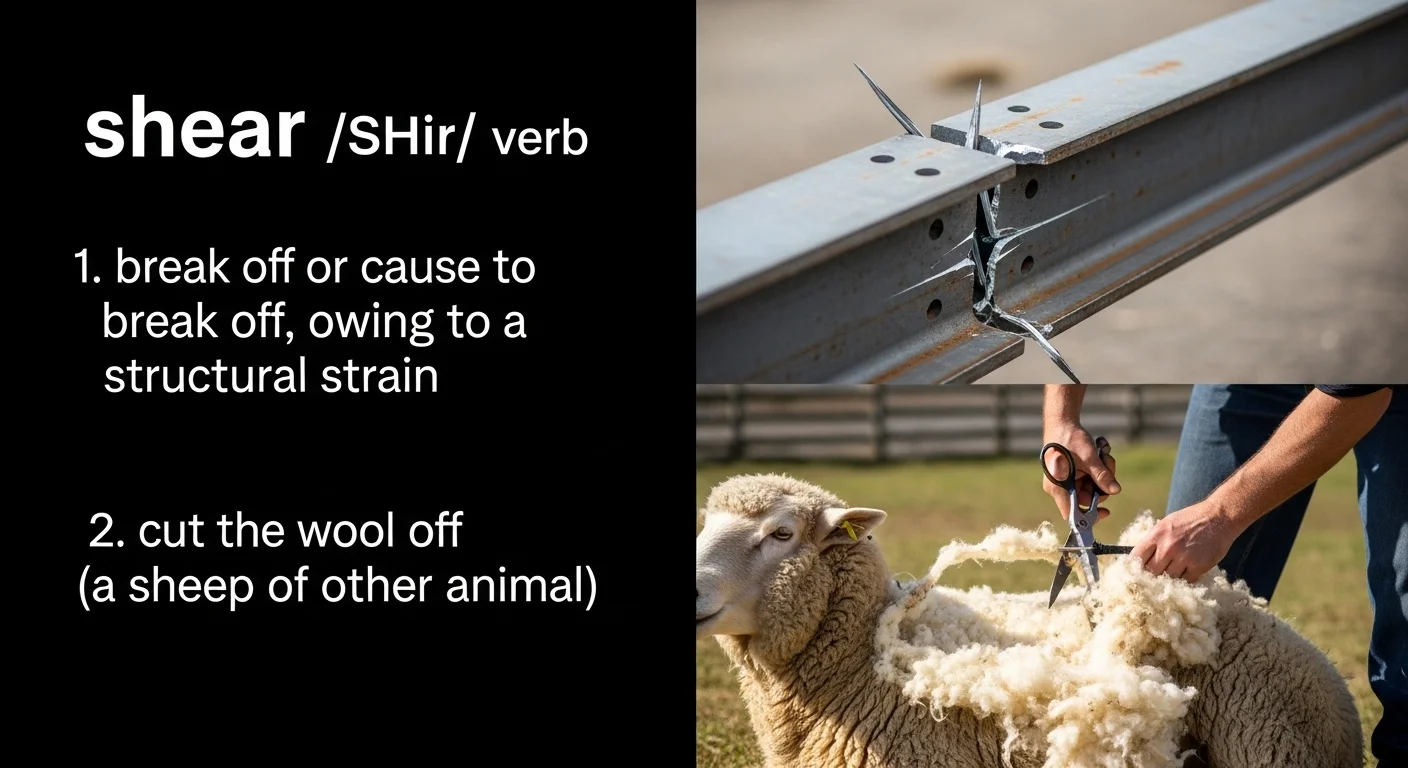
⚛️ Shear Meaning in Physics
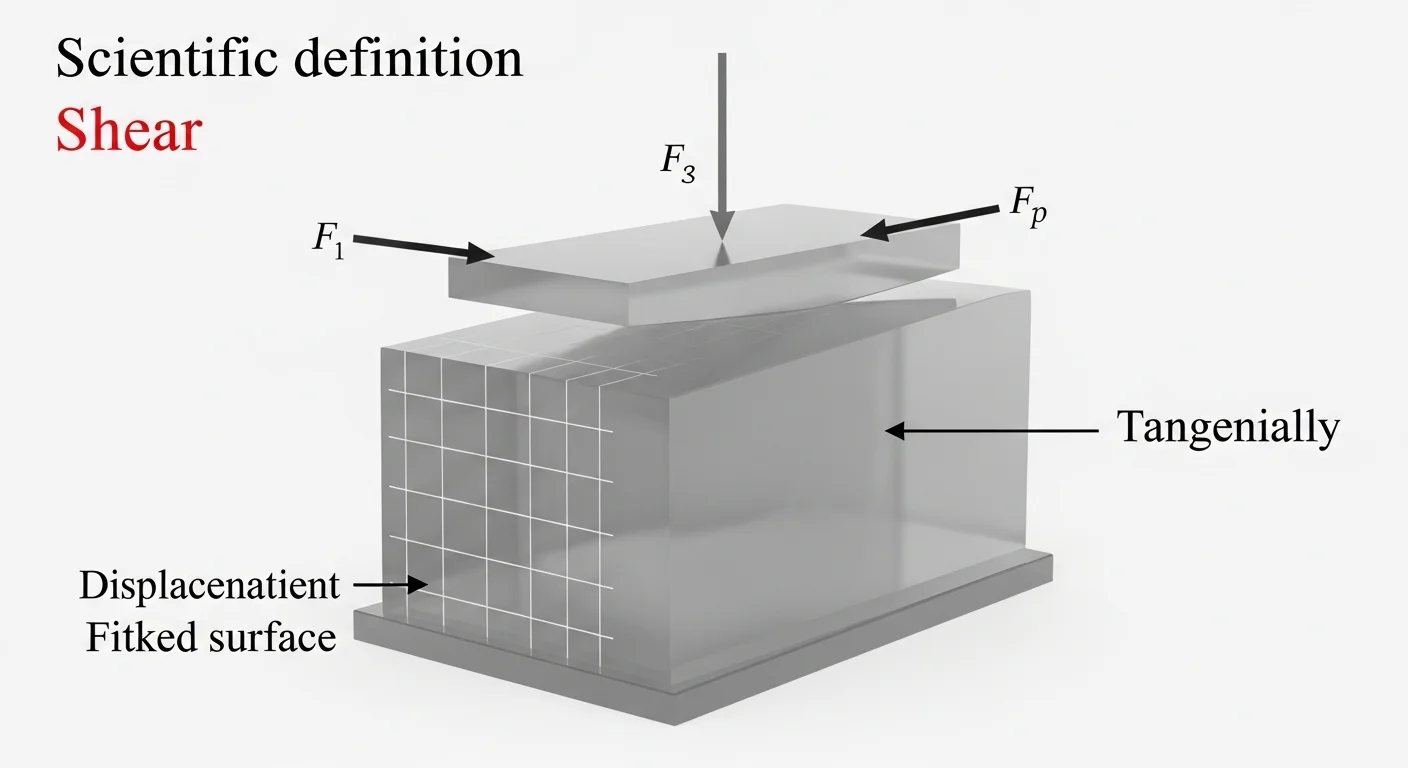
- In physics, shear refers to a force that causes layers of a material to slide past each other
- Acts parallel to a surface, not perpendicular
- Example: pushing the top of a deck of cards sideways
- Measured as shear stress
- Important in studying solids and fluids
- Explains deformation without changing volume
- Common in material science
- Used in experiments and calculations
- Helps understand structural behavior
- A key concept in mechanics
🏥 Shear Meaning in Medical
- In medical terms, shear refers to forces that cause skin layers to move in opposite directions
- Can lead to injuries like pressure sores
- Common in patients who stay in one position too long
- Happens when skin sticks but underlying tissue moves
- Important in nursing and patient care
- Prevented with proper positioning
- Related to friction and pressure
- Used in wound care discussions
- A health and safety concept
- Important in hospitals
🏗️ Shear Meaning in Engineering
- In engineering, shear means a force that causes parts of a structure to slide against each other
- Important in beams, bolts, and joints
- Engineers calculate shear stress for safety
- Helps design strong structures
- Example: cutting force in metal
- Used in civil and mechanical engineering
- Prevents structural failure
- Key in construction analysis
- A fundamental design factor
- Essential for safety calculations
📘 Shear Meaning in English
- “Shear” means to cut or trim (especially hair, wool, or material)
- Also means a force that causes sliding between layers
- Example: “Shear the sheep.”
- Can be a verb or noun
- Used in both everyday and technical language
- Common in farming and science
- Has multiple meanings depending on context
- Widely used English word
- Simple and practical term
- Easy to understand
👕 Shear Meaning in Clothing
- In clothing, shear means cutting or trimming fabric
- Used in tailoring and garment making
- Example: cutting cloth into shape
- Also related to “shearling” (processed wool)
- Important in fashion design
- Helps create proper fit
- Used in textile industry
- A practical clothing term
- Common in sewing and production
- Basic fashion vocabulary
➗ Shear Meaning in Maths
- In mathematics, shear refers to a geometric transformation
- Changes the shape of an object without changing its area
- Slants the shape in one direction
- Example: turning a rectangle into a parallelogram
- Used in coordinate geometry
- Represented using matrices
- Important in transformations
- Used in computer graphics
- Helps understand spatial changes
- A key math concept
🧪 Shear Meaning in Chemistry
- In chemistry, shear refers to forces affecting fluid flow and molecular movement
- Important in studying liquids and viscosity
- Example: mixing or stirring fluids
- Helps understand how substances behave
- Used in chemical engineering
- Affects reaction rates in some cases
- Important in industrial processes
- Linked to fluid dynamics
- Used in lab experiments
- A scientific concept
⚙️ Shear Meaning in Mechanics
- In mechanics, shear describes forces that cause deformation by sliding layers
- Closely related to shear stress and strain
- Important in analyzing materials
- Used in structural and machine design
- Helps predict failure points
- Common in mechanical systems
- Example: cutting force in tools
- Essential in engineering mechanics
- Helps ensure durability
- A core mechanical principle

What Shear Means in Simple Words
Shear can mean:
-
A force that causes sliding between layers in materials.
-
The act of cutting or trimming, especially hair or wool.
Example: “The metal experienced shear under extreme pressure,” or “The farmer will shear the sheep this weekend.”
Basic Definition of Shear
At its core, shear refers to:
-
Mechanical force causing layers to slide
-
Cutting or trimming in practical contexts
-
Stress or deformation in physics and engineering
Shear Meaning in Physics
In physics, shear describes:
-
A force applied parallel to a material surface
-
Causes deformation without changing volume
-
Common in studying stress and material strength
Example: “The bridge supports were tested to withstand shear forces during strong winds.”
Shear Meaning in Engineering
In engineering, shear is:
-
Used to calculate stresses in beams, plates, and structural elements
-
Important for safety and durability
-
Measured in units like pascals or psi
Example: “Engineers designed the beam to resist shear stress from heavy loads.”
Shear Meaning in Haircuts
In daily life, shear can also mean:
-
Cutting or trimming hair or wool
-
Tools used are called shears, like scissors for hair or sheep shearing
Example: “The stylist will shear a few inches off to refresh the haircut.”
Shear Meaning in Agriculture
Farmers use shear to:
-
Trim wool from sheep
-
Cut hedges or plants
-
Maintain crops and livestock
Example: “It’s springtime, so it’s time to shear the sheep for wool harvest.”
Common Misunderstandings About Shear
-
Some think shear only applies to cutting – it also refers to forces in physics and engineering
-
Others confuse shear with tension – shear acts parallel, while tension acts perpendicular to a surface
Shear Meaning in Materials
Materials experience shear when:
-
Layers slide past each other
-
Stress or pressure exceeds material strength
-
It can lead to failure or deformation
Shear Meaning in Weather
In meteorology, shear refers to wind shear:
-
Change in wind speed or direction over a short distance
-
Important for predicting storms, tornadoes, and flight safety
Example: “The pilot adjusted the flight path due to high wind shear.”
Shear Meaning in Mechanics
Mechanical shear is crucial in:
-
Machine design
-
Construction materials
-
Safety testing
It ensures components withstand sliding forces efficiently.
Shear Meaning in Daily Life
Everyday examples include:
-
Cutting paper with scissors (shear force applied)
-
Haircuts or trimming plants
-
Sliding doors or mechanisms under stress
Shear Meaning in Symbolism
Shear can symbolically mean:
-
Cutting away excess or unnecessary parts
-
Transformation or refinement
-
Breaking old patterns to improve structure
How to Recognize Shear in Practice
-
Force context: Material layers sliding
-
Cutting context: Trimming or slicing
-
Weather context: Rapid change in wind speed or direction
Benefits of Understanding Shear
-
Enhances engineering safety
-
Helps in construction and material design
-
Improves haircutting and trimming skills
-
Assists in meteorological predictions
How to Use Shear Correctly in Sentences
Examples:
-
“The beam broke under excessive shear.”
-
“She used the shears to shear the bushes in the garden.”
-
“Pilots must be cautious of wind shear during takeoff.”