
👕 My Dryer Doesn’t Have Tumble Dry Low
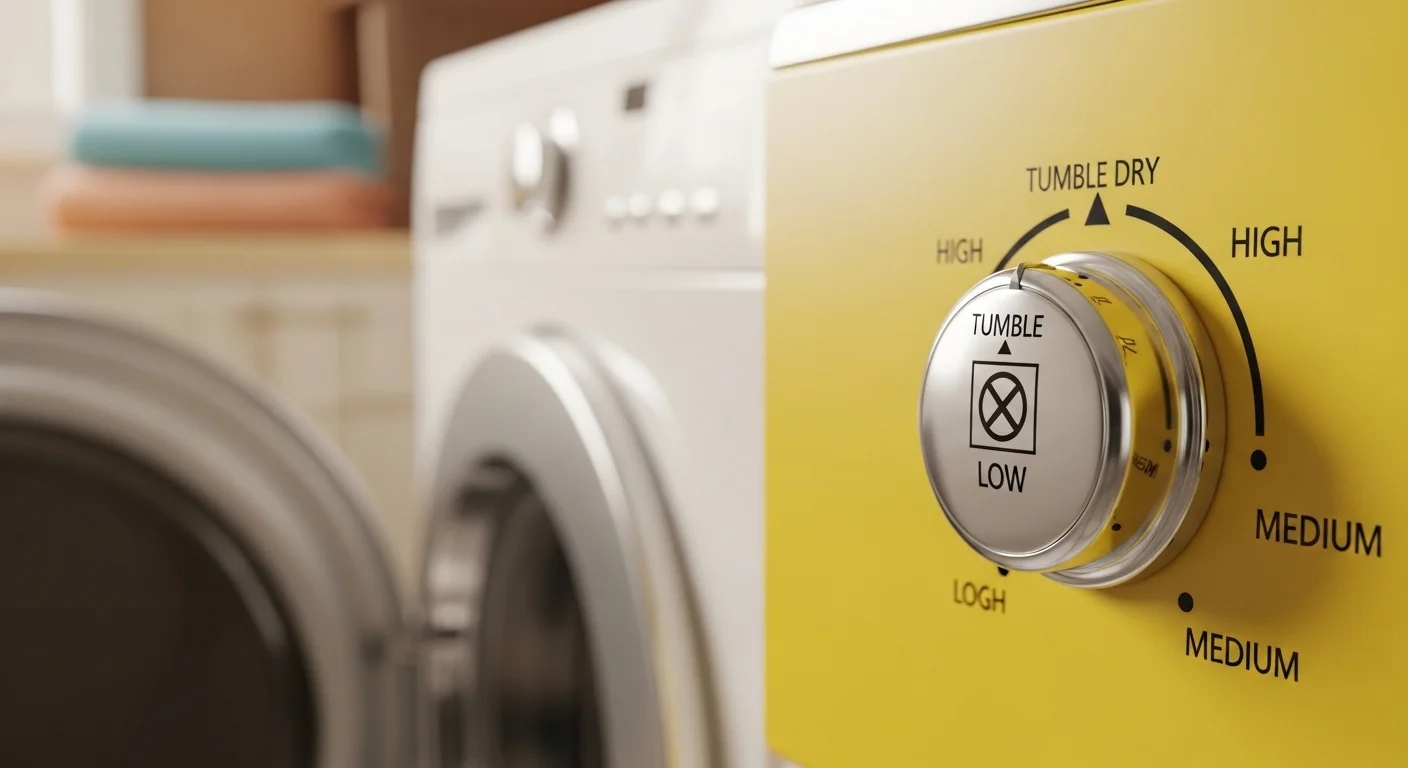
- If your dryer doesn’t have “Tumble Dry Low”, it likely has medium or high heat settings
- You can simulate low heat by selecting the “delicate” or “gentle” cycle
- Use air dry or no heat if the fabric is delicate
- Check your garment care label before drying
- Using higher heat than recommended may shrink or damage clothing
- Some dryers only label settings as numbers; refer to your manual for low heat equivalent
- Fabrics like wool, silk, or polyester may need alternative drying methods
- Low heat reduces wear and tear on clothes
- Can use a dryer rack for delicate items
- Always avoid high heat on sensitive fabrics
❌ Do Not Tumble Dry Low Meaning
- “Do not tumble dry low” means the garment should not be dried in a dryer at low heat
- Indicates that any heat in the dryer may damage the fabric
- Often appears on delicate fabrics like silk, lace, or embellished clothing
- Alternative drying methods: air dry, flat dry, or hang to dry
- Helps prevent shrinking, warping, or fading
- Important to follow care label instructions to maintain garment quality
- Can also protect elastic, prints, or coatings
- Avoid guessing – low heat is still heat
- Safe drying preserves longevity of clothing
- Common in premium or delicate fabrics
🌡️ Tumble Dry Low vs Delicate
- Tumble Dry Low: Uses low heat to dry clothes gently
- Delicate: Often uses low heat with slower spin or shorter cycle
- Both are gentle but delicate prioritizes minimizing mechanical stress
- Low heat reduces temperature damage, delicate reduces fabric agitation
- Use delicate for silk, lace, or loosely knit fabrics
- Tumble dry low is usually safe for cotton blends or synthetics
- Delicate may also involve shorter drying time
- Low heat is about temperature; delicate is about cycle intensity
- Check garment labels for specific instructions
- Both methods extend clothing lifespan
🌡️ Tumble Dry Low Meaning Celsius
- Tumble dry low usually corresponds to 30–40°C (86–104°F)
- Low heat avoids shrinking or damaging delicate fabrics
- Medium heat is usually 50–60°C
- High heat exceeds 70°C and can damage some clothing
- Celsius temperatures are helpful for international users
- Always check your dryer manual for exact temperature range
- Lower temperatures are safer for synthetics and blends
- Natural fibers like cotton may tolerate low heat
- Polyester, silk, and elastic benefit from 30°C settings
- Low heat = gentle drying
📱 Tumble Dry Low Meaning Samsung
- On Samsung dryers, Tumble Dry Low refers to a gentle drying cycle at low heat
- Designed to protect delicate clothing
- Helps prevent shrinking, fading, and damage
- Often paired with “delicate” or “synthetic” cycles
- Can be used for cotton, blends, or lightly soiled garments
- Samsung dryers may show temperatures digitally (30–40°C)
- Ensures safety for delicate fabrics
- Reduces energy usage compared to high heat
- Commonly recommended in the user manual
- Keeps garments looking new longer
🧺 Tumble Dry Low Meaning Washing Machine
- In washing machine contexts, tumble dry low is often printed on garment labels, not the machine itself
- Means dry on low heat after washing
- Washing machine cycles (spin speed) may complement gentle drying
- Avoid high heat in dryer after washing delicate fabrics
- Helps maintain garment size, color, and elasticity
- Some washers have integrated dryer functions with low heat options
- Low heat tumble dry is compatible with machine-dryable fabrics
- Used to prevent shrinkage or stretching
- Follow care instructions for safety
- Important for synthetic and blended fabrics
💨 Tumble Dry Low vs Air Dry
- Tumble Dry Low: Uses gentle heat and air circulation
- Air Dry: Uses no heat, just natural air
- Air dry is safest for delicate fabrics (silk, wool, embellished items)
- Tumble dry low is faster but still gentle
- Air dry prevents shrinkage completely
- Tumble dry low can be convenient for busy schedules
- Both methods reduce fabric wear compared to high heat
- Air dry may take longer but is safest for delicate or sensitive fabrics
- Consider using a drying rack for air dry
- Choose method based on fabric type and care instructions
❓ What Does Tumble Dry Mean
- Tumble dry means drying clothes in a dryer with rotating drum action
- Can be done on low, medium, or high heat depending on the setting
- Rotates clothes to allow even drying
- Can include gentle, delicate, or timed cycles
- Reduces wrinkles compared to air drying
- Heat may be applied to speed up drying
- Check garment label for safe tumble drying
- Used for cotton, synthetics, blends, and some delicates
- Avoid high heat for shrink-prone fabrics
- Essential laundry term for machine drying
What Does Tumble Dry Low Meaning?
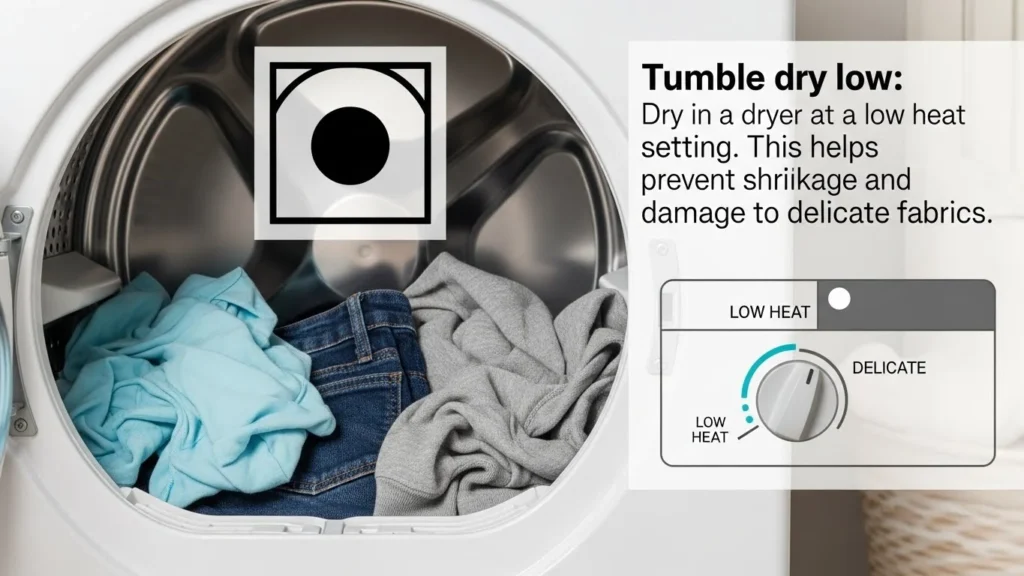
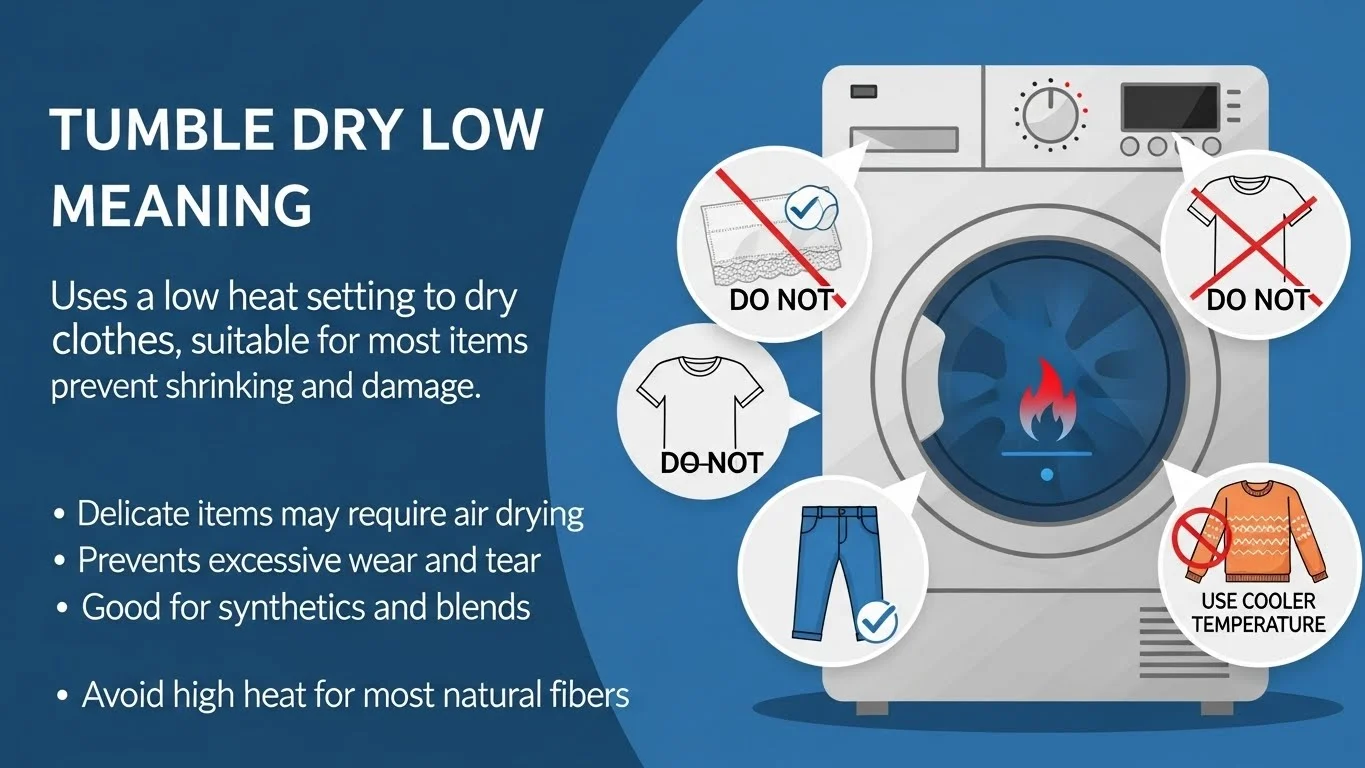
Tumble dry low means you should dry the clothing in a dryer using low heat.
The dryer tumbles the clothes while blowing warm air, but at a gentle temperature to protect the fabric.
In short:
Tumble = rotating in a dryer
Dry low = low heat setting
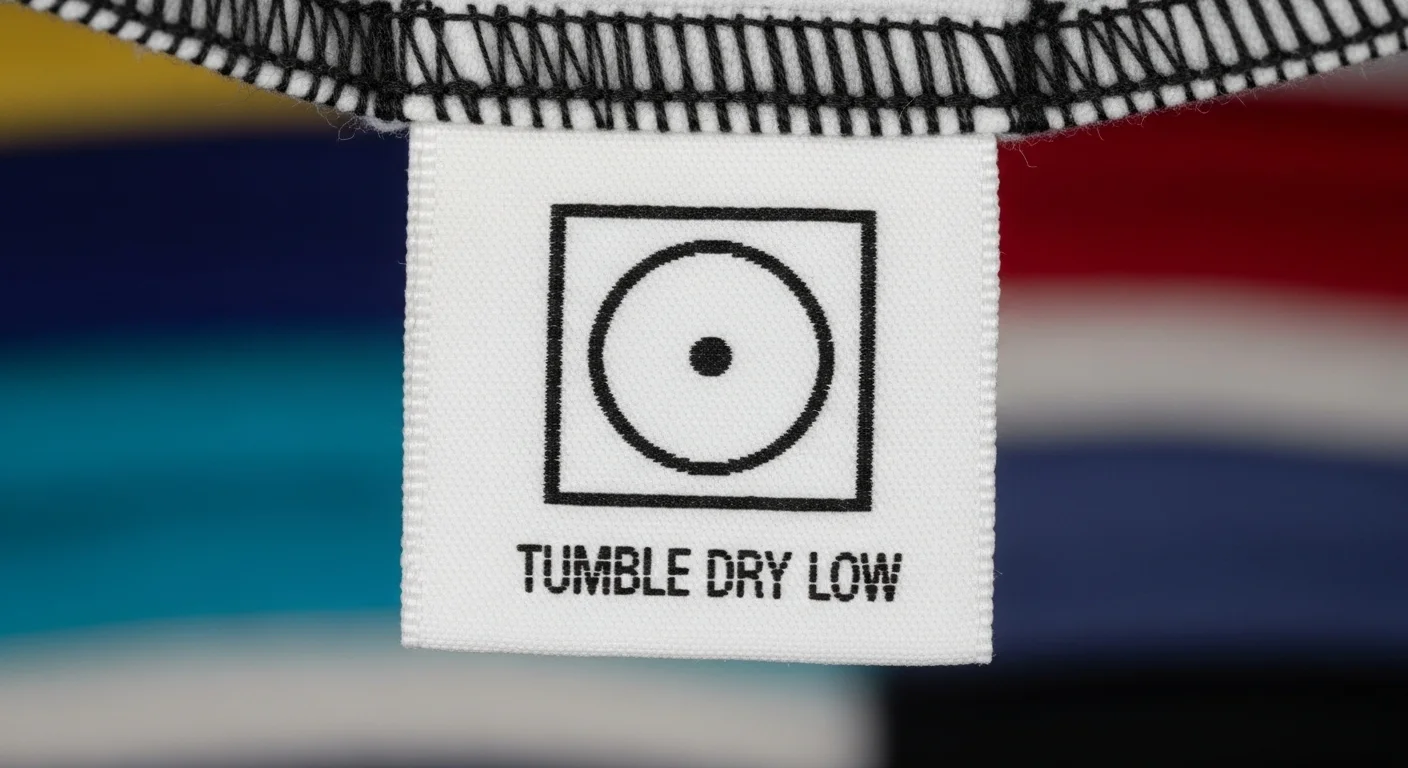
Tumble Dry Low Meaning on Clothing Labels
When manufacturers print tumble dry low on a label, they are warning you that high heat can damage the fabric.
This instruction helps prevent:
Shrinking
Fabric weakening
Color fading
Texture damage
Following the label keeps your clothes looking new longer.
What Temperature Is “Low” in Tumble Dry?
Low heat usually means:
Around 120°F to 125°F (49°C to 52°C)
This temperature is much gentler than medium or high heat and is safer for delicate or blended fabrics.
How Tumble Dry Low Is Different From Other Settings
Understanding the difference helps avoid mistakes.
Tumble dry low: Gentle heat, safest option
Tumble dry medium: Moderate heat, everyday fabrics
Tumble dry high: Strong heat, heavy items like towels
Low heat is always the safest choice when you’re unsure.
Why Some Clothes Require Tumble Dry Low
Certain fabrics are sensitive to heat.
These include:
Cotton blends
Polyester
Spandex
Rayon
Delicate knits
High heat can cause these materials to lose shape or elasticity.
What Happens If You Don’t Tumble Dry Low?
Ignoring the instruction can lead to:
Clothes shrinking
Fabric becoming stiff
Prints or logos cracking
Elastic wearing out faster
Once heat damage happens, it usually can’t be fixed.
Tumble Dry Low vs Air Dry
Both are gentle options, but they’re not the same.
Tumble dry low: Faster, controlled drying
Air dry: No heat, takes longer
If a label allows tumble dry low, it means air drying is not required, just optional.
When You Should Always Use Tumble Dry Low
Use low heat if:
The fabric feels thin or stretchy
The item has prints or designs
You’re drying activewear or undergarments
You’re unsure about the material
Low heat reduces risk.
Tumble Dry Low for Everyday Clothing
Common items that often need low heat:
T-shirts
Leggings
Workout clothes
Pajamas
Undergarments
Even casual clothes last longer with low heat.
Is Tumble Dry Low Safe for Jeans?
Yes, but with caution.
Low heat:
Reduces shrinkage
Helps maintain color
Protects stitching
Turning jeans inside out adds extra protection.
Tumble Dry Low Meaning for Delicate Fabrics
For delicate fabrics, tumble dry low is often the highest safe option.
Examples:
Lingerie (inside a mesh bag)
Lightweight sweaters
Synthetic blends
Never use high heat on delicate materials.
Can You Tumble Dry Low Instead of Medium?
Yes. Low heat is always safer.
Drying on low:
Takes a bit longer
Reduces wear and tear
Preserves fabric quality
There’s no harm in choosing low over medium.
Tumble Dry Low Symbols Explained
On care labels, tumble dry low is often shown as:
A square with a circle inside
One dot inside the circle
One dot always means low heat.
Common Mistakes People Make
Using high heat to save time
Ignoring clothing labels
Mixing heavy and light fabrics together
Overloading the dryer
These mistakes increase fabric damage.
How Long Does Tumble Dry Low Take?
Drying on low heat usually takes:
10–20 minutes longer than high heat
The extra time helps protect your clothes.
Is Tumble Dry Low Energy Efficient?
Yes. Although it takes longer, low heat:
Uses less intense energy
Reduces fabric replacement costs
Saves money over time
It’s better for clothes and your wallet.
Tumble Dry Low in Modern Washing Machines
Most modern dryers clearly label:
Low
Medium
High
Delicate
Some machines may call it “gentle” or “low temp.”
Why Clothing Brands Recommend Tumble Dry Low
Brands test fabrics before labeling.
They recommend tumble dry low to:
Extend garment lifespan
Maintain fit and comfort
Reduce customer complaints
It’s about fabric care, not inconvenience.
When Not to Tumble Dry Low
Do not tumble dry at all if the label says:
Do not tumble dry
Lay flat to dry
Dry clean only
Always follow the most restrictive instruction.