
What Frequency Means in Simple Words
Frequency refers to how often an event occurs over a certain period of time. For example, if you drink water eight times a day, the frequency of drinking water is eight per day. It’s all about repetition and regularity.
Basic Definition of Frequency
At its core, frequency measures the number of repetitions over time. It answers questions like:
How often does it happen?
How many times does it repeat?
This concept applies in science, daily routines, and modern life.
Frequency Meaning in Daily Life
In everyday life, frequency describes habits, routines, and repeated actions. Examples include:
Frequency of checking your phone
Frequency of cooking meals at home
Frequency of attending meetings
It helps people understand consistency and manage their time effectively.
Frequency Meaning in Science
In science, frequency refers to the number of times a repeating event occurs per unit of time. Scientists use it to measure cycles, vibrations, or patterns in physics, biology, and chemistry.
Frequency Meaning in Physics
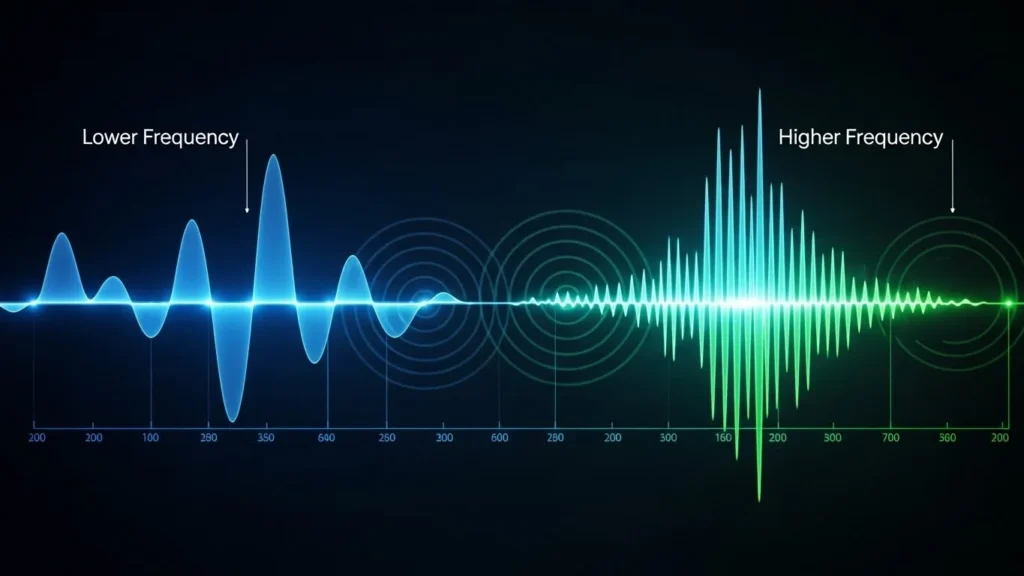
In physics, frequency often measures wave cycles per second, expressed in hertz (Hz).
High frequency = faster vibration, more energy
Low frequency = slower vibration, less energy
Frequency is essential for understanding sound waves, light waves, and electrical signals.
Frequency Meaning in Sound and Music
Frequency determines the pitch of a sound:
High frequency = high-pitched sound
Low frequency = low-pitched sound
For example, a whistle produces a higher frequency than a drum.
Frequency Meaning in Technology
In technology, frequency measures speed, performance, or signal repetition. Examples include:
CPU frequency in computers
Wi-Fi signal frequency
Radio frequency in broadcasting
Higher frequency often means faster processing or quicker signal transmission.
Frequency Meaning in Communication
In communication, frequency refers to how often messages are sent or received. Examples:
Email frequency
Posting frequency on social media
Call frequency with friends or colleagues
Managing frequency ensures effective communication without overwhelming others.
Frequency Meaning in Statistics
In statistics, frequency shows how often a particular value appears in a dataset. For example, if the number 5 appears ten times, its frequency is ten. This helps analyze patterns and trends.
Frequency Meaning in Health and Fitness
In health and fitness, frequency describes how often an activity is performed. Examples include:
Exercise frequency
Sleep cycle frequency
Meal frequency
Tracking frequency helps optimize routines and maintain a healthy lifestyle.
Frequency Meaning in Habits and Behavior
Frequency helps understand personal habits and behavior. Examples:
Frequency of studying
Frequency of procrastination
Frequency of screen time
Awareness of frequency can help improve productivity and daily routines.
Frequency Meaning in Business and Marketing
Businesses use frequency to measure repeated actions or interactions:
Customer purchase frequency
Ad exposure frequency
Content posting frequency
Monitoring frequency helps optimize strategies and engagement.
Frequency Meaning in Social Media
On social platforms, frequency measures how often content is posted or engaged with.
Posting too frequently may overwhelm followers
Posting too rarely may reduce visibility
Balancing frequency ensures better audience engagement.
Frequency Meaning in Modern Usage
In modern contexts, frequency often means regularity or consistency.
“I reduced the frequency of notifications.”
“Increase the frequency of updates.”
It’s a practical way to describe repeated actions in daily life.
Frequency Meaning in Casual Speech
Even in informal conversation, frequency describes how often something occurs:
“The frequency of errors is high.”
“This issue happens frequently.”
It adds clarity to discussions without sounding technical.
Common Misunderstandings About Frequency
Many confuse frequency with duration:
Frequency = how often something happens
Duration = how long something lasts
Example: Exercising one hour three times a week
Duration = 1 hour
Frequency = 3 times per week
Frequency vs Rate: Are They the Same?
Frequency and rate are related but not identical:
Frequency focuses on repetition
Rate focuses on speed or change over time
Technically, they differ, though they are sometimes used interchangeably in casual speech.
Why Frequency Is Important
Understanding frequency helps you:
Track habits and routines
Analyze patterns and trends
Measure performance
Communicate clearly in daily life and work
Frequency is a simple yet powerful concept for organizing repeated events.
How to Use Frequency Correctly in Sentences
Examples:
“The frequency of meetings has increased.”
“Low frequency sounds travel farther.”
“He reduced the frequency of social media use.”
It works in both formal and informal contexts.