
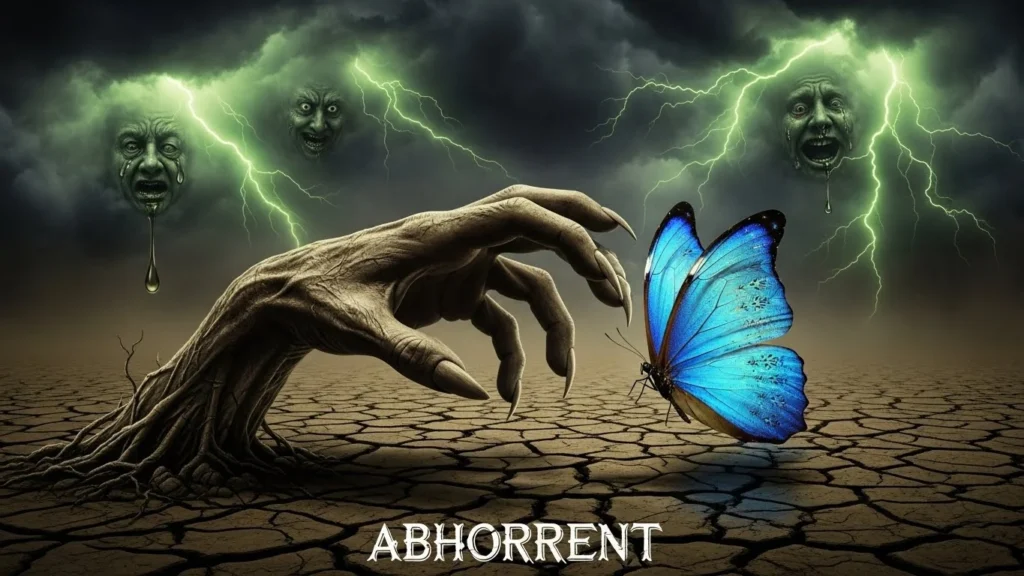

What Does “Abhorrent” Mean in Chat or Text?
Abhorrent is an adjective used to describe something that is extremely unpleasant, repulsive, or morally wrong.
General meaning: Inspiring disgust or hatred.
Example: “Lying to your friends is abhorrent behavior.”
In formal writing: Often used to describe ideas, actions, or beliefs that are offensive.
Example: “Discrimination in any form is abhorrent.”
Origin & History
The word abhorrent comes from the Latin “abhorrēns”, meaning “shuddering away from” or “detesting.” Over centuries, it has evolved to describe anything that people strongly dislike or find morally repulsive.
How People Use “Abhorrent” in Real Conversations
Even though it sounds formal, abhorrent sometimes appears in everyday chat, social media, and discussions.
Platforms
Texting & Messaging Apps: People might use it to express disgust at actions or news.
Social Media: Posts about current events, politics, or ethics may include the word.
Forums & Discord: Used in debates or discussions about behavior, ethics, or controversial topics.
Academic Settings: Often appears in essays, articles, or debates about morality or law.
Appropriate vs Awkward
Appropriate: When describing serious dislike or moral opposition.
Awkward: Using it casually for minor annoyances—“This song is abhorrent” may sound exaggerated.
Real-Life Examples of “Abhorrent Meaning” in Text Messages
Here are relatable examples of how “abhorrent” appears in conversations:
Friend A: “I can’t believe someone would cheat in the game.”
Friend B: “Yeah, that’s totally abhorrent.”School Chat:
Student A: “I read about corruption in that report.”
Student B: “It’s abhorrent how they treat people unfairly.”Casual Chat:
User 1: “His behavior at the party was unacceptable.”
User 2: “Abhorrent, honestly. I’m glad I wasn’t there.”
These examples show how abhorrent expresses strong dislike or moral condemnation in everyday contexts.
Common Mistakes & Misunderstandings
Even experienced writers and chat users sometimes misuse abhorrent:
Overusing it for minor annoyances: Save it for strong disgust, not small frustrations.
Confusing with similar words: “Disagreeable” or “unpleasant” are milder and less formal.
Tone issues: Using it casually can make you sound overly dramatic.
Spelling errors: Common mistakes include “abhorent” or “abhorrentt.”
Related Words & Concepts
Understanding related terms helps clarify usage:
Detestable: Equally strong dislike.
Repulsive: Causes strong aversion or disgust.
Offensive: Less formal than abhorrent, but similar meaning.
Loathsome: Extremely unpleasant or hateful.
Horrible: General term for very bad or disgusting.