
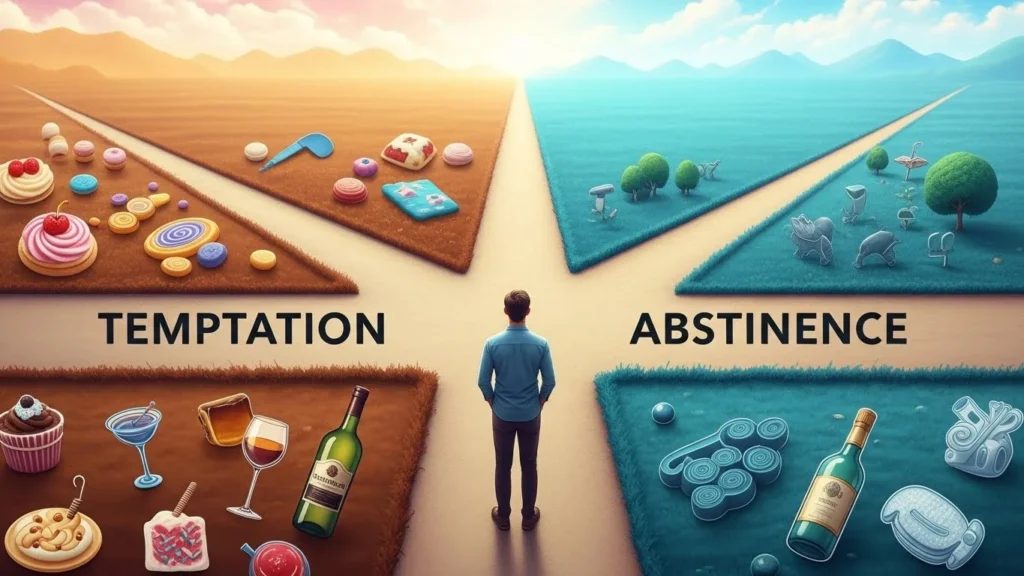

What Does “Abstain” Meaning?
Abstain is a verb that means to deliberately avoid doing something, especially something considered unhealthy, immoral, or unwise.
Simple definition:
To abstain is to choose not to do or participate in something.
Key points about abstain:
It is intentional, not accidental
Often used for voting, drinking, eating, or habits
Can be for moral, religious, health, or personal reasons
Example:
“She decided to abstain from alcohol during the challenge.”
Meaning: She deliberately chose not to drink.
How People Use “Abstain” in Real Life
Everyday Life
Health: “I abstain from junk food to stay healthy.”
Habits: “He abstains from social media on weekends.”
Religious or moral reasons: Fasting or avoiding certain behaviors
Voting & Politics
In voting contexts, abstain means choosing not to vote for or against a motion or candidate
Example: “Several members abstained during the council vote.”
Natural vs Awkward Use
Natural use:
Choosing not to engage in a behavior intentionally
Describing voluntary avoidance for personal reasons
Awkward use:
Using it casually for accidental avoidance (“I abstained from lunch” instead of “I skipped lunch”)
Overusing in informal chat
Real-Life Examples of “Abstain” in Sentences
Example 1: Health
“She abstains from eating sugar to manage her diabetes.”
Meaning: She intentionally avoids sugar.
Example 2: Voting
“Three board members abstained from voting on the proposal.”
Meaning: They chose not to vote either yes or no.
Example 3: Personal Choice
“He abstained from online shopping to save money.”
Meaning: He deliberately avoided shopping.
Example 4: Moral/Religious
“During Ramadan, Muslims abstain from eating and drinking during daylight hours.”
Meaning: They intentionally avoid certain activities as part of religious practice.
Common Mistakes & Misunderstandings
Common Errors
Confusing abstain with forget: Abstaining is intentional; forgetting is accidental.
Using it for minor decisions casually: It’s better for significant choices or formal contexts.
Assuming it always has a negative meaning: Abstaining can be positive, neutral, or morally guided.
Mixing it with “refrain”: Similar, but abstain often implies a stronger, longer-term decision.
Related Words & Concepts
These words are often linked to abstain:
Refrain: To hold back from doing something (often temporary)
Avoid: General act of staying away from something
Forbear: Formal or literary term for restraint
Fasting: Abstaining from food or drink for health or religious reasons
Non-participation: Choosing not to engage, especially in voting
These terms help understand abstain in different contexts.