
What Does “ACH Debit” Mean?
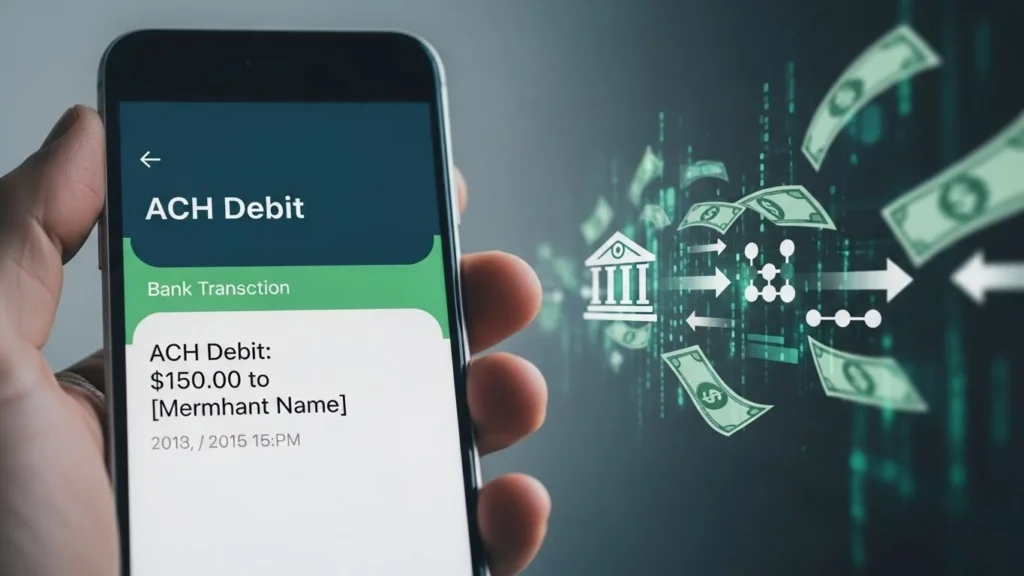
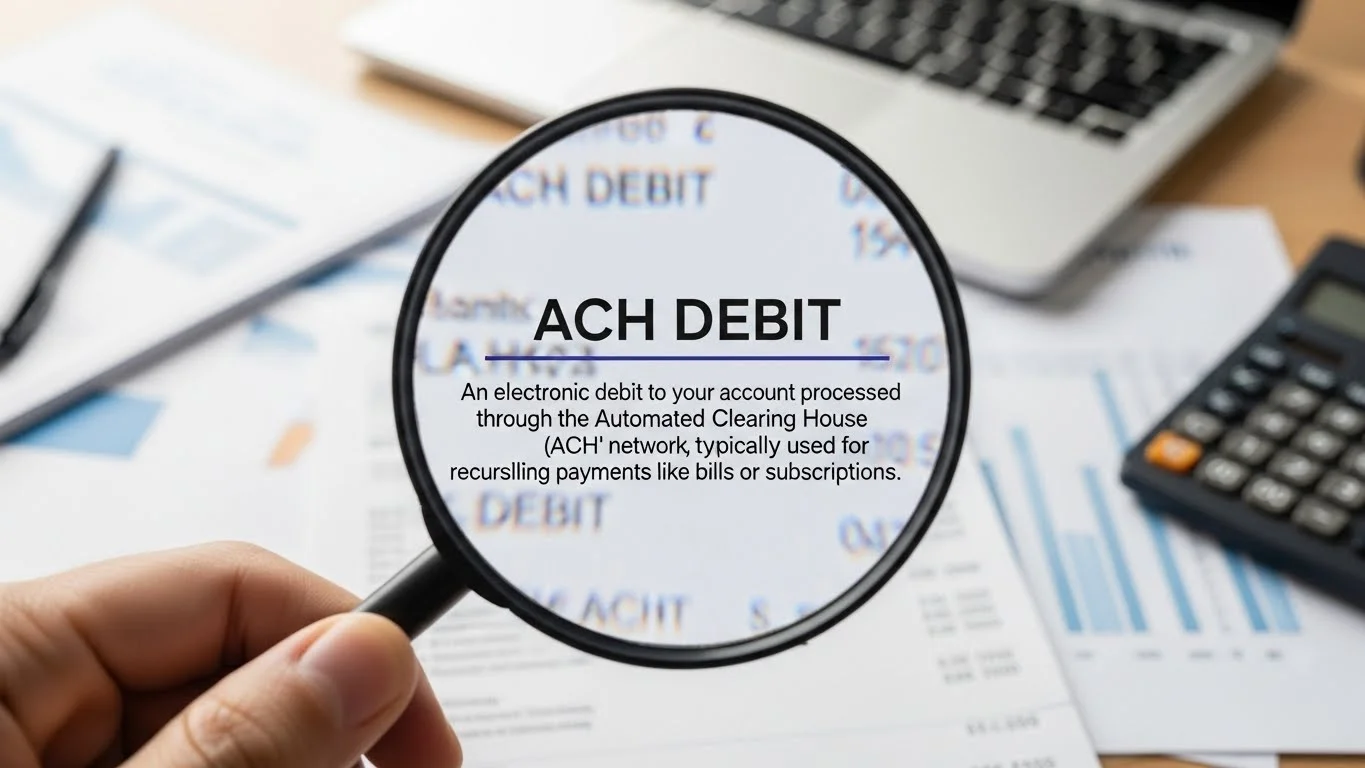
ACH debit refers to a transaction where money is electronically withdrawn from your bank account through the Automated Clearing House (ACH) network.
Key Points:
ACH = Automated Clearing House, a secure network for electronic payments in the U.S.
Debit = money moving out of your account
Commonly used for bill payments, subscriptions, and recurring payments
Example: “The monthly gym membership was paid via ACH debit from my checking account.”
How ACH Debits Work
Authorization: You authorize a company or organization to withdraw funds from your account.
Processing: The company sends the transaction request through the ACH network.
Settlement: Funds are withdrawn from your account and deposited to the recipient.
Confirmation: Your bank statement shows the transaction as an ACH debit.
Key Feature: ACH debits are electronically processed, making them faster and safer than checks.
Common Uses of ACH Debit Meaning
Monthly subscriptions: Streaming services, gym memberships, software subscriptions
Utility bills: Electricity, water, internet
Loan payments: Mortgage or personal loan installments
Business transactions: Vendor payments or payroll deductions
Example: “My electricity bill is automatically paid through an ACH debit every month.”
Real-Life Examples
Example 1 (Subscription Payment):
Sentence: “Spotify charges my account via ACH debit each month.”
Explanation: Automatic withdrawal for a recurring subscription.
Example 2 (Loan Payment):
Sentence: “The bank withdrew my car loan payment using ACH debit.”
Explanation: Scheduled loan repayment through the ACH system.
Example 3 (Utility Payment):
Sentence: “I set up ACH debit to pay my water bill directly from my checking account.”
Explanation: Convenient electronic bill payment method.
Common Misunderstandings
Not a credit: ACH debit removes money from your account, unlike ACH credit, which adds money.
Not instant: ACH debits may take 1–3 business days to fully process.
Authorization is required: Unauthorized debits can be disputed with your bank.
Tip: Always check statements to ensure ACH debits match authorized payments.
Related Terms & Concepts
ACH Credit: The opposite of ACH debit; money added to your account electronically
Direct debit: Similar term, often used outside the U.S.
Electronic funds transfer (EFT): Broad category including ACH payments
Recurring payment: Regular automatic deduction using ACH debit
Internal Linking Opportunity: Could link to articles like ACH credit meaning, EFT explained, or direct debit vs ACH.