
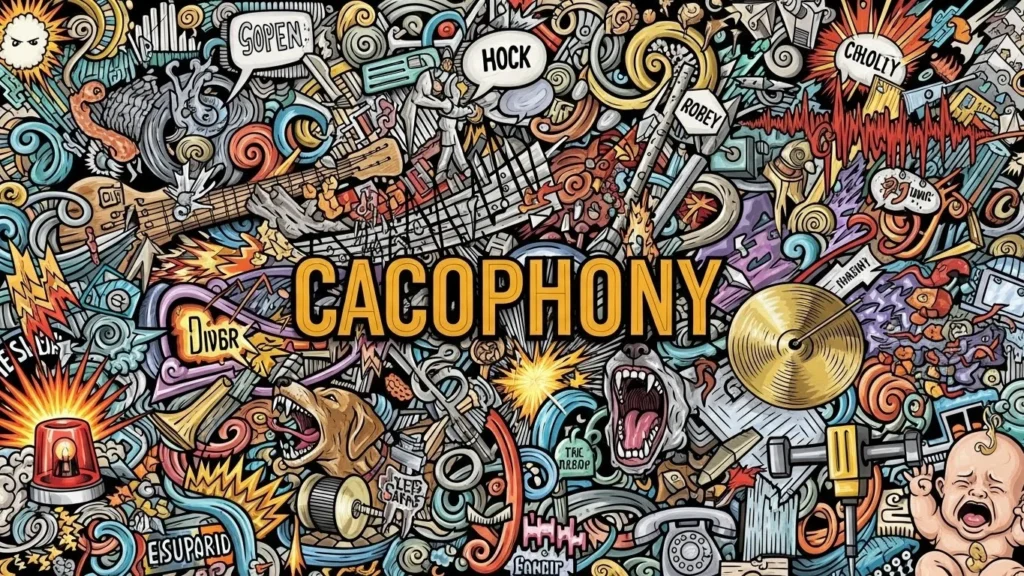

What Does “Cacophony” Meaning?
Cacophony means a loud, harsh, or unpleasant mixture of sounds.
In simple terms:
Cacophony = too many noisy sounds happening at once, and it sounds bad.
Basic Definition
A combination of sounds that feels chaotic, jarring, or overwhelming
Often used to describe noise, but sometimes used metaphorically
Origin of the Word Cacophony
Comes from Greek:
“kakos” meaning bad
“phōnē” meaning sound
So, cacophony literally means “bad sound.”
How People Use “Cacophony” in Real Conversations
Cacophony isn’t slang, but it’s still commonly used—especially in writing, storytelling, journalism, and educated speech.
Where You’ll See or Hear It
Books and novels
News articles
Academic writing
Descriptive storytelling
Commentary on cities, crowds, or events
Common Situations Described as a Cacophony
Busy city streets
Construction sites
Loud classrooms
Crowded markets
Protests or rallies
Casual Explanation
If someone says,
“It was a cacophony,”
they usually mean:
“It was really loud, chaotic, and unpleasant.”
Real-Life Examples of “Cacophony” in Use
Example 1
“The morning traffic created a cacophony of horns and engines.”
Explanation: Many loud vehicle sounds mixed together.
Example 2
“The classroom turned into a cacophony after the bell rang.”
Explanation: Everyone talking at once created noise.
Example 3
“The market was a cacophony of shouting vendors and music.”
Explanation: Overwhelming noise from many sources.
Example 4
“Social media can feel like a cacophony of opinions.”
Explanation: Used metaphorically to describe mental noise.
Example 5
“The band intentionally used cacophony to create tension.”
Explanation: Sometimes used creatively in art or music.
Common Mistakes & Misunderstandings
People often misuse or misunderstand cacophony.
Common Errors
Thinking it means any loud sound:
Not just loud—unpleasant and chaotic.Using it for silence:
Cacophony always involves sound.Confusing it with harmony:
Harmony = pleasant sounds
Cacophony = unpleasant soundsOverusing it in casual speech:
It’s better suited for descriptive or expressive language.
Related Words and Concepts
Words often associated with or confused with cacophony include:
Clamor: Loud continuous noise
Din: Long-lasting loud noise
Uproar: Noisy disturbance
Discord: Lack of harmony (sound or relationships)
Pandemonium: Wild chaos and noise
Internal linking tip: These pair well with articles like din meaning, discord meaning, or uproar meaning.