
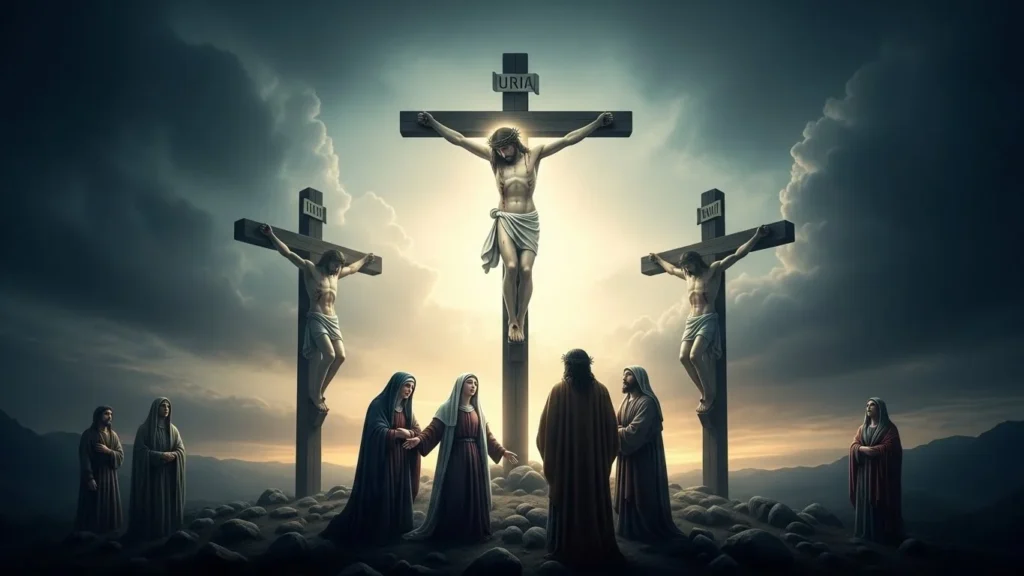

What Does Calvary Mean?
Calvary primarily refers to the hill outside Jerusalem where Jesus was crucified, according to Christian tradition.
In simple words:
Calvary means a place of suffering or sacrifice, often with deep religious or symbolic significance.
Example:
“The story of Calvary reminds believers of sacrifice, love, and redemption.”
Meaning: It refers to the hill where Jesus sacrificed his life, symbolizing suffering and salvation.
Calvary Meaning in Religion
In Christianity:
Significance: Calvary is the site of Jesus Christ’s crucifixion, a central event in Christian faith.
Symbolism: Represents sacrifice, redemption, and forgiveness.
Cultural impact: Mentioned in hymns, prayers, literature, and religious teachings.
In essence: Calvary is a symbol of faith, suffering for a purpose, and spiritual significance.
Calvary in Everyday Language
Beyond religious context, the word Calvary is sometimes used metaphorically:
To describe personal suffering or trials: “Her journey through illness was her own Calvary.”
To symbolize challenges or hardships one must endure: “The project was a Calvary of stress and deadlines.”
It conveys the idea of enduring hardship with perseverance or purpose.
Historical Context
The name Calvary comes from the Latin word Calvaria, meaning “skull,” because the hill was known as Golgotha in Hebrew, which also means skull.
The site is historically and archaeologically significant and is a major destination for pilgrims.
Over centuries, Calvary has influenced art, music, and literature, often as a symbol of suffering and hope.
Common Misunderstandings
People often misunderstand Calvary because:
They think it’s a general term for any hill (it has a specific religious reference)
They confuse it with cavalry (soldiers on horseback) due to similar spelling
They assume it only represents death, not sacrifice or redemption
Clarification:
Calvary represents a place of sacrifice, suffering, and spiritual significance, not just a hill.
Related Words and Concepts
Golgotha – Another name for Calvary
Crucifixion – The act performed at Calvary
Sacrifice – Symbolized by the event
Redemption – Spiritual meaning connected to Calvary
Passion of Christ – The suffering leading to Calvary
These terms often appear together in religious studies and literature.