
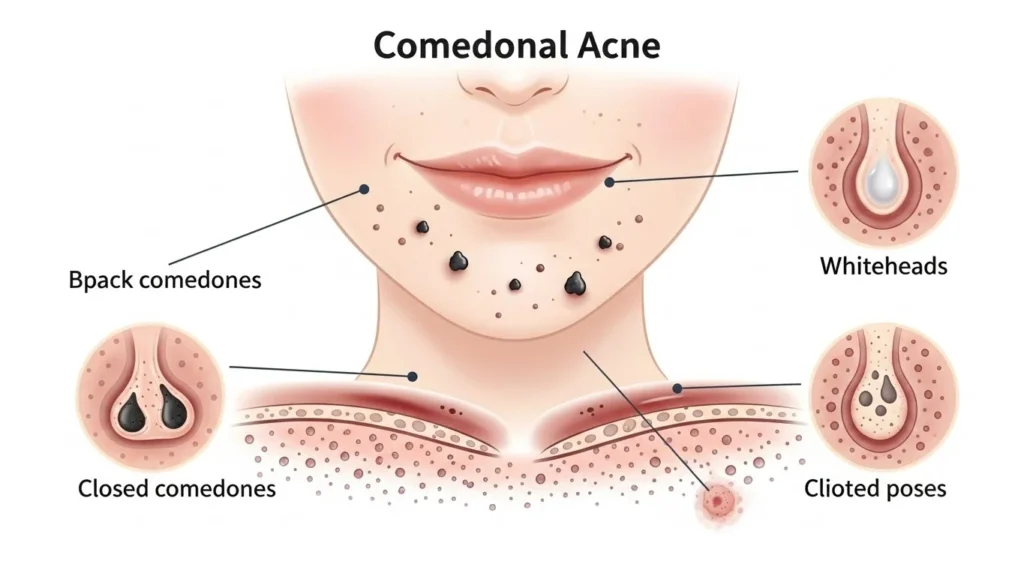
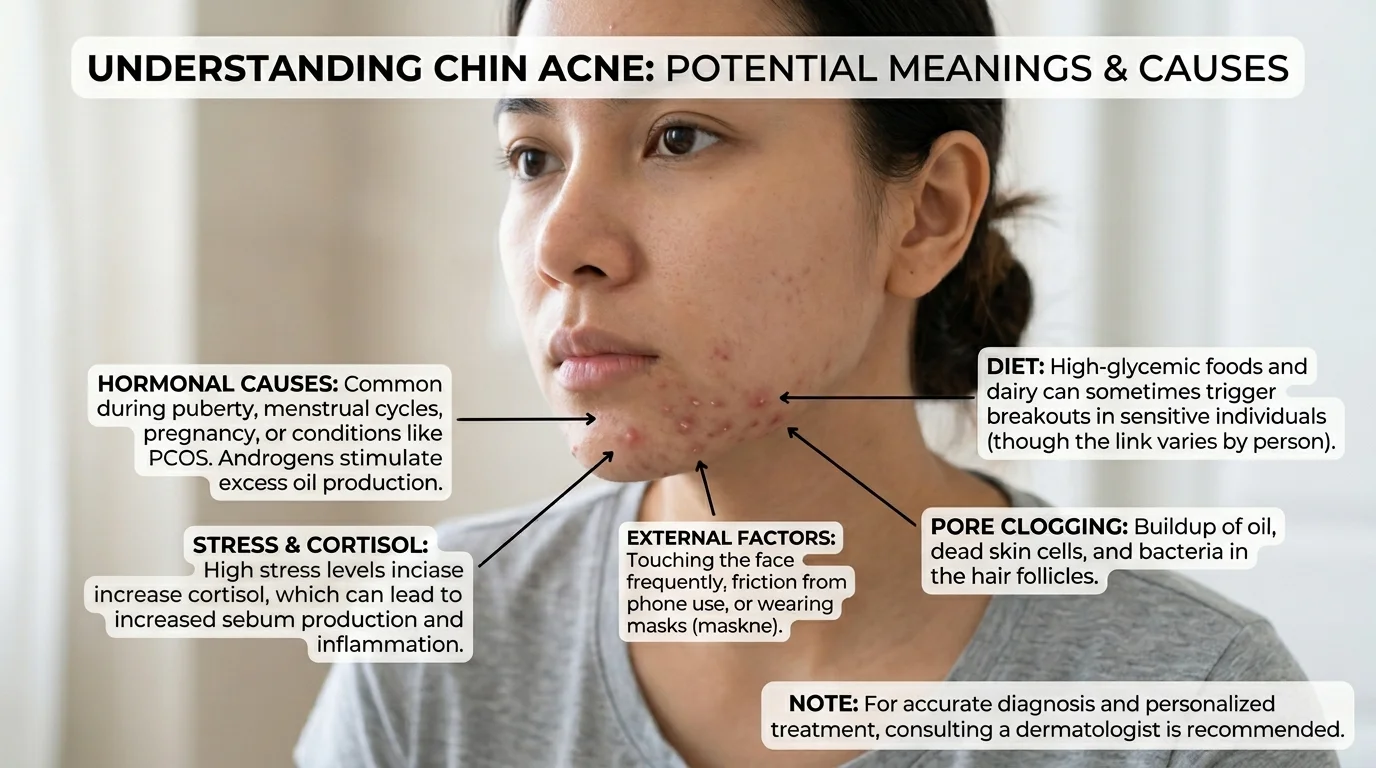
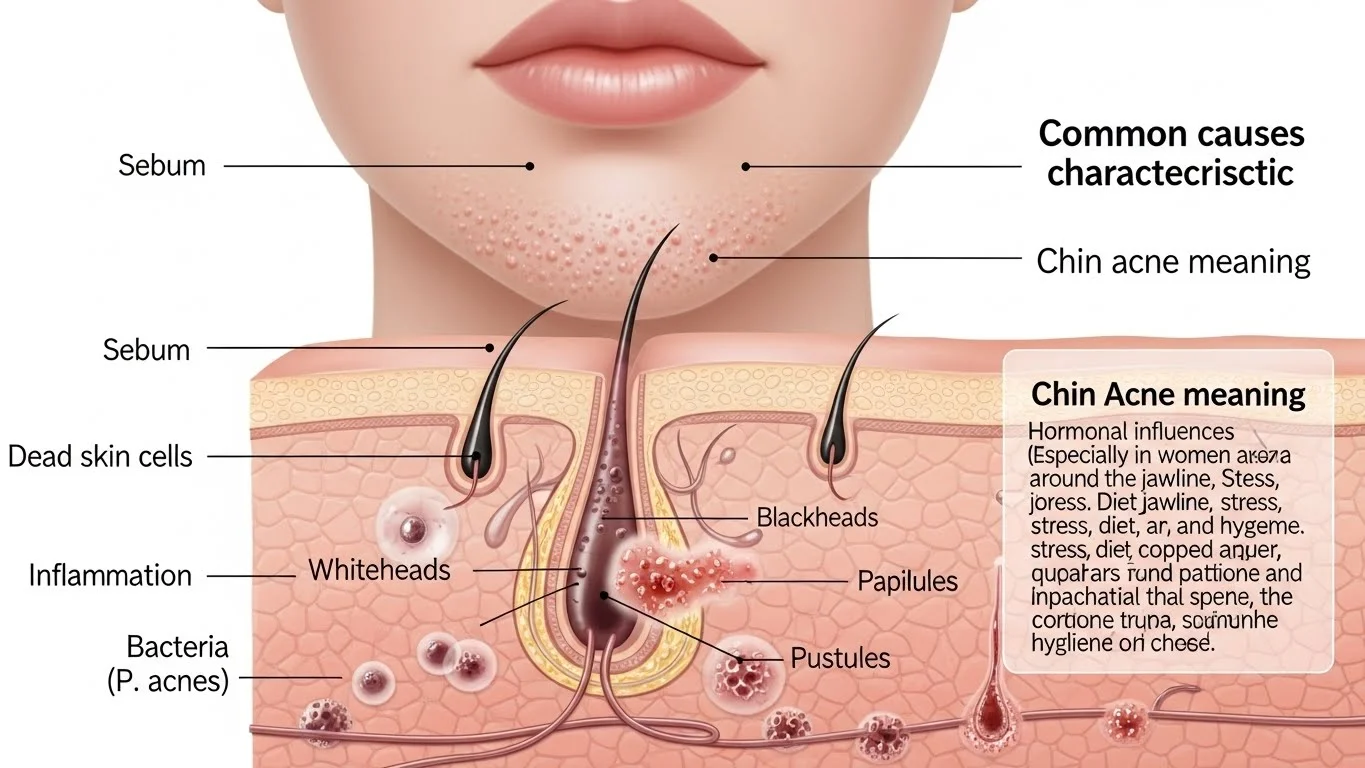
Chin acne meaning refers to pimples, breakouts, or inflamed skin that appear specifically on the chin area. It is a common type of acne that can affect teenagers and adults alike. Understanding the meaning of chin acne is important because breakouts in this area are often linked to hormonal changes, stress, skincare products, diet, or irritation from touching the face. Chin acne may appear as whiteheads, blackheads, painful cysts, or red bumps and can sometimes be stubborn compared to acne in other areas. In many cases, hormonal fluctuations during puberty, menstruation, or stress are major contributing factors. Proper skincare, healthy habits, and suitable treatments can help reduce breakouts and improve skin health. This article explores the causes, symptoms, and treatment options for chin acne, helping you clearly understand why it happens and how it can be managed effectively.

Table of Contents
Toggle😟 Why is my chin breaking out all of a sudden
- Sudden chin breakouts are often linked to hormonal changes
- Stress can increase oil production and trigger pimples
- Touching your face frequently may spread bacteria
- Hormonal shifts during periods or puberty can cause chin acne
- Poor skincare habits may clog pores around the chin area
- Wearing masks or resting your chin on hands can irritate skin
- Certain foods may trigger acne in some people
- Lack of sleep can worsen skin inflammation
- Makeup or oily products may block pores
- Changes in hormones, stress, or lifestyle are common causes
🧴 How to cure pimples on chin
- Wash your face gently twice daily
- Use non-oily and non-comedogenic skincare products
- Avoid touching or popping pimples
- Keep pillowcases and phones clean
- Drink enough water and maintain healthy sleep
- Use mild acne treatments with salicylic acid or benzoyl peroxide
- Reduce stress levels when possible
- Avoid heavy makeup on acne-prone areas
- Eat balanced foods and monitor acne triggers
- Be consistent with skincare routine for best results
🌿 How to get rid of chin acne naturally
- Apply aloe vera gel to calm inflammation
- Use diluted tea tree oil carefully on pimples
- Wash face with gentle natural cleanser
- Keep skin hydrated with light moisturizer
- Avoid excessive sugary or greasy foods if they trigger acne
- Use honey masks for soothing effect
- Drink enough water daily
- Maintain clean towels and pillow covers
- Reduce stress through relaxation and exercise
- Avoid squeezing pimples to prevent scars
⚡ How to get rid of chin pimples overnight
- Clean the area gently before bed
- Apply a spot treatment for acne
- Use an ice pack briefly to reduce swelling
- Avoid touching or picking the pimple
- Use a clean pillowcase overnight
- Keep skin moisturized but not oily
- Pimple patches may help protect the area
- Stay hydrated before sleeping
- Avoid heavy skincare products overnight
- Deep pimples may take more than one night to heal fully
🤰 Chin acne pregnancy
- Pregnancy hormones can increase oil production
- Chin acne is common during hormonal changes in pregnancy
- Breakouts may appear on chin and jawline
- Gentle skincare is usually recommended
- Avoid strong acne medications unless approved by a doctor
- Stress and sleep changes may worsen acne
- Hormonal fluctuations are the main cause
- Skin may improve after hormone levels stabilize
- Hydration and mild skincare can help
- Consult a healthcare professional for severe acne concerns

😣 Pimples on chin and jawline
- Often connected to hormonal acne
- Common during puberty, periods, or stress
- Oil glands around jawline can become clogged
- Touching face frequently may worsen breakouts
- Sweat and friction can irritate the area
- Certain skincare or hair products may contribute
- Stress hormones may increase inflammation
- Consistent skincare helps manage jawline acne
- Common in both teens and adults
- Hormonal imbalance is a frequent trigger
🧑 Jawline acne
- Jawline acne usually relates to hormonal changes
- Can appear as painful or deep pimples
- Stress and lack of sleep may worsen it
- Common before menstrual cycles
- Oil buildup and clogged pores contribute to breakouts
- May be triggered by skincare or cosmetic products
- Keeping skin clean helps reduce flare-ups
- Avoid picking acne to prevent scars
- Healthy habits may improve skin condition
- Persistent jawline acne may need medical advice
🔍 Reason for pimples on chin and jawline
- Hormonal imbalance is one of the main reasons
- Stress can increase acne-causing oil production
- Poor sleep may worsen inflammation
- Touching the face spreads oil and bacteria
- Certain foods may trigger acne in some people
- Makeup or skincare products can clog pores
- Sweat and friction from masks may irritate skin
- Genetics can influence acne-prone skin
- Menstrual cycle changes often affect chin area
- Lack of proper skincare can contribute to breakouts

What Does “Chin Acne” Mean?
Chin acne is pimples, blackheads, or cysts that appear on the chin area of your face.
Simple definition:
Chin acne is a type of hormonal or stress-related breakouts that occur on the lower face.
Key points about chin acne:
-
Usually hormonal in nature, especially in adults
-
Can be influenced by stress, diet, or skincare routines
-
Often appears in clusters rather than isolated pimples
Example:
-
“I noticed chin acne popping up before my period.”
This indicates hormonal influence.
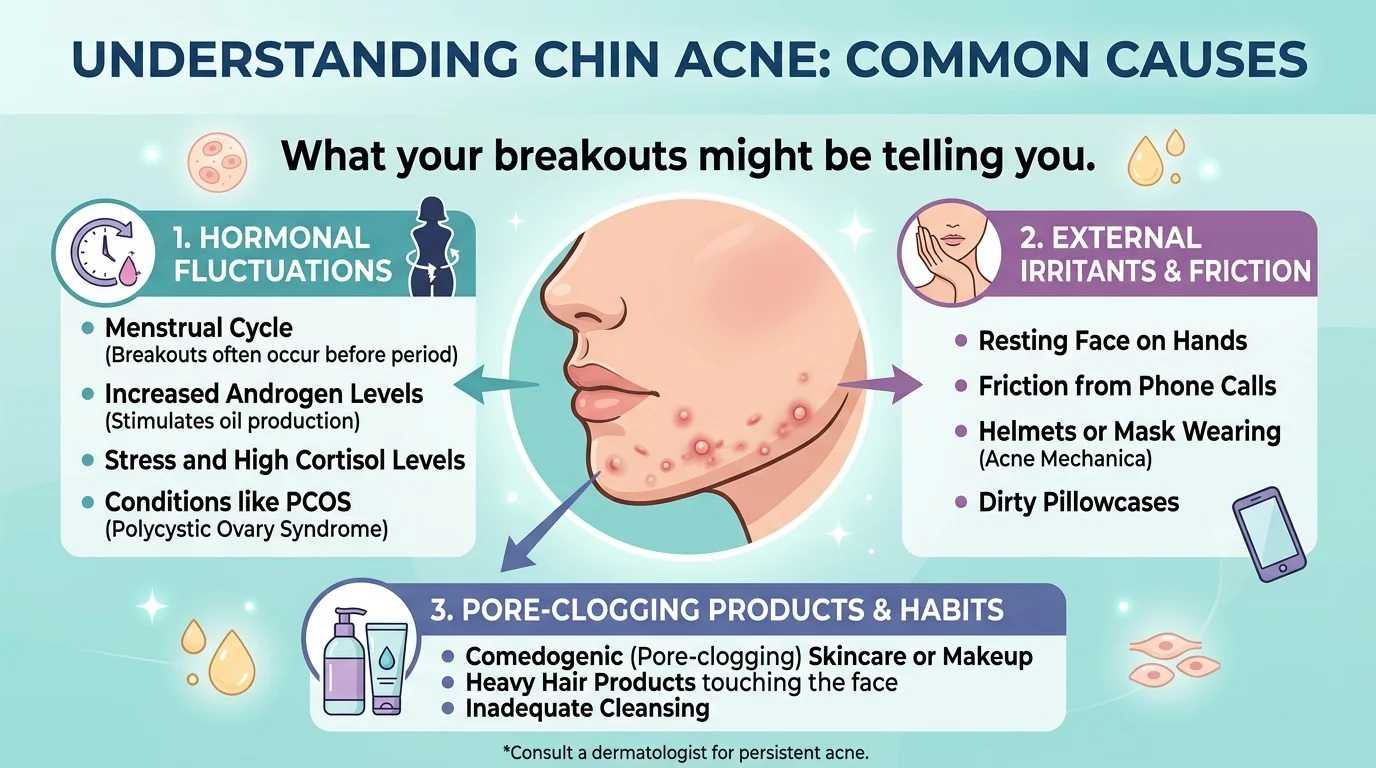
Common Causes of Chin Acne
Hormonal Changes
-
Fluctuations in estrogen, progesterone, and testosterone can trigger oil production
-
Often appears around menstrual cycles, pregnancy, or menopause
Stress and Lifestyle
-
High stress increases cortisol, which can worsen breakouts
-
Poor sleep, unhealthy diet, and lack of hydration contribute
Skincare and Habits
-
Touching or resting your hands/chin on surfaces spreads bacteria
-
Using heavy creams or makeup can clog pores
-
Not cleansing properly at night
Other Factors
-
Certain medications
-
Underlying health conditions like PCOS (Polycystic Ovary Syndrome)
-
Genetics can also make some people more prone
How Chin Acne Differs From Other Acne
-
Often hormonal, whereas forehead or cheek acne is usually linked to oil, dirt, or bacteria
-
Appears more painful or cystic than regular pimples
-
May come in cycles related to hormones
Knowing these differences helps in treatment and prevention.
Real-Life Examples of Chin Acne Meaning
Example 1: Hormonal Breakout
-
“I get chin acne every week before my period.”
Meaning: Hormonal fluctuations trigger the breakout.
Example 2: Stress-Induced Acne
-
“After a stressful week at work, I noticed small bumps on my chin.”
Meaning: Stress hormones affect skin oil production.
Example 3: Lifestyle Factor
-
“My chin acne worsens when I eat too much sugar.”
Meaning: Diet can influence inflammation and oil production.
Example 4: Skincare Habit
-
“I was touching my chin constantly, and acne appeared there.”
Meaning: Bacteria and dirt from hands can worsen acne.
Common Mistakes & Misunderstandings
Common Errors
-
Assuming all acne is caused by food: While diet plays a role, hormones and skincare matter more for chin acne.
-
Using harsh treatments: Over-drying can irritate the skin and worsen acne.
-
Ignoring cycles: Chin acne often returns if hormonal triggers aren’t considered.
-
Thinking it’s permanent: With proper care and treatment, it can improve significantly.
Prevention & Treatment Tips
Preventing and managing chin acne:
-
Maintain good skincare: Cleanse twice daily, use non-comedogenic products
-
Avoid touching your chin: Minimize bacteria transfer
-
Check hormones: Track cycles or consult a doctor for irregularities
-
Healthy lifestyle: Sleep well, reduce stress, eat a balanced diet
-
Topical treatments: Salicylic acid, benzoyl peroxide, or retinoids can help
-
Professional help: Dermatologists can prescribe hormonal therapy or stronger treatments if needed
Related Terms & Concepts
These terms are often linked with chin acne:
-
Hormonal acne: Acne triggered by hormonal changes
-
Adult acne: Breakouts that occur after teenage years
-
Cystic acne: Painful, deep acne often on the chin
-
PCOS acne: Acne linked to Polycystic Ovary Syndrome
-
Comedones: Blackheads or whiteheads
These terms are useful for deeper exploration or internal linking.
FAQs
What does chin acne mean in simple words?
Chin acne refers to pimples or breakouts on the chin, often linked to hormones, stress, or lifestyle.
Why does acne appear specifically on the chin?
Because the chin area is sensitive to hormonal changes and oil production, especially in adults.
Can diet cause chin acne?
Yes, sugary, greasy, or inflammatory foods can worsen it, but hormones are usually the main trigger.
Is chin acne permanent?
No. With proper care, lifestyle changes, and sometimes medical treatment, it can improve.
Should I see a doctor for chin acne?
Yes, if it is severe, cystic, or recurring, or if you suspect hormonal imbalance like PCOS.
Conclusion
Understanding the chin acne meaning helps you identify hormonal, lifestyle, and skincare factors affecting your skin. Unlike other types of acne, chin breakouts often come in cycles and may require both topical and lifestyle solutions.
Next time you notice chin acne, remember it’s a common, treatable issue linked to your body’s natural rhythms and habits.