

What Does COB Mean in Business?
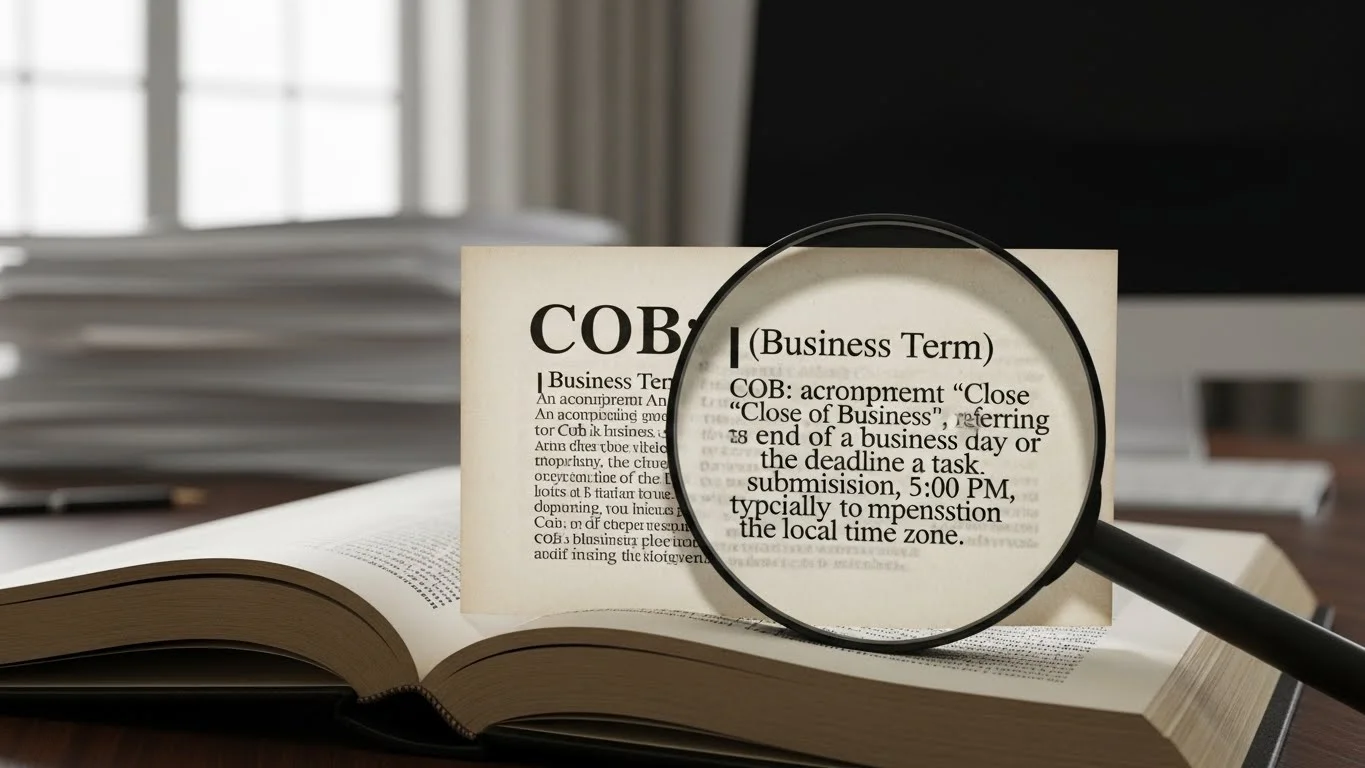
COB stands for “Close of Business.”
In simple words:
COB refers to the end of the business day, usually the time when offices close.
It’s a common term in emails, memos, and official communications
It indicates deadlines or completion times for tasks or reports
Example:
“Please send me the financial report by COB Friday.”
Meaning: Submit the report before the office closes on Friday.
How COB Is Used in Emails and Workplace Communication
COB is widely used in professional communication to set clear time expectations:
Emails: “Please approve the document by COB today.”
Meetings: “Feedback is expected by COB Wednesday.”
Project deadlines: Ensures everyone knows when the work should be completed
It helps prevent confusion about time zones, office hours, and priority tasks.
COB Meaning Business vs EOD (End of Day)
Many people confuse COB and EOD, but there is a subtle difference:
COB (Close of Business): Refers to when the office officially closes, often 5 PM or 6 PM
EOD (End of Day): Can be used more loosely; sometimes refers to midnight in some workplaces
Knowing this difference ensures deadlines are interpreted correctly.
COB in Different Industries
COB is used in almost every professional field, including:
Finance: For reporting transactions, closing books, or submitting statements
Corporate: For emails, approvals, or project deadlines
Customer Service: To indicate when a response or resolution is expected
IT & Tech: For ticket resolution or system updates
In each industry, COB ensures clarity, accountability, and timing consistency.
Real-Life Examples of COB in Business
“Submit the client proposal by COB Monday.”
Meaning: Before the office closes on Monday.“All invoices must be processed by COB today.”
Meaning: Complete invoice processing before the end of today’s business hours.“Feedback on the draft is due by COB Thursday.”
Meaning: Managers or colleagues should respond before the office closes Thursday.
Common Misunderstandings
People sometimes misunderstand COB because:
They think it means midnight or 24:00
They confuse it with EOD (End of Day)
They assume it applies to non-business days like weekends
Important clarification:
COB usually refers to the official closing time of a business day, typically 5–6 PM local office time.
Why COB Is Important in Business Communication
Using COB correctly ensures:
Clear deadlines for tasks and deliverables
Avoiding misunderstandings about timing
Smooth workflow in offices with multiple teams
Professional and precise communication
It is especially critical in remote teams and international businesses.
Related Business Terms
Other terms often linked with COB include:
EOD (End of Day)
BOD (Beginning of Day)
ASAP (As Soon As Possible)
Deadline
Business hours
Understanding these terms helps navigate professional communication confidently.