
What Does “Conservation” Meaning?
Conservation means the careful protection, preservation, and responsible use of resources so they are not wasted, damaged, or destroyed.
Core Idea of Conservation
Protecting something from harm
Using resources wisely and sustainably
Making sure resources remain available for the future
Simple definition:
Conservation is about saving, protecting, and managing resources responsibly.
Origin of the Word Conservation
Comes from the Latin word conservare, meaning “to keep,” “preserve,” or “maintain”
Entered English in the 14th century
Originally referred to preserving property or rights, later expanded to nature and science
Conservation in Environmental Context
This is the most common usage today.
Environmental Conservation Includes:
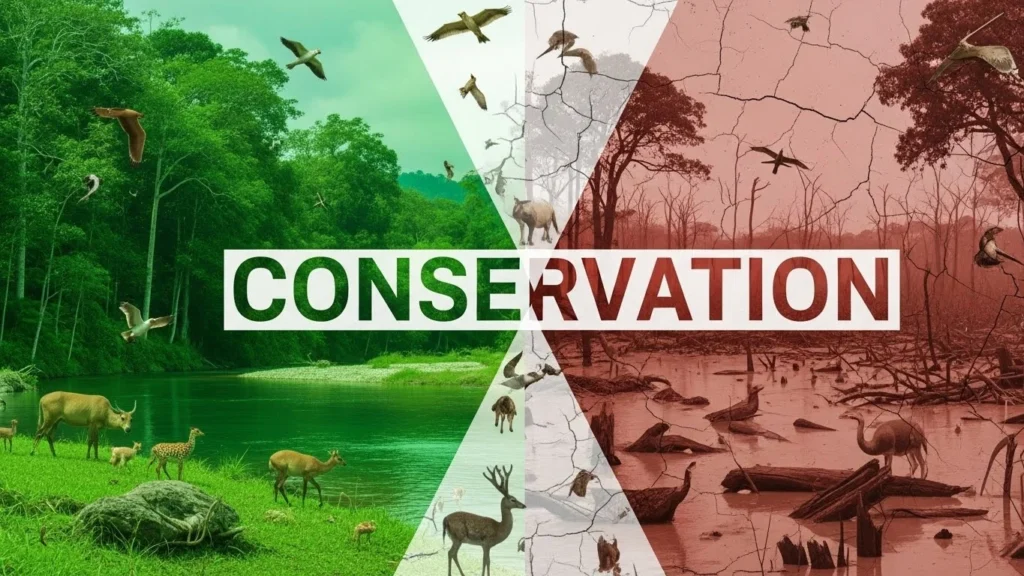
Protecting forests, oceans, rivers, and wildlife
Reducing pollution and waste
Preventing overuse of natural resources
Example:
“Wildlife conservation helps protect endangered species from extinction.”
Environmental conservation focuses on long-term balance between humans and nature.
Conservation in Science and Physics
In science, conservation refers to laws stating that certain quantities remain constant.
Examples
Conservation of energy: Energy cannot be created or destroyed, only changed
Conservation of mass: Matter is neither created nor destroyed in chemical reactions
Example:
“The law of conservation of energy is a fundamental principle in physics.”
Conservation in Everyday Life
Conservation isn’t limited to textbooks or policies—it shows up in daily habits.
Common Examples
Turning off lights to conserve electricity
Saving water while brushing teeth
Reusing and recycling materials
Example:
“Simple habits like recycling support conservation at home.”
Why Conservation Is Important
Conservation matters because it:
Protects ecosystems and biodiversity
Prevents resource shortages
Supports future generations
Reduces environmental damage
Encourages responsible living
Without conservation, resources can be depleted, polluted, or permanently damaged.
Common Misunderstandings
Conservation does not mean zero use: It means responsible use, not avoiding use completely
Not only about animals: Conservation also applies to energy, water, land, and materials
Not just a government issue: Individuals play a major role through daily choices
Tip: Conservation is about balance, not restriction.
Related Words and Concepts
Preservation: Keeping something untouched or protected
Sustainability: Using resources in a way that meets present needs without harming the future
Environmental protection: Actions taken to reduce harm to nature
Resource management: Planning how resources are used
Internal linking opportunity: sustainability meaning, preservation vs conservation, renewable resources