
What EBIT Means in Simple Words
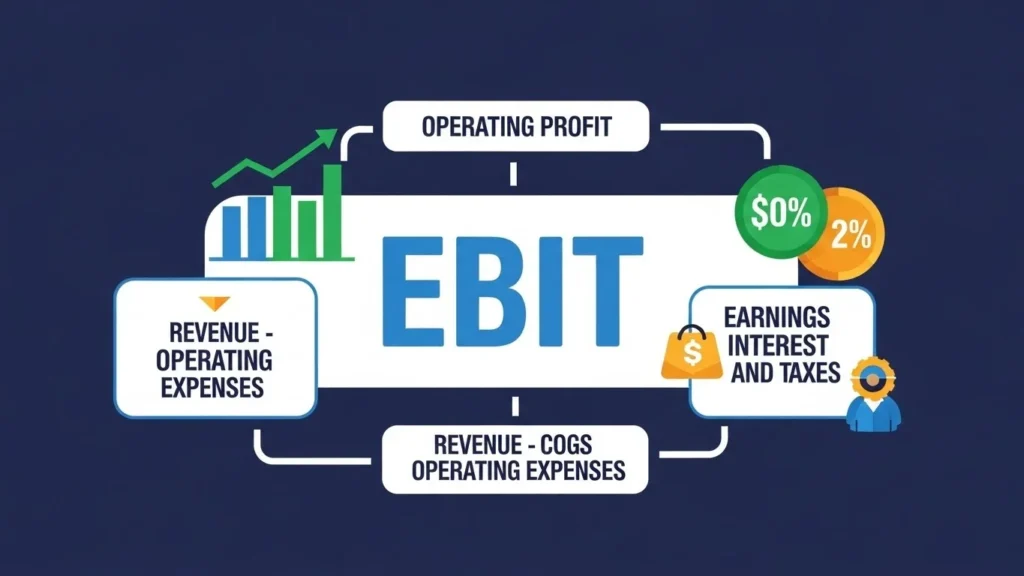
EBIT refers to the profit a company makes from its core operations before paying interest on debts and taxes.
Example: “The company’s EBIT last quarter was $500,000, showing strong operational performance.”
Basic Definition of EBIT
At its core, EBIT is a financial metric that focuses on operating profitability.
Key points:
Measures earnings from operations
Excludes interest and taxes
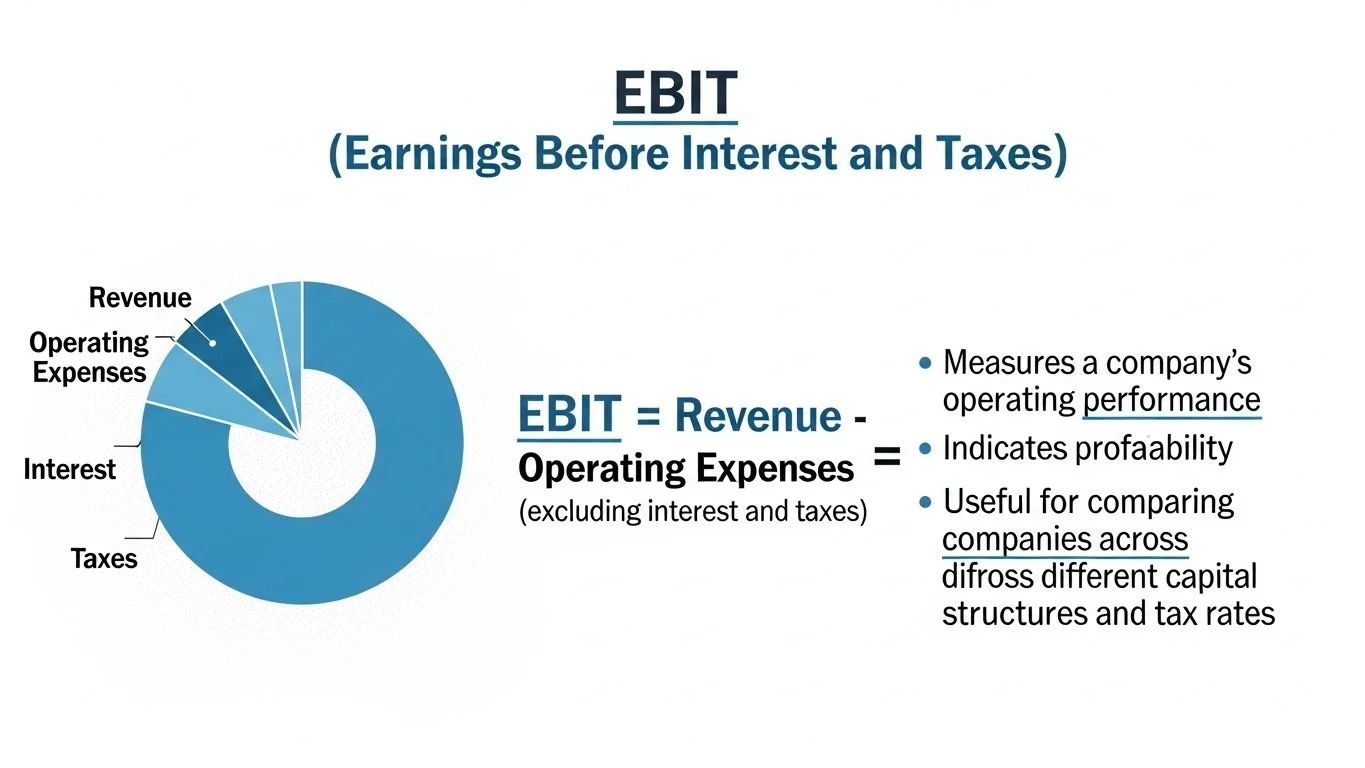
Helps compare company performance across industries
EBIT Meaning in Accounting
In accounting, EBIT is used to analyze a company’s profitability by focusing on operations rather than financing or tax strategies.
Operating revenue minus operating expenses
Excludes non-operating income and expenses
EBIT Meaning in Finance
In finance, EBIT is crucial for:
Evaluating company performance
Calculating financial ratios like EBIT margin
Comparing profitability across firms
It provides a clear picture of operational efficiency.
How to Calculate EBIT
The formula for EBIT:
EBIT = Revenue – Operating Expenses (excluding taxes and interest)
Alternatively:
EBIT = Net Income + Interest + Taxes
This shows profit before non-operating costs.
EBIT vs Net Income
EBIT: Focuses on operating profit, ignores taxes and interest
Net Income: Includes all expenses, taxes, and interest
EBIT is useful for evaluating operational efficiency independent of financing.
EBIT Meaning in Business Analysis
Businesses use EBIT to:
Assess profitability of core operations
Make strategic decisions
Attract investors by showing operational performance
It’s a standard metric in financial reporting.
EBIT Meaning in Investment
Investors look at EBIT to:
Compare companies within an industry
Evaluate efficiency without influence of financing or tax differences
Determine potential return on investment
EBIT provides insight into operational health.
EBIT Meaning in Modern Usage
In 2026, EBIT is widely used in:
Annual financial reports
Corporate strategy meetings
Investment analysis and stock evaluation
It’s a standard term in finance and business communication.
Common Misunderstandings About EBIT
Some confuse EBIT with profit after taxes – EBIT excludes taxes
Others think EBIT includes interest income or expenses – it does not
EBIT only reflects operational profitability, not total profit
EBIT vs EBITDA
EBITDA: Earnings Before Interest, Taxes, Depreciation, and Amortization
EBIT: Earnings Before Interest and Taxes
EBITDA adds back non-cash expenses like depreciation; EBIT focuses on operating profit.
Why EBIT Is Important
EBIT is important because it:
Shows true operating profitability
Helps compare companies regardless of tax structure or debt levels
Assists in decision-making for investors and managers
How to Use EBIT Correctly in Sentences
Examples:
“The company reported an EBIT of $2 million this quarter.”
“Investors analyze EBIT to assess operational performance.”
“EBIT has increased despite higher operating costs.”
EBIT Meaning in Decision Making
EBIT helps managers and investors make decisions by:
Evaluating which departments are profitable
Deciding on expansions or cost-cutting
Setting realistic financial goals