
What Is Etching Meaning?
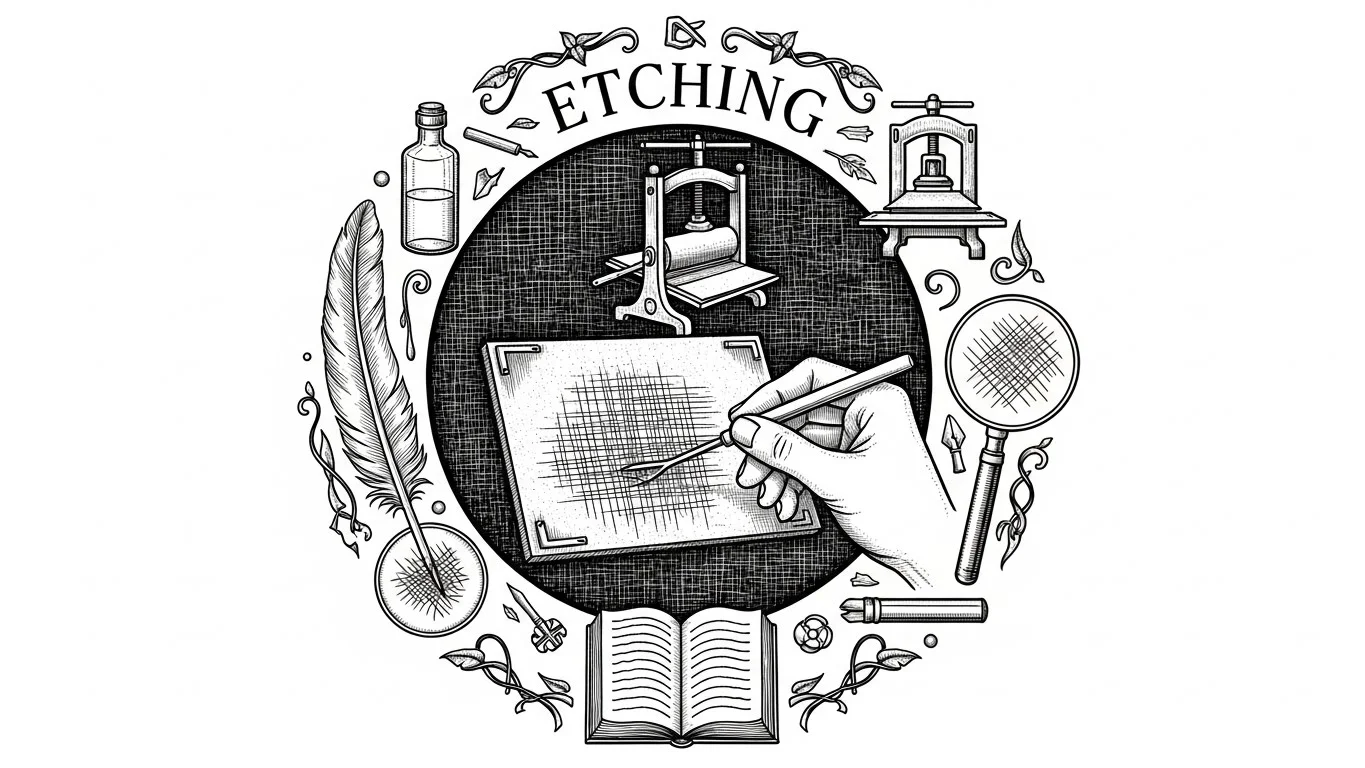
Etching is a process of creating designs, patterns, or images on a surface by cutting, engraving, or corroding material. Traditionally, it refers to art, but it’s also used in modern manufacturing and jewelry making.
Origin of Etching
Etching as an art form dates back to the 15th century, primarily in Europe, where artists used acids to create intricate designs on metal plates. Over time, the technique expanded to other materials and industries.
Etching in Art
Printmaking: Artists create a design on a metal plate, ink it, and transfer the image onto paper.
Visual effects: Etching allows fine details, textures, and shading.
Famous artists: Rembrandt and Goya are known for their etchings.
Etching in Jewelry
Decorative purposes: Patterns are etched onto metal surfaces.
Customization: Names, designs, or symbols can be added to rings, bracelets, or pendants.
Techniques: Acid etching or laser etching is commonly used.
Etching in Technology
Semiconductors: Etching creates precise patterns on silicon chips.
Glass etching: Used to create frosted designs on glassware.
Engraving tools: Modern lasers allow accurate, detailed etching.
How Etching Works
Traditional acid etching: Apply protective coating, scratch design, expose metal to acid.
Laser etching: Uses concentrated light to remove material.
Electrochemical etching: Uses electric current to corrode metal selectively.
Types of Etching
Drypoint etching: Scratch directly onto the plate without acid.
Aquatint: Creates tonal variations for shading.
Laser etching: Digital precision with modern tools.
Chemical/acid etching: Traditional method for metal or glass.
Etching in Daily Life
Custom engraved gifts
Glassware designs like frosted patterns
Jewelry customization
Industrial applications in electronics or metalwork
Benefits of Etching
Creates fine, detailed designs
Can be applied to various materials
Suitable for artistic, decorative, and industrial purposes
Offers permanent or long-lasting markings
Common Misunderstandings
Etching is only for art: Also used in industrial and jewelry applications
Etching damages materials: Proper techniques prevent unwanted damage
Etching and engraving are identical: Engraving removes material mechanically; etching uses chemical or laser processes
Etching vs Engraving
Etching: Uses acid, laser, or chemicals; often finer details; less force required
Engraving: Carving or cutting with tools; more physical effort; deeper marks
Etching Materials
Metal plates – copper, zinc, steel
Glass – decorative or functional patterns
Jewelry metals – silver, gold, brass
Semiconductors – silicon chips in electronics
Tools Used in Etching
Acid or chemical solutions
Laser etching machines
Electrochemical setups
Scratching tools for traditional art etching
Etching Techniques for Beginners
Start with simple designs
Choose safe materials like brass or coated metal plates
Use protective coatings before acid etching
Experiment with depth and texture
Famous Etchings
Rembrandt’s “The Three Crosses”
Goya’s “Los Caprichos” series
Modern laser-etched art and jewelry
Etching in Modern Industry
Circuit boards and microchips
Branding or serial numbers on metal tools
Glass panels in architecture
Precision patterns on automotive parts
Caring for Etched Items
Avoid abrasive cleaning on delicate etchings
Use soft cloths or brushes
Protect from chemicals or high heat unless intended
Jewelry etchings can be polished carefully
Advantages of Etching
High precision and detail
Versatile across materials and industries
Long-lasting results
Allows customization and personalization