
What Gibbous Means in Simple Words
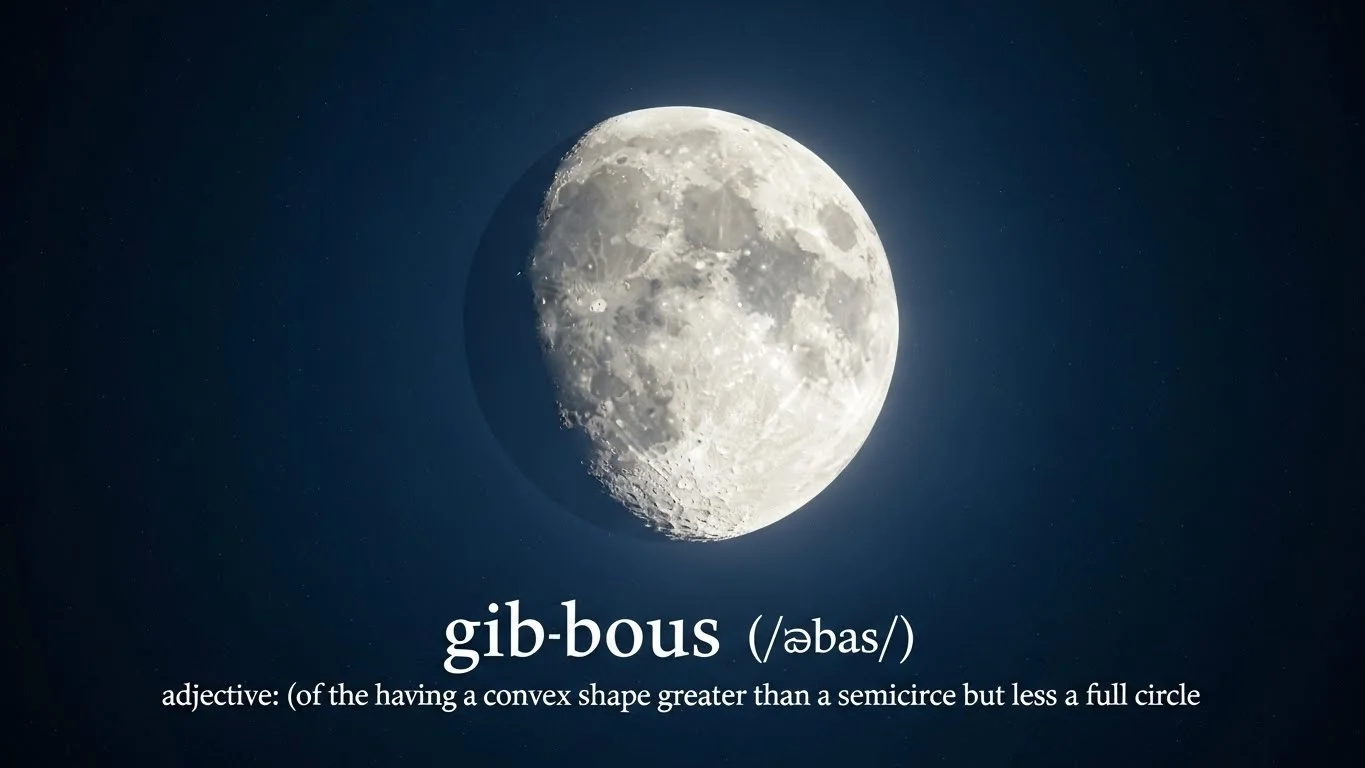
Gibbous refers to something that is more than half but not fully complete in shape. The term is most commonly applied to the moon.
Example: A moon that is almost full but not entirely full is called a gibbous moon.
Basic Definition of Gibbous
At its core, gibbous means bulging or convex. In astronomy, it describes the moon’s phase when the illuminated portion is between 50% and 99%.
Gibbous Meaning in Astronomy
In astronomy, a gibbous moon is the phase between the first quarter and full moon, or between the full moon and last quarter.
Waxing gibbous: The moon is growing toward a full moon
Waning gibbous: The moon is shrinking after a full moon
Gibbous Meaning in Daily Language
Though less common, gibbous can describe any object that is swollen, bulging, or rounded.
Example: “The old bridge had gibbous arches that curved outward.”
Gibbous Moon Phases
There are two gibbous phases in the lunar cycle:
Waxing gibbous: Light grows from 50% to nearly full
Waning gibbous: Light decreases from full to 50%
These phases are visible roughly one week before and after a full moon.
How to Identify a Gibbous Moon
Key signs:
More than half of the moon is illuminated
Not yet a full moon (waxing) or already past full moon (waning)
Curved shape appears bulging toward the night sky
Gibbous Meaning in Science
Beyond the moon, gibbous can describe shapes in nature or science that are convex or swollen. Examples include:
A gibbous hill or terrain
Certain shells or plant structures
The meaning remains tied to the idea of bulging or rounded form.
Common Misunderstandings About Gibbous
Some people confuse gibbous with:
Full moon: Fully illuminated
Half moon: Only 50% illuminated
Gibbous always means more than half but not fully illuminated.
Gibbous in Culture and Literature
In literature or poetry, gibbous often describes something rounded or bulging, evoking a sense of fullness without completeness.
Example: “The gibbous moon hung heavy in the evening sky.”
Waxing vs Waning Gibbous
Waxing gibbous: Growing toward full
Waning gibbous: Shrinking after full
Remembering the difference helps track moon phases accurately.
Gibbous Meaning in Navigation
Historically, sailors and travelers used gibbous moon phases to predict tides and plan nighttime travel.
Knowing whether the moon was waxing or waning helped determine the best travel conditions.
How to Use Gibbous Correctly in Sentences
Examples:
“Tonight, we can see a bright waxing gibbous moon.”
“The gibbous shape of the hill made it look almost dome-like.”
“A waning gibbous moon cast a soft glow over the field.”
It works in both technical and literary contexts.
Gibbous Meaning in Modern Usage
In 2026, gibbous is mostly used in astronomy, but it can occasionally appear in creative writing or casual descriptions of shapes.
Example: “The bread had a gibbous top, perfectly rounded and golden.”
Why Understanding Gibbous Matters
Knowing the gibbous meaning helps you:
Identify moon phases accurately
Understand scientific and poetic descriptions
Use the word correctly in writing and speech
It’s a small but precise term that enriches language and observation.