

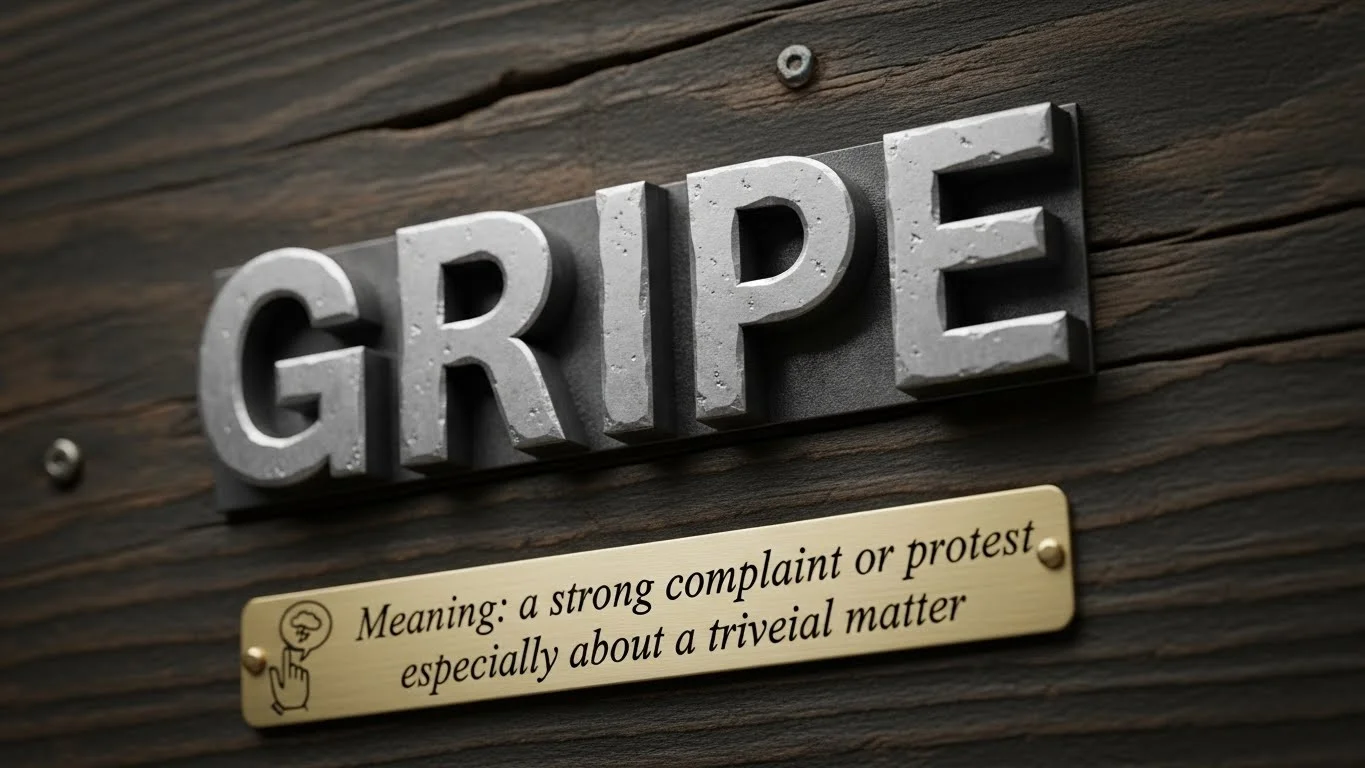
What Does Gripe Mean?
Gripe is a noun and a verb used to describe complaints, frustrations, or grievances.
In simple words:
As a noun: A gripe is a complaint.
As a verb: To gripe means to complain or express dissatisfaction.
Example sentences:
Noun: “Her biggest gripe is the slow internet.”
Verb: “He always gripes about traffic on his way to work.”
Gripe Meaning in Everyday Conversation
In everyday life, people use gripe to:
Talk about annoyances at work or school
Share frustrations with friends or family
Vent about minor problems
It’s a casual, informal way to describe dissatisfaction.
Example:
“I have a gripe with the new cafeteria menu.”
Meaning: You are unhappy about it or find it annoying.
Real-Life Examples of Gripe in Sentences
“My only gripe about the movie was that it was too long.”
Meaning: The only complaint was the movie’s length.“Stop griping and focus on the solution.”
Meaning: Stop complaining and try to fix the problem.“She griped about her workload all day.”
Meaning: She complained repeatedly about having too much work.
Common Misunderstandings
People sometimes misunderstand gripe because:
They think it’s an extreme or serious complaint (it’s usually minor)
They confuse it with formal complaints or legal claims
They use it incorrectly as a synonym for “criticism”
Important clarification:
Gripe usually refers to everyday frustrations or small complaints.
Gripe as a Noun vs Verb
Noun example: “His gripe is that the coffee is always cold.”
Verb example: “He always gripes about the traffic.”
Remember: The meaning is related but shifts depending on usage.
Related Words and Synonyms
Words often connected to gripe include:
Complaint
Grumble
Whine
Moan
Irritation
Beef (informal)
These words help you describe minor frustrations in casual conversations.
When to Use Gripe Appropriately
Gripe is suitable in informal situations:
Talking to friends
Writing casual posts or blogs
Sharing minor frustrations at work
It’s usually not suitable in formal writing or professional complaints.
Gripe in Modern Culture
The term “gripe” is widely used on:
Social media posts
Text messages
Forums and discussion boards
Example:
“I have a gripe with this app — it keeps crashing.”
It’s relatable because everyone experiences small annoyances.