

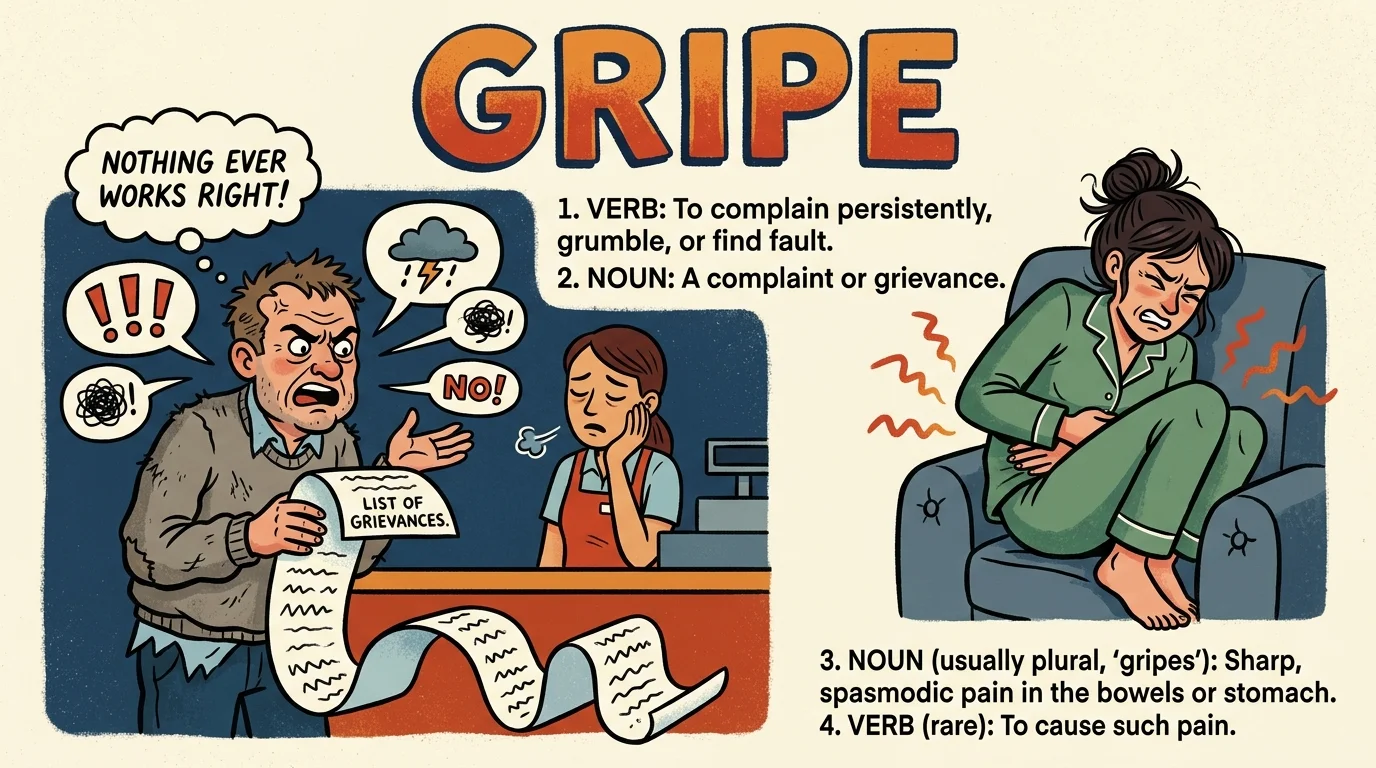
🍼 Gripe Water Meaning
- Gripe water is a liquid remedy given to babies
- Used to relieve gas, colic, and stomach discomfort
- Often made from herbal ingredients like fennel or ginger (varies by brand)
- Commonly used for crying or fussy infants
- Not a prescription medicine in many countries
- Example: “The baby felt better after gripe water.”
- Always use with caution and proper guidance
- Available in pharmacies and baby care stores
- A popular infant soothing product
- Used worldwide for baby digestion support
😣 Gripe Meaning French
- In French, gripe is not commonly used as a standalone word
- Closest meaning relates to complaint or flu (“grippe”)
- “Grippe” (with double P) means influenza
- “Gripe” in English sense = se plaindre (to complain)
- Used in translation context
- Not a native everyday French slang word
- Meaning depends on spelling
- Often confused with “grippe”
- Context is important
- Mostly borrowed usage
🇪🇸 Gripe Meaning Spanish
- In Spanish, gripe means flu (influenza)
- Example: “Tengo gripe” = “I have the flu”
- Common everyday medical term
- Used in health and doctor visits
- Refers to viral illness
- Not related to “complaint” meaning in English
- Very common word in Spanish-speaking countries
- Easy and widely understood
- A basic health term
- Important in medical vocabulary
📘 Gripe Meaning in English
- Gripe means to complain or express annoyance
- Example: “Stop griping about small things.”
- Informal verb
- Used in everyday conversation
- Often negative tone
- Means persistent complaining
- Common in spoken English
- Simple slang-like word
- Not very formal
- Widely understood
🔄 Gripe Synonym
- Complain
- Moan
- Grumble
- Whine
- Protest
- Whinge
- Object
- Criticize
- Nag
- Bellyache (informal)
👶 Gripe Meaning Baby
- In baby context, “gripe” refers to stomach discomfort or colic pain
- Example: baby has gripe (gas pain)
- Often related to crying and fussiness
- Used in term gripe water
- Common in parenting language
- Indicates digestive discomfort
- Not a disease name
- Used in childcare discussions
- Mild and temporary condition
- A parenting-related term
🏥 Gripe Medical
- Medically, gripe refers to stomach cramps or digestive discomfort
- Often linked with gas or colic in infants
- Not a strict medical diagnosis
- Used in general health language
- Example: abdominal gripe
- Common in baby care terminology
- Helps describe mild digestive issues
- Informal medical usage
- Related to gastrointestinal discomfort
- Used in non-technical settings
💬 “I Have a Gripe” Meaning
- “I have a gripe” means I have a complaint or issue
- Example: “I have a gripe with the service.”
- Used to express dissatisfaction
- Informal but common phrase
- Can refer to small or big issues
- Often used in conversations or reviews
- Slightly negative tone
- Means something is bothering you
- Easy everyday expression
- Widely understood idiom
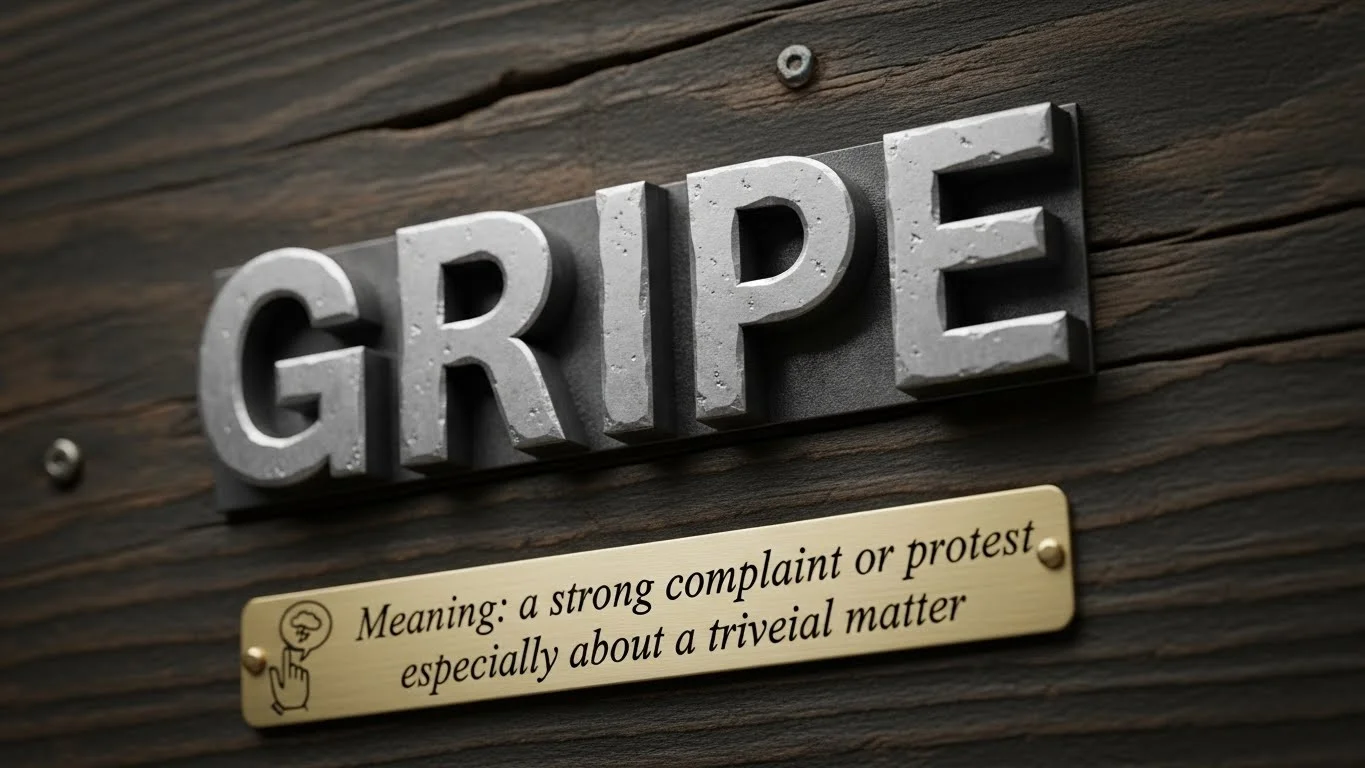
What Does Gripe Mean?
Gripe is a noun and a verb used to describe complaints, frustrations, or grievances.
In simple words:
As a noun: A gripe is a complaint.
As a verb: To gripe means to complain or express dissatisfaction.
Noun: “Her biggest gripe is the slow internet.”
Verb: “He always gripes about traffic on his way to work.”
Gripe Meaning in Everyday Conversation
In everyday life, people use gripe to:
Talk about annoyances at work or school
Share frustrations with friends or family
Vent about minor problems
It’s a casual, informal way to describe dissatisfaction.
Example:
“I have a gripe with the new cafeteria menu.”
Meaning: You are unhappy about it or find it annoying.
Real-Life Examples of Gripe in Sentences
“My only gripe about the movie was that it was too long.”
Meaning: The only complaint was the movie’s length.“Stop griping and focus on the solution.”
Meaning: Stop complaining and try to fix the problem.“She griped about her workload all day.”
Meaning: She complained repeatedly about having too much work.
Common Misunderstandings
People sometimes misunderstand gripe because:
They think it’s an extreme or serious complaint (it’s usually minor)
They confuse it with formal complaints or legal claims
They use it incorrectly as a synonym for “criticism”
Important clarification:
Gripe usually refers to everyday frustrations or small complaints.
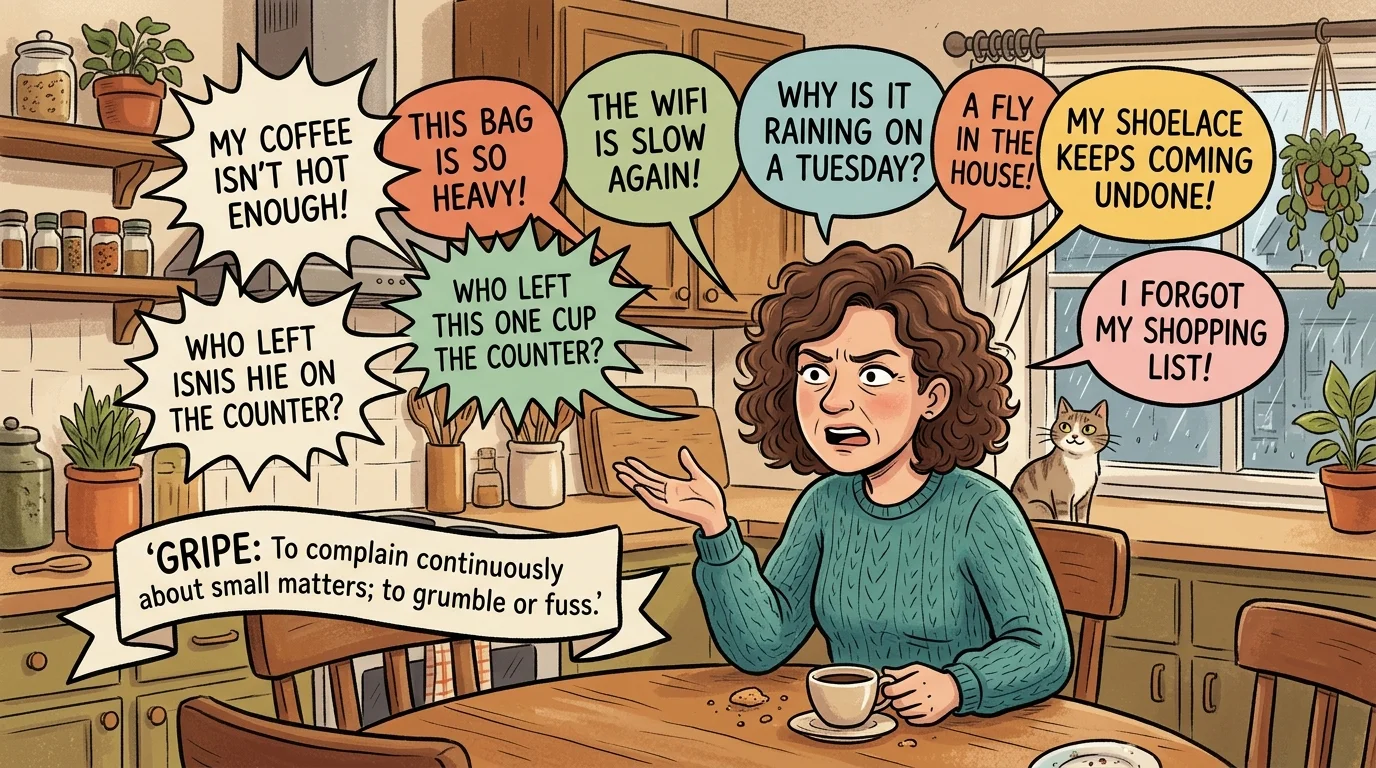
Gripe as a Noun vs Verb
Noun example: “His gripe is that the coffee is always cold.”
Verb example: “He always gripes about the traffic.”
Remember: The meaning is related but shifts depending on usage.
Related Words and Synonyms
Words often connected to gripe include:
Complaint
Grumble
Whine
Moan
Irritation
Beef (informal)
These words help you describe minor frustrations in casual conversations.
When to Use Gripe Appropriately
Gripe is suitable in informal situations:
Talking to friends
Writing casual posts or blogs
Sharing minor frustrations at work
It’s usually not suitable in formal writing or professional complaints.
Gripe in Modern Culture
The term “gripe” is widely used on:
Social media posts
Text messages
Forums and discussion boards
Example:
“I have a gripe with this app — it keeps crashing.”
It’s relatable because everyone experiences small annoyances.