
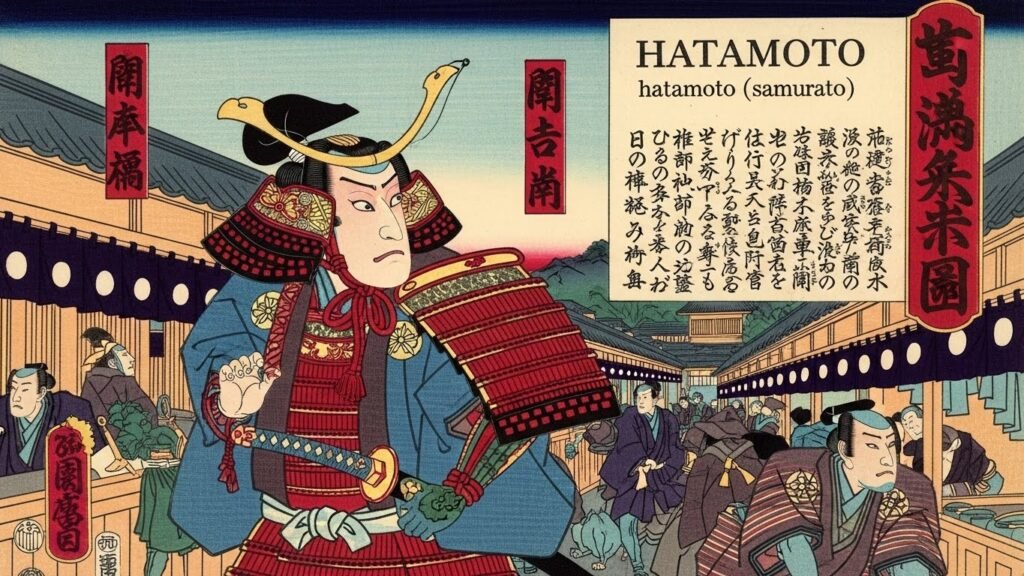
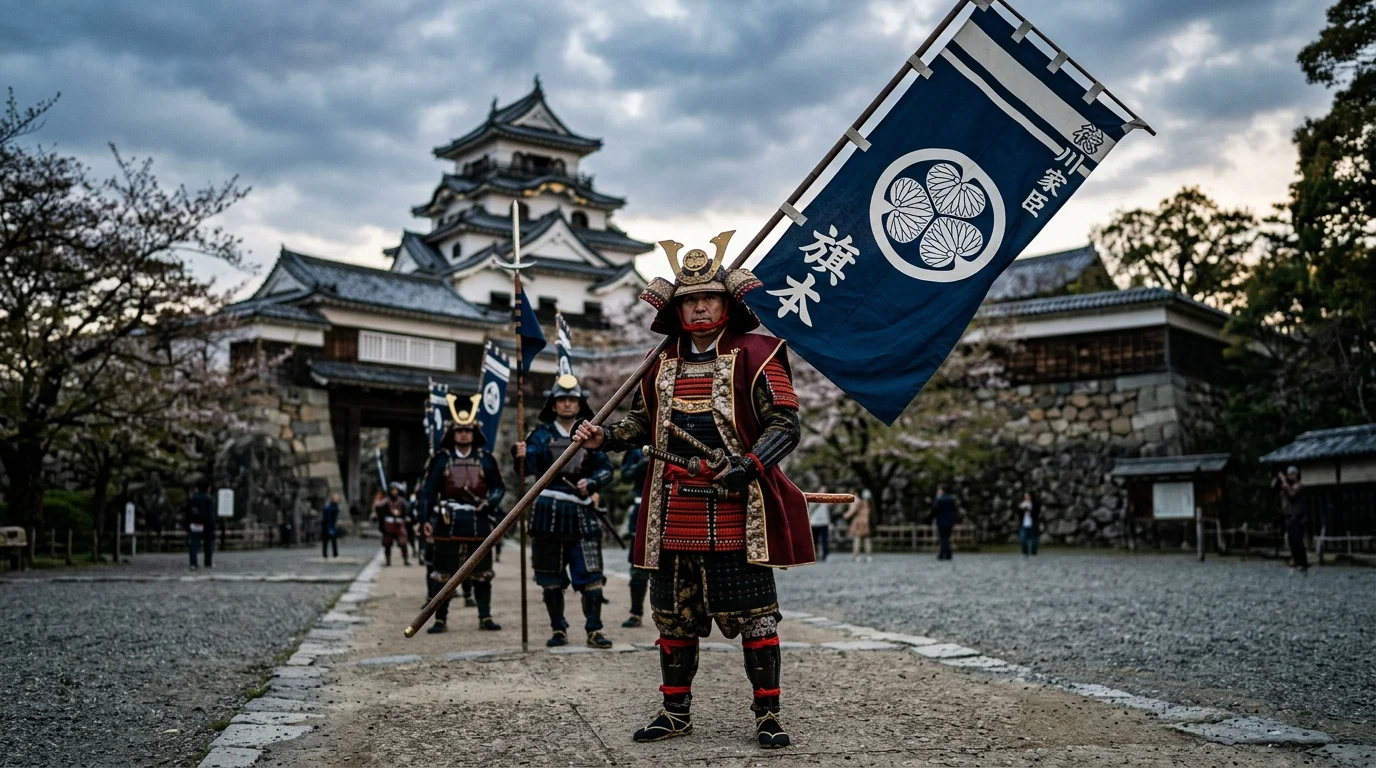
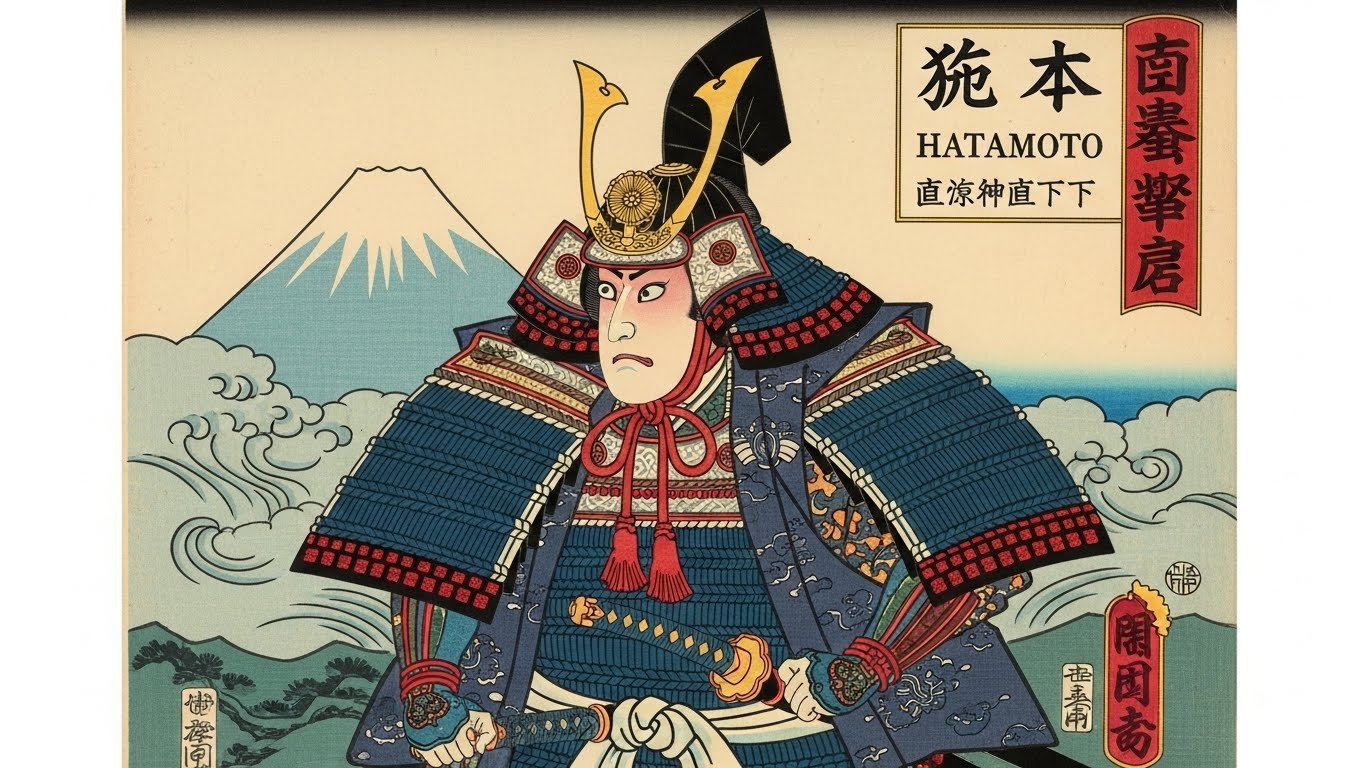
What Does Hatamoto Mean?
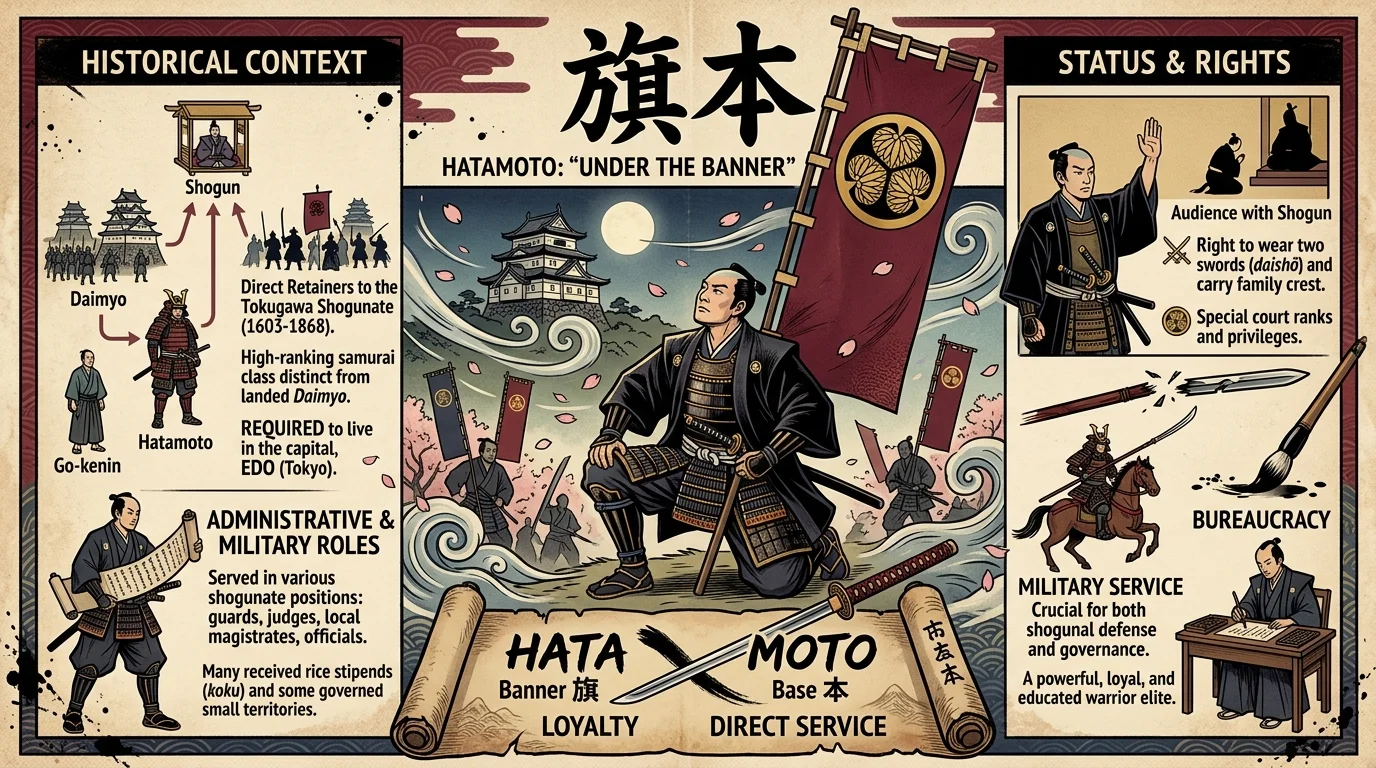
Hatamoto is a Japanese word that means “under the banner.”
It referred to high-ranking samurai who served directly under the shogun, the military ruler of Japan during the feudal period.
Hatamoto Meaning in Simple Words
In simple terms, a hatamoto was:
A trusted samurai
Directly loyal to the shogun
Part of the ruling military class
They were above ordinary samurai but below major feudal lords.
Origin of the Word Hatamoto
The word comes from:
Hata meaning “banner”
Moto meaning “base” or “origin”
Together, it symbolized warriors who fought close to the shogun’s banner in battle.
Hatamoto Meaning in Japanese History
In history, hatamoto were:
Elite samurai retainers
Military officials
Administrators and guards
They played a key role in maintaining control and order.
Hatamoto in the Edo Period
During the Edo period, hatamoto:
Served the Tokugawa shogunate
Lived in Edo (modern Tokyo)
Helped govern the country
Their loyalty was essential to political stability.
Hatamoto vs Daimyo
Hatamoto are often compared to daimyo, but they were different.
Hatamoto: Direct servants of the shogun
Daimyo: Powerful regional lords
Hatamoto ranked lower but were closer to the shogun.
Social Status of a Hatamoto
Hatamoto held a respected social position:
Higher than most samurai
Lower than daimyo
Granted land or stipends
Their status was both military and social.
Duties of a Hatamoto
Their responsibilities included:
Guarding the shogun
Administrative work
Military leadership
Ceremonial roles
They were trusted with sensitive tasks.
Hatamoto Meaning in Feudal Society
In feudal society, hatamoto represented:
Loyalty
Authority
Discipline
They were symbols of order and governance.
Hatamoto in Warfare
In times of war, hatamoto:
Fought near the shogun
Led troops
Protected command centers
Their position showed honor and trust.
Hatamoto Meaning in Modern Context
Today, hatamoto is mainly used:
In history discussions
In books and documentaries
In anime, manga, and games
It is not used as a modern job title.
Hatamoto in Anime and Pop Culture
In modern media, hatamoto characters are often shown as:
Loyal warriors
Elite guards
High-ranking samurai
The term adds historical depth to storytelling.
Hatamoto vs Samurai
All hatamoto were samurai, but not all samurai were hatamoto.
Hatamoto had:
Direct shogun access
Higher authority
Greater responsibility
Why Hatamoto Were Important
Hatamoto mattered because they:
Supported central power
Enforced laws
Maintained stability
They helped shape Japan’s political system.
Hatamoto Meaning in Simple Sentences
“The hatamoto served the shogun directly.”
“Hatamoto were elite samurai.”
“He belonged to a respected hatamoto family.”
Common Misunderstandings About Hatamoto
Some people mistakenly think:
Hatamoto were the highest rulers
Hatamoto were common soldiers
In reality, they were elite but not supreme.
Hatamoto and Loyalty
Loyalty was central to the hatamoto role:
Personal allegiance to the shogun
Lifelong service
Strong honor code
This loyalty defined their identity.
Hatamoto Meaning for Beginners
For beginners, remember this:
A hatamoto was a high-ranking samurai who served the shogun directly.
That definition works in most contexts.
Use of Hatamoto in Academic Studies
Historians study hatamoto to understand:
Power structures
Military organization
Social hierarchy
They are key to Japanese historical analysis