

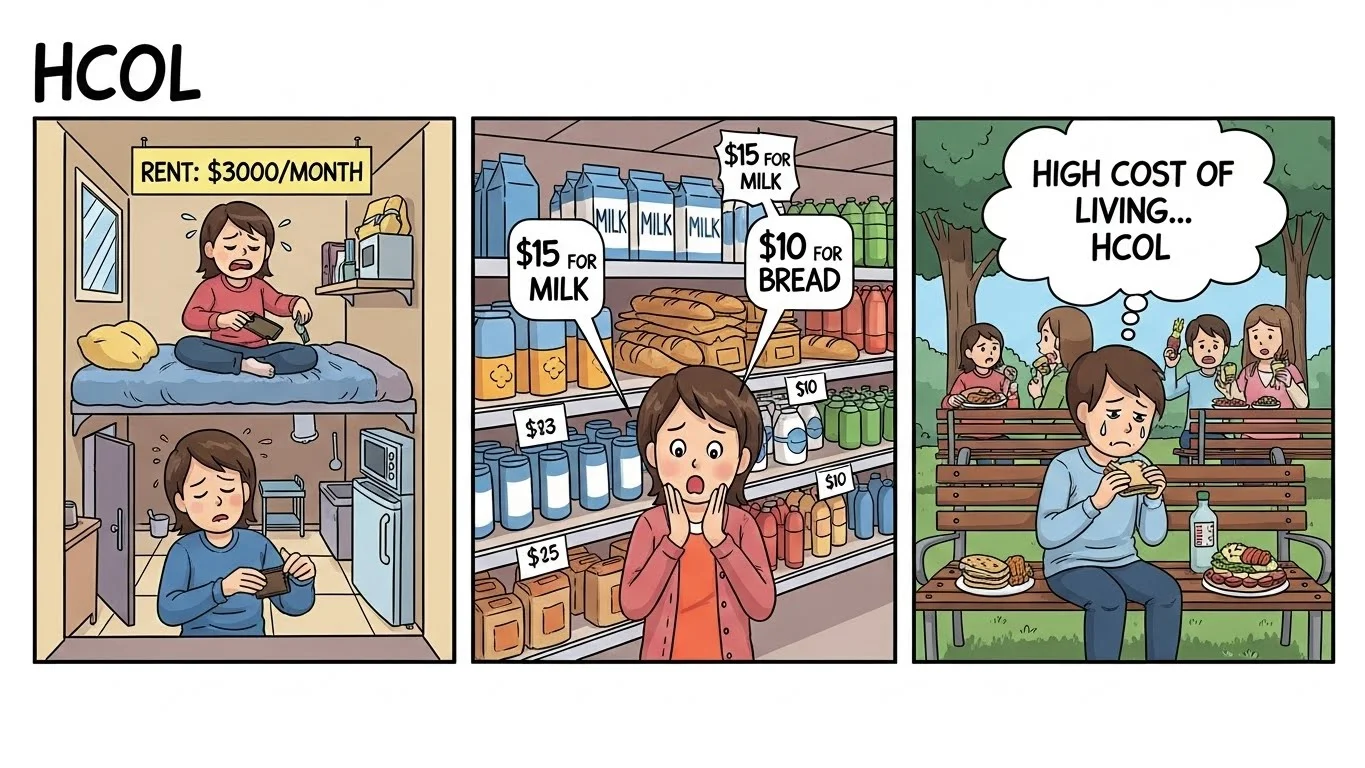
What Does “HCOL” Mean?
HCOL stands for High Cost of Living.
It’s used to describe cities or areas where everyday expenses—like housing, food, transportation, and taxes—are significantly higher than average.
What Makes an Area HCOL?
An area is considered HCOL when several key expenses are high at the same time.
Common factors include:
Expensive housing or rent
Higher grocery and dining costs
Increased transportation expenses
Higher taxes or service costs
Competitive job markets driving up prices
Examples often cited in discussions include major metropolitan areas and global cities.
How People Use “HCOL” in Real Life
Job & Salary Discussions
“The salary is good, but it’s an HCOL area.”
Used to explain why higher pay may still feel tight.
Remote Work & Hiring
“Compensation varies based on LCOL vs HCOL locations.”
Companies may adjust salaries depending on cost of living.
Personal Finance & Budgeting
“Living in an HCOL city requires strict budgeting.”
Helps people plan expenses realistically.
Real-Life Examples
Example 1 (Job Offer):
Sentence: “They offered $90k, but it’s an HCOL city, so it won’t go as far.”
Explanation: High expenses reduce purchasing power.
Example 2 (Online Discussion):
Sentence: “I moved from an LCOL area to an HCOL one and felt the difference immediately.”
Explanation: Comparison of living costs between regions.
Example 3 (Company Policy):
Sentence: “Employees in HCOL regions receive a cost-of-living adjustment.”
Explanation: Pay adjusted for higher expenses.
HCOL Meaning vs LCOL vs MCOL
These abbreviations are often used together:
HCOL – High Cost of Living
MCOL – Medium Cost of Living
LCOL – Low Cost of Living
They help compare locations quickly, especially in salary negotiations, relocation decisions, and budgeting.
Common Mistakes & Misunderstandings
Assuming HCOL always means higher quality of life: High costs don’t always equal better living.
Ignoring taxes and hidden expenses: Rent isn’t the only factor.
Using HCOL as an official classification: It’s an informal but widely accepted term, not a legal label.
Tip: Always look at your net income and lifestyle, not just the salary number.
Related Terms & Abbreviations
COL – Cost of Living
Cost-of-living adjustment (COLA) – Salary increase based on expenses
Housing market – Major driver of HCOL status
Remote pay bands – Salary ranges adjusted by location
Internal Linking Opportunity: Could link to articles like LCOL meaning, MCOL meaning, or cost of living explained.