

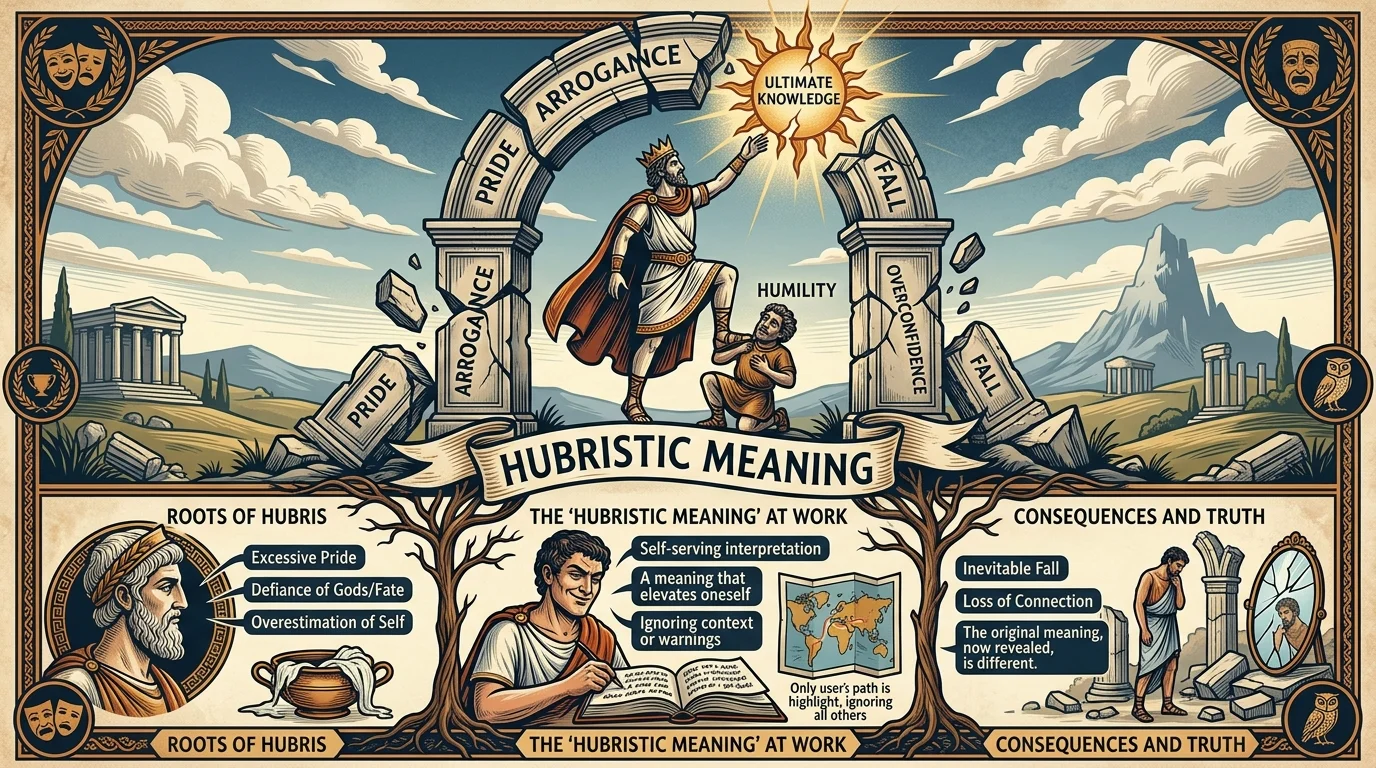

The word hubristic meaning is used to describe behavior marked by excessive pride, arrogance, or overconfidence. It comes from the word hubris, a concept from ancient Greek literature and philosophy that referred to dangerous levels of pride often leading to downfall or failure. Understanding the meaning of hubristic is important because the term is commonly used in political discussions, literature, psychology, and everyday commentary to criticize people who appear overly self-confident or dismissive of others. A hubristic attitude may involve believing oneself to be superior, untouchable, or incapable of making mistakes. The word often carries a strong negative tone and is frequently associated with abuse of power or poor judgment caused by arrogance. This article explores the definition, origin, and examples of “hubristic,” helping you clearly understand how the term is used in modern language and discussions about behavior and leadership.

😏 Hubristic meaning in Urdu
- Hubristic = غرور بھرا / تکبر والا / خودپسند
- It describes someone with excessive pride or arrogance
- Example: وہ بہت تکبر کرنے والا شخص ہے
- Often used in formal or literary Urdu
- Refers to overconfidence or ego
- Negative personality trait
- Linked with arrogance and pride
- Common in psychology and literature
- Describes dangerous overconfidence
- Similar to “maghroor” in Urdu
🔁 Hubristic synonym
- Arrogant
- Proud
- Conceited
- Overconfident
- Egotistical
- Haughty
- Proudful
- Narcissistic
- Self-important
- Pretentious
🇫🇷 Hubristic in French
- Hubristic = hubristique (rare academic word)
- Means excessive pride or arrogance
- Often used in philosophy or literature
- Example: attitude hubristique
- Refers to dangerous overconfidence
- Connected to Greek concept of hubris
- Negative character trait
- Used in formal French writing
- Rare in everyday conversation
- Same meaning as English
✍️ Hubristic in a sentence
- His hubristic attitude led to his downfall
- The leader’s hubristic decisions caused failure
- She gave a hubristic speech full of arrogance
- Hubristic behavior often leads to mistakes
- The company collapsed due to hubristic management
- His hubristic confidence blinded him to risks
- History is full of hubristic rulers
- The athlete’s hubristic mindset cost him the game
- Hubristic pride is often dangerous
- The character’s hubristic flaw was clear
📘 Hubristic meaning in English
- Hubristic means showing excessive pride or arrogance
- Comes from the word “hubris” (overbearing pride)
- Often used in literature and psychology
- Describes dangerous overconfidence
- Can lead to downfall or failure
- Negative personality trait
- Common in formal English writing
- Associated with lack of humility
- Used to describe leaders or characters
- Important concept in storytelling
🔊 Hubristic pronunciation
- Pronounced: hyoo-BRIS-tik
- Phonetic: /hjuːˈbrɪs.tɪk/
- Stress on second syllable: BRIS
- Three syllables total
- Sounds like “hyoo-bris-tik”
- Common in academic English
- Derived from “hubris”
- Clear and formal pronunciation
- Used in literature and psychology
- Often mispronounced as “hub-ris-tik” incorrectly
🧠 Hubristic meaning and examples
- Hubristic means overly proud or arrogant behavior
- Example: a hubristic leader ignoring advice
- Example: a hubristic athlete underestimating opponents
- Example: a hubristic decision causing failure
- Example: hubristic companies ignoring risks
- Example: hubristic speeches full of ego
- Example: hubristic confidence before a loss
- Example: hubristic rulers in history
- Example: hubristic thinking in business mistakes
- Example: hubristic behavior in stories
👤 Hubristic person
- A hubristic person is someone extremely arrogant
- Believes they are better than others
- Ignores advice or criticism
- Often overestimates their abilities
- May make risky decisions
- Lacks humility and self-awareness
- Can face failure due to overconfidence
- Seen as proud or ego-driven
- Common character trait in stories and psychology
- Negative personality description

Table of Contents
ToggleWhat Does “Hubristic” Meaning?
Hubristic is an adjective that describes someone who is excessively proud, arrogant, or overconfident, often in a way that leads to mistakes or downfall.
Simple definition:
Hubristic means having too much pride or confidence, usually in a dangerous or foolish way.
Origin:
Comes from the Greek word hubris, meaning excessive pride or self-confidence
Used historically in literature and Greek tragedies to describe characters whose arrogance leads to their downfall
Example:
“The CEO’s hubristic decisions cost the company millions.”
Meaning: His overconfidence led to a serious mistake.
How People Use “Hubristic” in Real Life
Everyday Conversations
Describing someone making risky choices due to overconfidence
Talking about arrogance in leadership, relationships, or sports
Literature & History
Often used to describe characters in Greek tragedies or historical figures whose pride caused failure
Example: Napoleon’s hubristic ambition led to his downfall

Natural vs Awkward Use
Natural use:
Academic writing, journalism, or serious conversations
Describing actions caused by arrogance or overconfidence
Awkward use:
Overusing in casual chat (“He’s so hubristic lol”)
Using it without context or explanation
Real-Life Examples of “Hubristic” in Sentences
Example 1: Workplace
“His hubristic approach to management alienated his team.”
Meaning: Overconfidence caused negative consequences.
Example 2: Historical Figure
“The king’s hubristic claim to the throne angered neighboring nations.”
Meaning: Arrogant pride led to conflict.
Example 3: Sports
“The player’s hubristic refusal to train harder cost them the championship.”
Meaning: Overconfidence led to failure.
Example 4: Literature
“The hero’s hubristic pride blinded him to danger.”
Meaning: Excessive pride caused mistakes.
Common Mistakes & Misunderstandings
Common Errors
Confusing hubristic with simple confidence: Hubristic is negative; confidence can be positive.
Overusing it casually: It sounds formal and serious; don’t use it for minor pride.
Misunderstanding consequences: Hubris implies a fall or risk due to overconfidence.
Spelling mistakes: Correct spelling is hubristic, not hubristick or hubrisitic.
Related Words & Concepts
These words are often linked to hubristic:
Arrogant: Overly proud or self-important
Overconfident: Too sure of one’s abilities
Conceited: Excessively proud of oneself
Prideful: Full of pride (neutral or negative)
Hubris: The noun form referring to excessive pride
These terms are useful for writing, character analysis, and academic discussions.
FAQs
What does hubristic mean in simple words?
It means being extremely proud, arrogant, or overconfident, often leading to mistakes or failure.
Is hubristic a positive word?
No. It has a negative connotation, implying dangerous or foolish pride.
Where does hubristic come from?
It comes from the Greek word hubris, used in ancient literature to describe characters whose pride caused their downfall.
Can I use hubristic to describe myself?
It’s not common because it implies arrogance that could lead to negative consequences.
What is the difference between hubristic and arrogant?
Arrogant describes general pride, while hubristic emphasizes excessive pride that risks failure or harm.
Conclusion
Understanding the hubristic meaning helps you describe pride and arrogance in a precise, sophisticated way. Whether in literature, history, or everyday situations, hubristic implies overconfidence that can lead to consequences.
Next time you see someone making risky, prideful decisions, you’ll know the perfect word to describe their behavior: hubristic.