
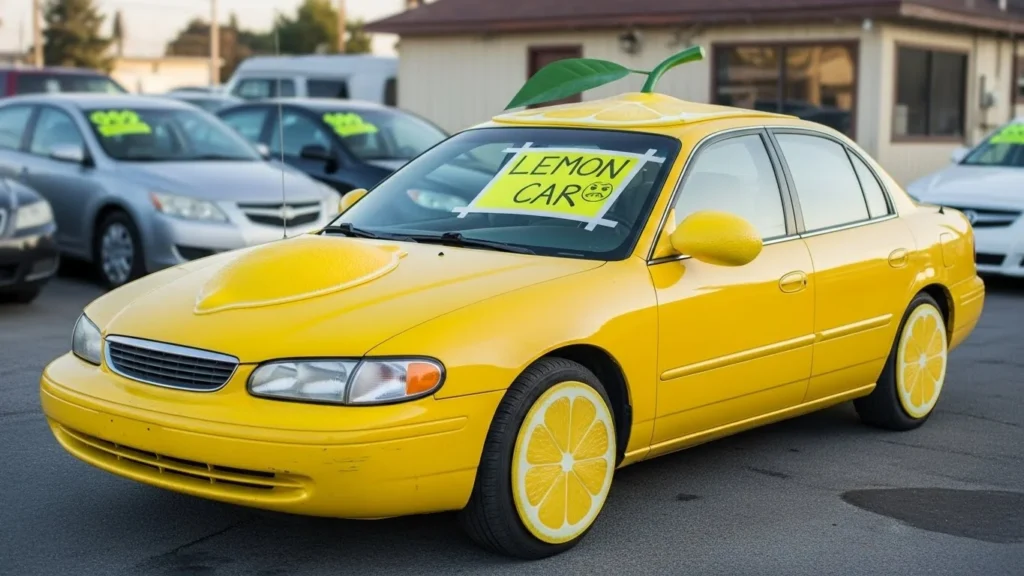
What Does “Lemon Car” Meaning?
A lemon car is a term for a vehicle that has significant defects or problems that affect its safety, value, or usability. These issues are usually persistent, appearing shortly after purchase, and cannot be easily fixed despite multiple repair attempts.
Common Types of Lemon Cars
New Cars: Fresh off the lot but have manufacturing defects
Used Cars: Purchased second-hand with hidden issues that weren’t disclosed
Rental or Lease Vehicles: Sometimes returned frequently for serious mechanical problems
Origin of the Term
The word “lemon” has been used since the early 1900s in the U.S. to describe defective or disappointing products.
It became associated with cars as automobile ownership became widespread, symbolizing a vehicle that “sucks” or fails unexpectedly.
How to Identify a Lemon Car
Watch out for these red flags:
Repeated mechanical failures or breakdowns
Persistent problems that continue despite repairs
Warning lights staying on after multiple fixes
Unusual noises, leaks, or performance issues
Discrepancies in vehicle history reports
Legal Protections for Lemon Cars
Many countries, including the U.S., have lemon laws to protect consumers:
Eligibility: Usually applies to new cars with repeated repair attempts for the same issue
Remedies: Refund, replacement, or compensation from the manufacturer
Documentation: Keep records of all repairs, communication, and service visits
Pro Tip: Check your state or country’s specific lemon laws before buying a car.
Tips to Avoid Buying a Lemon Car
Research the Model: Look for common issues and reliability ratings
Inspect the Vehicle: Hire a trusted mechanic for a pre-purchase inspection
Check Vehicle History: Use VIN checks for accidents, recalls, or title issues
Ask Questions: About previous owners, repairs, and warranties
Test Drive Thoroughly: Pay attention to performance, brakes, and electronics
Related Terms & Concepts
Certified Pre-Owned (CPO): Used cars inspected and approved by the manufacturer
Recall: A manufacturer notice to fix a defect in certain car models
Warranty: Coverage for repairs during a specific period
Buyback: Manufacturer repurchase under lemon law
Vehicle History Report: Detailed report showing accidents, repairs, or title issues