
What Does “Naturally Aspirated” Meaning?
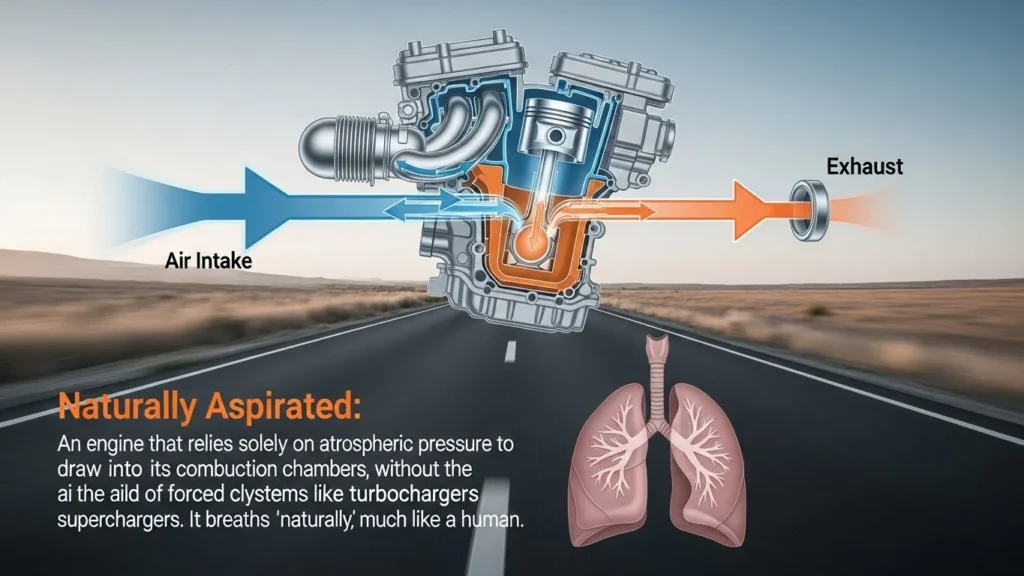
A naturally aspirated (NA) engine is an internal combustion engine that relies on atmospheric pressure to draw air into the engine rather than using a turbocharger or supercharger.
Air enters the engine without forced induction
Common in sports cars, everyday vehicles, and older engine models
Known for linear power delivery and responsiveness
How Naturally Aspirated Engines Work
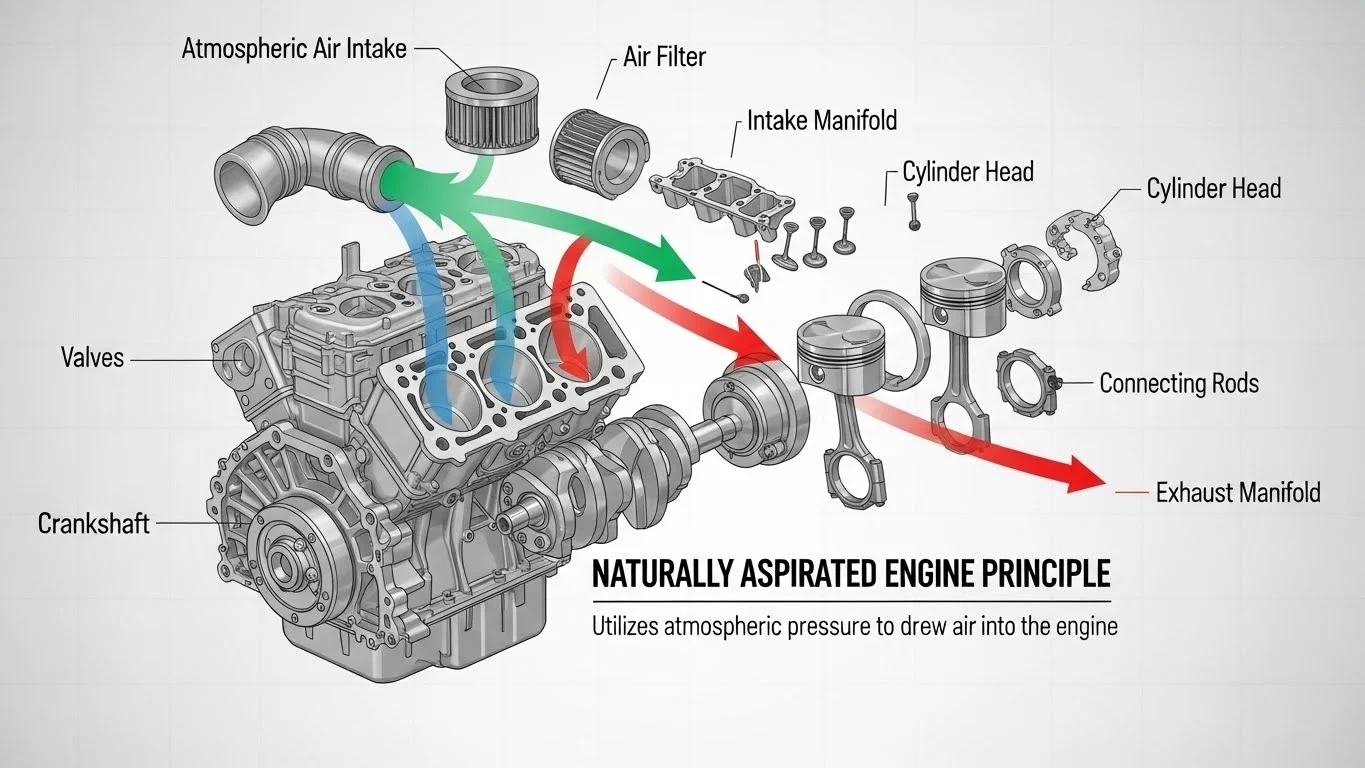
Air intake: Air is drawn into the combustion chamber naturally through the intake manifold
Fuel mixing: Air combines with fuel to create the proper mixture
Combustion: The mixture ignites, producing power
Exhaust: Spent gases exit the engine
No turbo or supercharger forces extra air in; the engine relies solely on natural airflow and engine vacuum.
Advantages of Naturally Aspirated Engines
Immediate throttle response: No lag like turbocharged engines
Smoother power delivery: Linear and predictable
Simplicity: Fewer components, easier maintenance
Reliability: Less stress on engine parts
Classic feel: Often preferred by car enthusiasts for driving experience
Disadvantages of Naturally Aspirated Engines
Lower power output: Produces less horsepower compared to forced induction engines of the same size
Less efficiency at high altitudes: Reduced air density affects performance
Fuel economy: Sometimes less efficient than modern turbo engines
Naturally Aspirated vs Turbocharged
| Feature | Naturally Aspirated (NA) | Turbocharged |
|---|---|---|
| Air intake | Atmospheric pressure | Forced via turbocharger |
| Power delivery | Linear, predictable | Can feel laggy, spikes |
| Maintenance | Simpler, fewer parts | More complex |
| Driving feel | Smooth, classic | More aggressive |
| High altitude performance | Reduced | Less affected |
Examples of Naturally Aspirated Engines
Sports cars: Mazda MX-5 Miata, Porsche 911 GT3
Supercars: Ferrari F8 Tributo, Lamborghini Huracán (some models)
Everyday vehicles: Honda Civic Si (older generations), Toyota Corolla
Common Misconceptions
Not slow: Naturally aspirated engines can be very fast if designed well
Not outdated: NA engines are still popular in high-performance and enthusiast vehicles
No tuning potential: Performance tuning is possible through airflow, exhaust, and engine mapping
Related Automotive Terms
Forced induction: Engines that use turbochargers or superchargers
Turbo lag: Delay in power delivery in turbocharged engines
Redline: Maximum engine speed for safe operation
Revving: Increasing engine RPM, often enjoyed in NA engines
Why Understanding Naturally Aspirated Engines Matters
Helps car enthusiasts and buyers make informed decisions
Useful for understanding performance, reliability, and driving experience
Explains differences between NA and turbo engines in reviews and discussions