

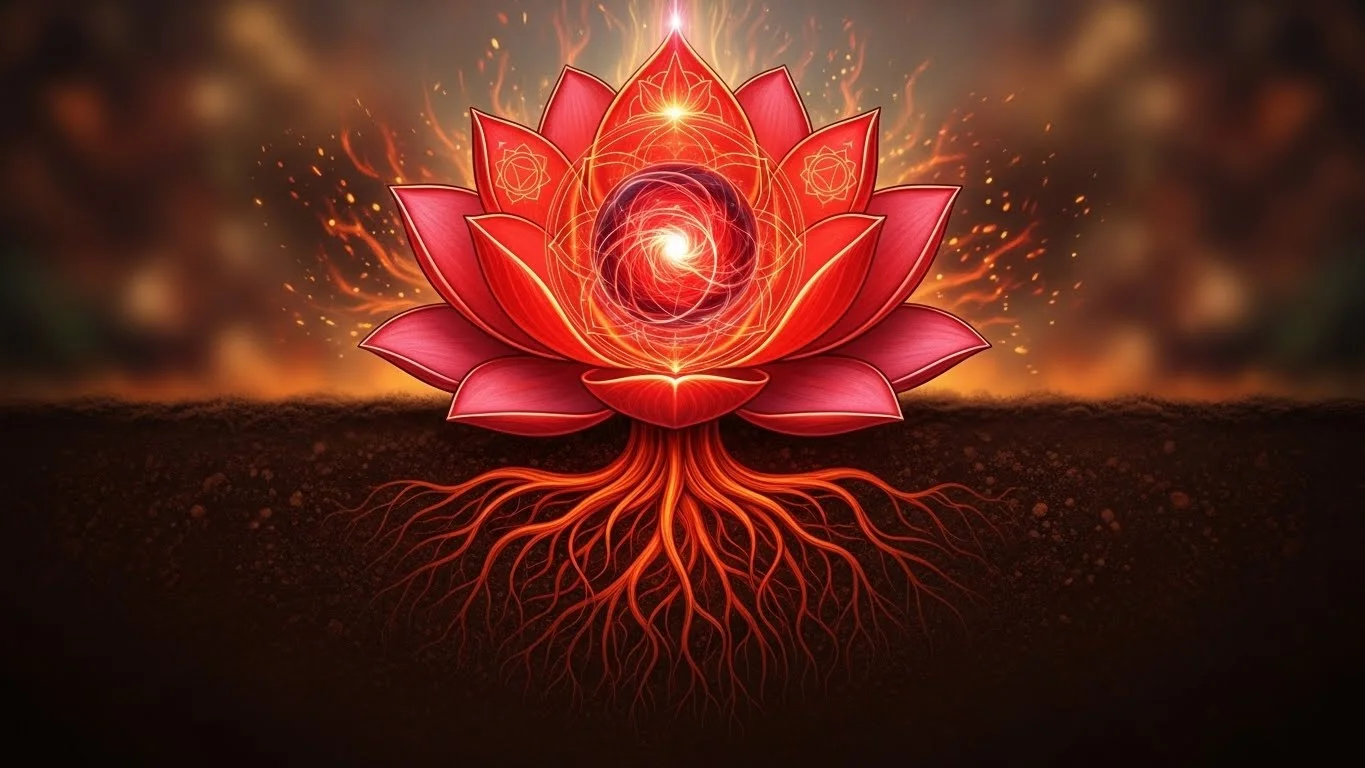
What Is the Root Chakra Meaning?
The root chakra, also known as Muladhara, is the first of the seven main chakras in the body. Located at the base of the spine, it governs our sense of grounding, survival, and physical well-being.
Location: Base of the spine, near the tailbone
Color: Red
Element: Earth
Symbol: Four-petaled lotus
Purpose and Function
The root chakra provides a foundation for all other chakras. When balanced, it gives:
Stability and security
Confidence in meeting basic needs
Physical vitality and energy
A sense of safety in the world
Signs of a Balanced Root Chakra
When your root chakra is healthy and balanced, you may experience:
Feeling grounded and connected to reality
Confidence in your ability to handle challenges
Financial stability and responsibility
Strong physical health and stamina
Calmness and inner peace
Signs of an Imbalanced Root Chakra
An imbalanced or blocked root chakra can show up as:
Anxiety, fear, or insecurity
Financial or career instability
Physical fatigue or chronic pain in the lower body
Feeling disconnected from reality or “spacey”
Restlessness or mood swings
How to Heal or Activate the Root Chakra
Balancing the root chakra involves physical, mental, and spiritual practices:
Grounding Exercises: Walking barefoot on grass, meditating, or practicing yoga
Red Foods & Crystals: Red apples, beets, strawberries; crystals like red jasper or garnet
Affirmations: “I am safe, secure, and grounded”
Physical Activity: Strength training, running, or dancing to strengthen your connection to your body
Root Chakra in Daily Life
The root chakra isn’t just about spirituality—it affects everyday life:
Work & Career: Feeling secure in your job or career path
Money & Resources: Confidence in handling finances
Relationships: Building healthy, secure connections
Health: Strong energy levels and overall physical stability
Related Chakras & Energy Centers
Sacral Chakra (Svadhisthana): Creativity, emotions, sexuality
Solar Plexus Chakra (Manipura): Personal power, confidence
Heart Chakra (Anahata): Love, compassion, relationships
Balancing your root chakra often helps align and stabilize the other chakras above it.