
📖 Saga Meaning Name
- As a name, Saga is used in Nordic countries
- It comes from Old Norse mythology
- Associated with storytelling and wisdom
- Often linked with the goddess of history
- Example: “Saga is a beautiful Scandinavian name.”
- Symbolizes stories and legends
- Popular in Iceland and Sweden
- A feminine given name
- Represents knowledge and narration
- Has a cultural and mythological background
😎 Saga Meaning Slang
- In slang, saga means a long, dramatic, or complicated story or situation
- Example: “That breakup was a whole saga.”
- Used for ongoing drama or events
- Common in social media language
- Can be humorous or serious
- Suggests something extended and emotional
- Often used for life situations
- Informal but widely understood
- Implies many events over time
- A modern conversational term
🇮🇷 Saga Meaning in Farsi
- In Farsi, saga means داستان طولانی (dāstān-e toulāni)
- Refers to a long story or epic tale
- Used in literature and conversation
- Similar to epic narrative
- Can describe historical stories
- Common in translated works
- Indicates long events or drama
- Used in storytelling context
- A descriptive literary term
- Easy to understand meaning
🇵🇰 Saga Meaning in Urdu
- Saga کا مطلب ہے طویل کہانی یا داستان
- مثال: “یہ ایک لمبی سَگا ہے”
- اکثر جھگڑوں یا واقعات کے لیے بھی استعمال ہوتا ہے
- ادبی اور عام زبان دونوں میں استعمال
- بڑی اور تفصیلی کہانی کو ظاہر کرتا ہے
- تاریخی واقعات کے لیے بھی استعمال
- جذباتی یا ڈرامائی کہانی
- آسان اور عام فہم لفظ
- کہانی یا واقعے کا تسلسل
- ادب میں اہم اصطلاح
📚 Saga Meaning in Books
- In books, saga means a long epic story or series of stories
- Often spans generations or years
- Example: family saga novels
- Common in fantasy and historical fiction
- Includes multiple characters and events
- Focuses on long-term storytelling
- Used in literary genres
- Popular in novels and series
- Shows complex narratives
- A storytelling structure
🔄 Saga Meaning Synonyms
- Epic
- Story
- Chronicle
- Tale
- Legend
- Narrative
- Account
- History
- Adventure
- Drama
📘 Saga Meaning in English
- Saga means a long and detailed story or series of events
- Example: “the saga of his life”
- Often used for dramatic situations
- Can be real or fictional
- Suggests something ongoing
- Common in literature and speech
- Indicates complexity and length
- Used for both positive and negative stories
- A widely used English word
- Easy to understand
🎬 Saga Meaning Movies
- In movies, saga refers to a film series with a continuous story
- Example: Star Wars saga
- Includes multiple connected films
- Focuses on long story arcs
- Often includes sequels and prequels
- Popular in Hollywood franchises
- Used for epic storytelling
- Covers large timelines and characters
- Common in fantasy and action genres
- A cinematic storytelling term
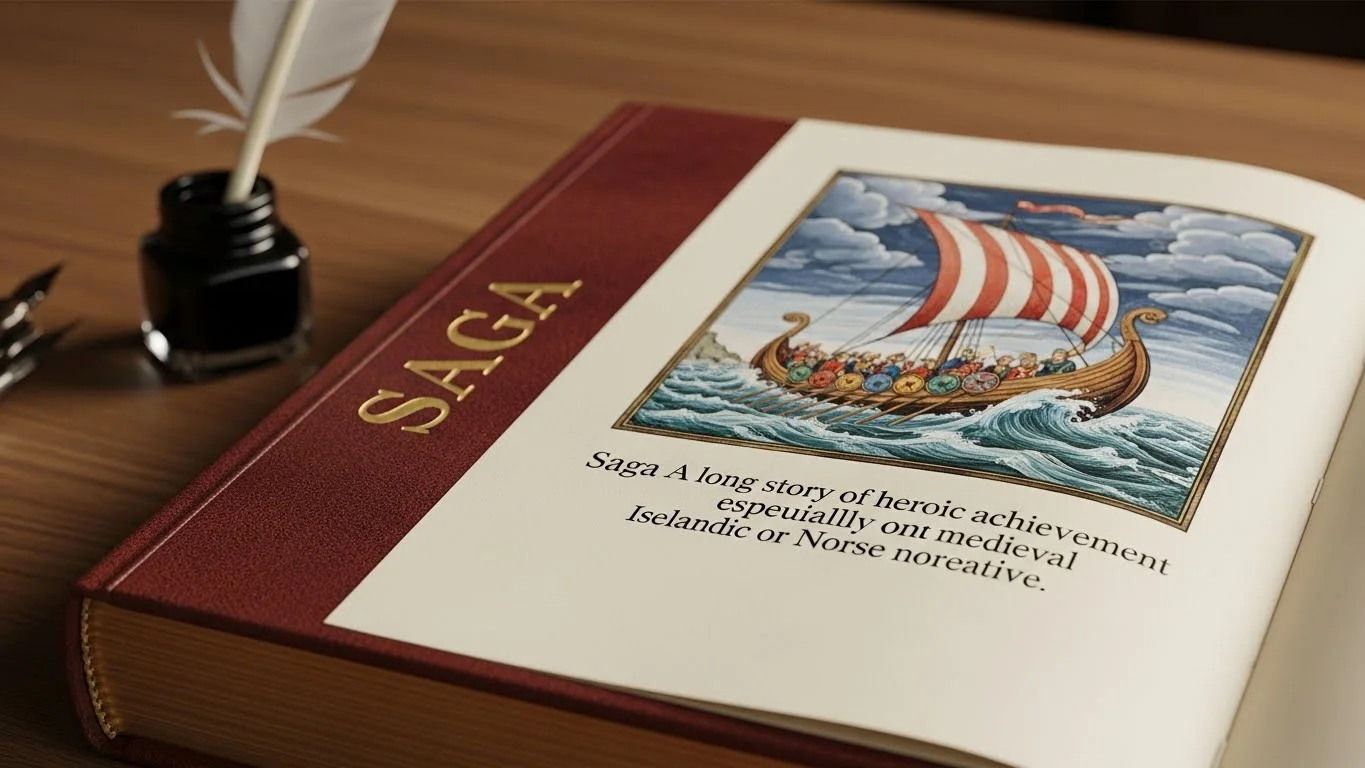
What Does Saga Meaning?
Saga has two main meanings:
A long story or narrative: Often an epic tale involving multiple events or generations.
A long series of events or experiences: Can refer to real-life situations, sometimes dramatic or complicated.
Example:
Literary: “The Lord of the Rings is a famous saga.”
Everyday life: “Their family saga lasted for decades.”
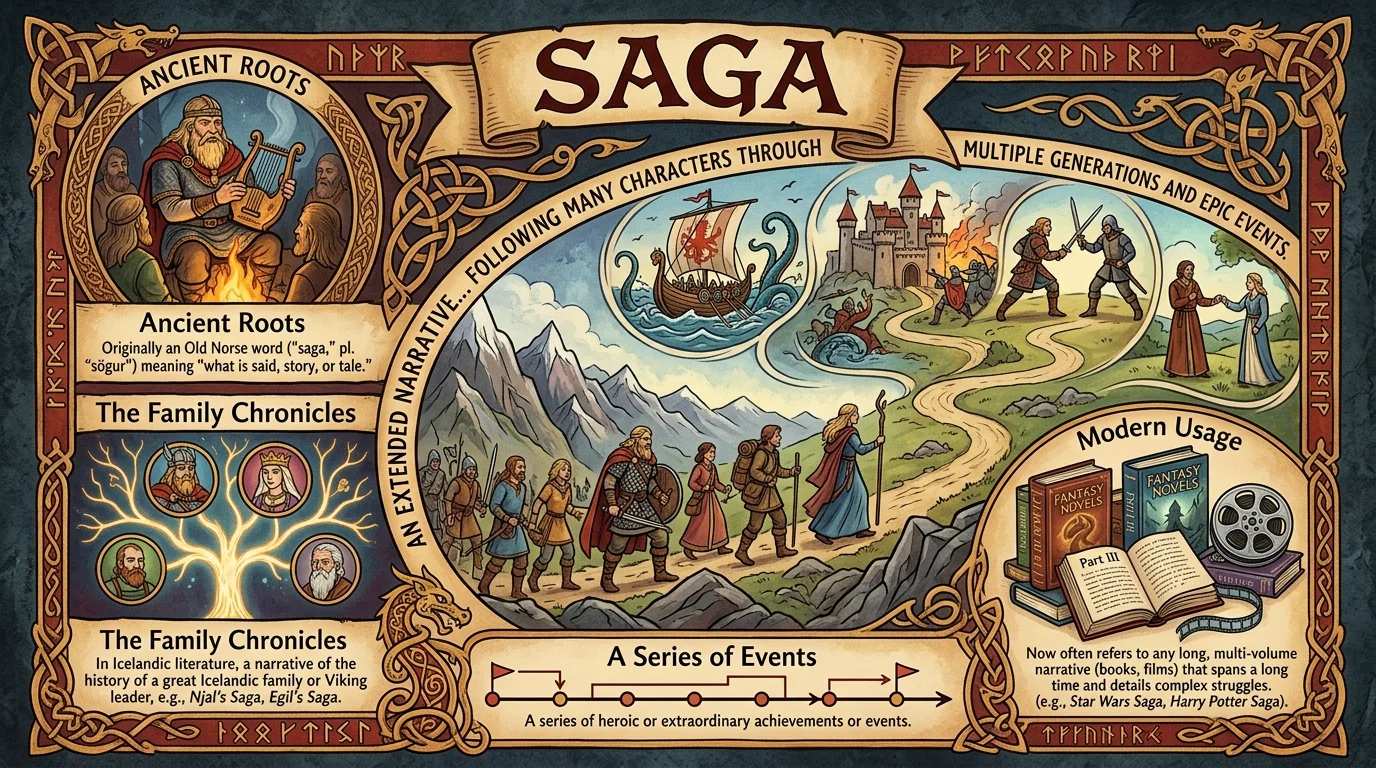
Origin of the Word Saga
Comes from Old Norse “saga”, meaning a “story” or “tale.”
Historically used in Scandinavian literature to describe epic stories of heroes and families.
Entered English in the 18th century with similar literary meaning.
Saga in Literature
Often refers to epic stories, legends, or myths.
Common in Norse literature, medieval tales, and modern fantasy novels.
Examples include:
“The Icelandic sagas”
Modern series like “Star Wars Saga”
Saga in Modern Usage
Can describe long and complex series of events in life or media.
Example: “The saga of their company’s rise and fall made headlines.”
Often conveys drama, complexity, or endurance over time.
Saga vs Story
Saga: Long, detailed, often involving multiple characters or generations
Story: Shorter or simpler narrative
Example:
Saga: “A family saga spanning three generations.”
Story: “A short story about a boy and his dog.”
Examples of Saga in Conversation
“We followed the saga of the royal family online.”
“Her career saga is full of ups and downs.”
“The movie saga kept audiences engaged for years.”
Saga in Pop Culture
Movies and book series: “The Twilight Saga,” “Star Wars Saga”
TV series often referred to as sagas due to long-running storylines
Video games: Some franchises are called game sagas
Common Misunderstandings
Not every long story is a saga; it must be epic or complex.
Saga is not limited to fiction; it can describe real-life events.
Saga does not mean “boring” or “routine”—it often implies exciting, eventful, or dramatic series.
Related Words
Epic: Long and grand story
Chronicle: Detailed historical account
Legend: Story passed down over generations
Series: A set of connected events or episodes
Saga in Business and News
Used metaphorically to describe long business ventures, scandals, or ongoing stories.
Example: “The saga of the tech startup’s rise and fall continues.”
Benefits of Using the Word Saga
Adds drama or gravitas to your writing
Helps describe long, complex sequences clearly
Can apply to both fictional and real-life contexts