
What Does Serotonin Meaning?
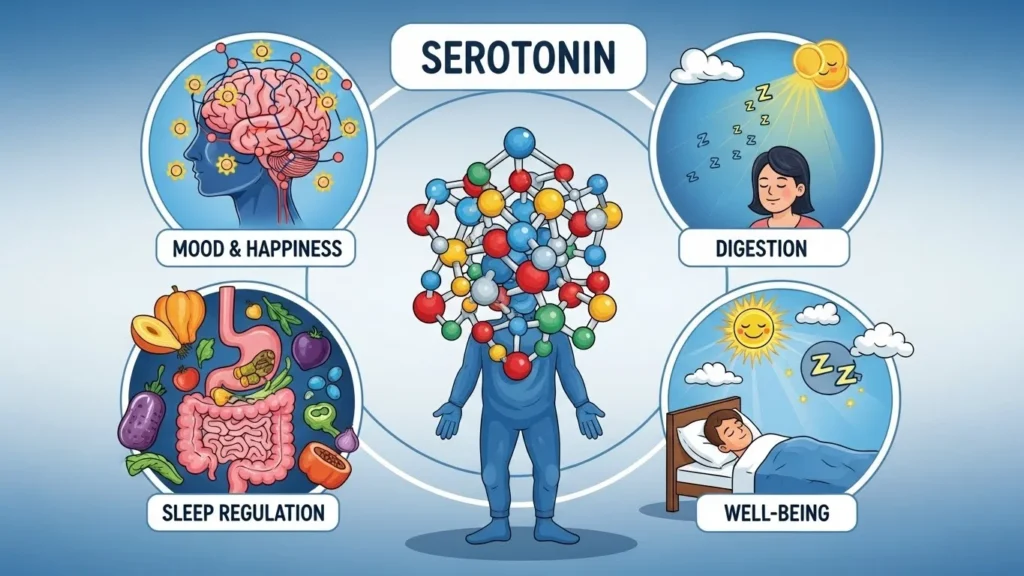
Serotonin is a chemical messenger (neurotransmitter) in the brain and body that helps regulate mood, sleep, appetite, digestion, and other functions.
Often called the “feel-good” chemical
Helps maintain emotional balance and happiness
Impacts mental health, motivation, and social behavior
Origin of the Term
Coined in the mid-20th century by scientists studying neurotransmitters
Name derives from “sero-” (serum) and “tonin” (affecting muscle tone)
Studied extensively in neurology, psychiatry, and psychology
How Serotonin Works in the Body
Produced mainly in the brain and gut
Regulates:
Mood and emotions
Sleep cycles
Appetite and digestion
Memory and learning
Helps the body respond to stress and maintain calmness
Effects of Serotonin on Mood
High serotonin levels: Associated with happiness, calmness, and emotional stability
Low serotonin levels: Linked to depression, anxiety, and mood swings
Often targeted by antidepressants like SSRIs to improve mental health
Serotonin in Daily Life
Influenced by diet, exercise, sunlight, and sleep
Foods that can help boost serotonin:
Eggs
Cheese
Pineapples
Salmon
Activities that improve serotonin naturally:
Exercising regularly
Spending time outdoors
Socializing with friends
Practicing mindfulness
Real-Life Examples of Serotonin
Feeling calm after a walk in the sun – serotonin boost
Eating a healthy meal and feeling satisfied – serotonin effects
Laughing with friends – increases serotonin in the brain
Listening to favorite music – stimulates serotonin release
Common Misconceptions About Serotonin
Not just about happiness: It also affects digestion, sleep, and body functions
Supplements are not always necessary: Lifestyle changes often help naturally
Instant happiness: Boosting serotonin is gradual, not immediate
Related Terms
Dopamine: Another neurotransmitter linked to reward and motivation
Endorphins: Natural painkillers that also improve mood
SSRIs: Medications that help increase serotonin levels for depression
Neurotransmitter: Chemicals that transmit signals in the brain
Why Understanding Serotonin Matters
Helps explain mood swings, stress, and mental health conditions
Guides healthy lifestyle choices for better emotional well-being
Supports understanding mental health treatments and self-care