
What Does Sextant Mean?
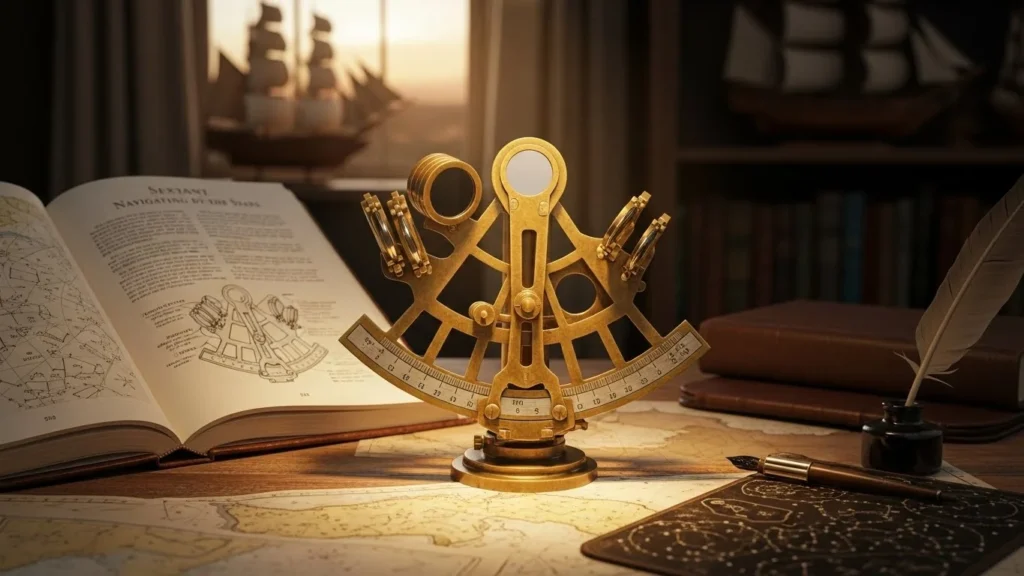
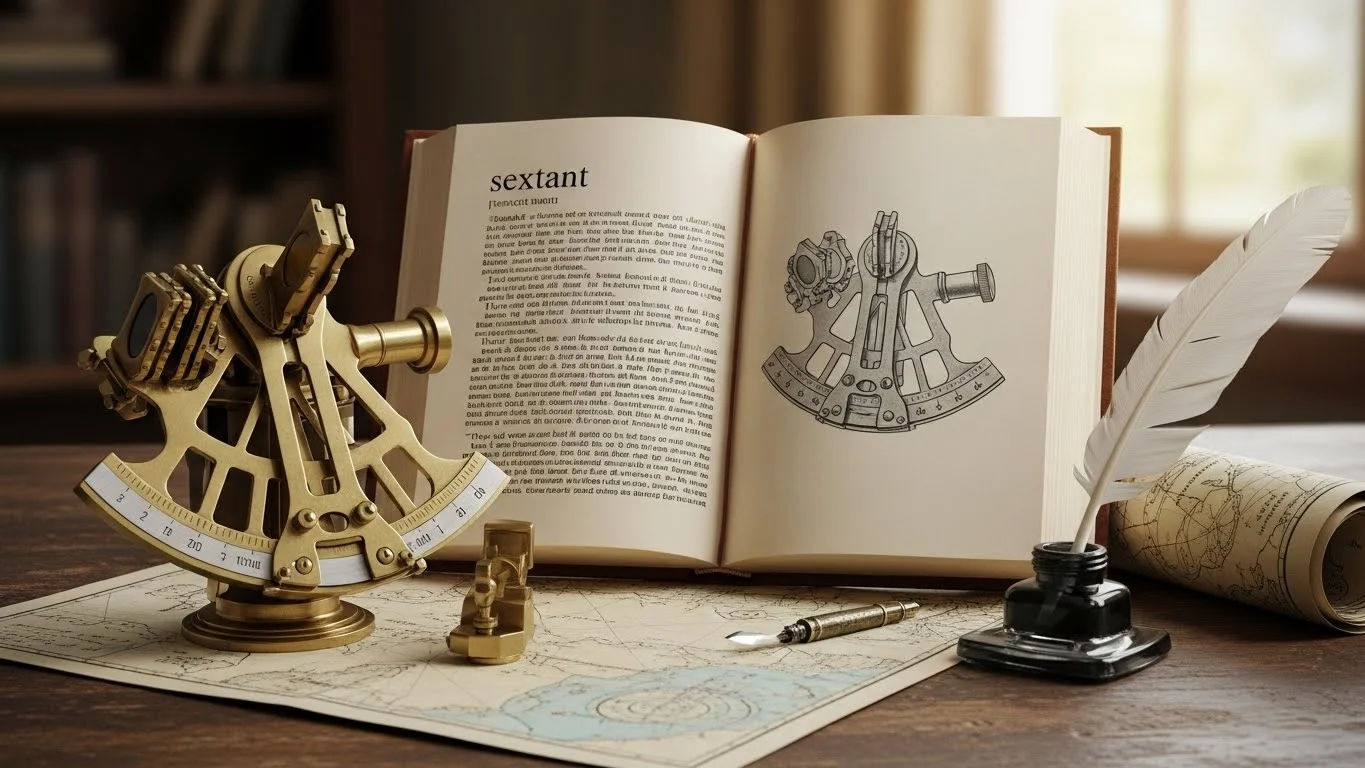
A sextant is a scientific instrument used to measure the angle between two visible objects, usually between a celestial body (like the sun or stars) and the horizon.
In simple words, a sextant helps people determine their position, especially at sea.
Origin of the Word Sextant
The word sextant comes from the Latin word sextus, meaning sixth.
The instrument is named this way because its arc covers one-sixth of a circle, or 60 degrees.
It was developed in the 18th century and quickly became essential for navigation.
What Is a Sextant Used For?
A sextant is mainly used for navigation and astronomy.
Common uses include:
Finding latitude and longitude
Navigating ships at sea
Celestial navigation
Astronomical observations
Before GPS, sextants were one of the most reliable navigation tools.
How a Sextant Works
A sextant works by:
Measuring the angle between a celestial object and the horizon
Using mirrors to align images
Calculating position based on time and angle
Accurate timekeeping is essential when using a sextant effectively.
Sextant Meaning in Navigation
In navigation, the sextant allows sailors to:
Know their position without landmarks
Travel long distances safely
Navigate using the sun, moon, and stars
Even today, sextants are taught as a backup navigation method.
Sextant Meaning in Modern Times
Although GPS is widely used, sextants still matter because:
They don’t rely on electronics
They work without power
They are reliable in emergencies
Many navigation schools still teach sextant use.
Common Misunderstandings About Sextants
People often misunderstand sextants by:
Thinking they are outdated and useless
Confusing them with compasses
Believing they only work at night
In reality, sextants work both day and night and serve a different purpose than compasses.
Related Terms and Instruments
Words often associated with sextant include:
Compass
Chronometer
Navigation
Celestial navigation
Horizon
These tools often work together in traditional navigation.
Why Understanding Sextant Matters
Knowing the sextant meaning helps you:
Understand navigation history
Read maritime or exploration content
Appreciate non-digital navigation skills
It highlights how humans navigated the world long before modern technology.