
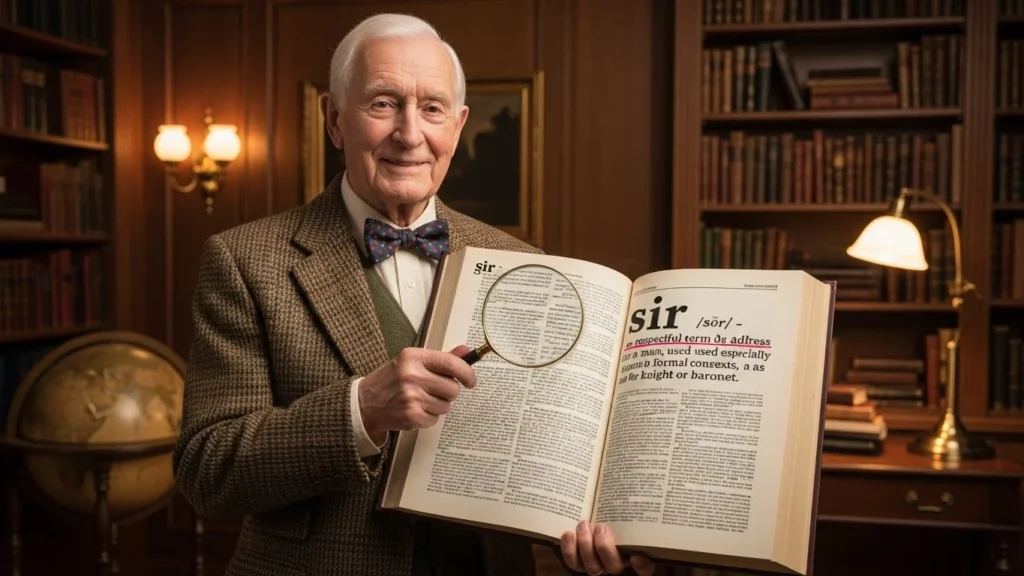
What Does “Sir” Meaning?
Sir is a respectful title or form of address used for:
Men in positions of authority or respect
Formal communication in letters or speech
Polite address to someone whose name you don’t know
It is often used to show respect, courtesy, or deference.

Origin of the Word “Sir”
Comes from the Middle English “sire”, from Old French, meaning lord or master.
Historically, it was a title for knights and gentlemen.
Over time, it became a general term of respect for adult men.
Sir in Daily Life
Schools: Students often say “Sir” to male teachers.
Workplace: Employees may address managers or senior officials as “Sir.”
Service settings: Used to politely address strangers, e.g., “Can I help you, Sir?”
Letters and emails: Formal greetings, e.g., “Dear Sir or Madam.”
Sir in Military and Police
Commonly used in armed forces and law enforcement to show respect to superiors.
Example: “Yes, Sir!” or “No, Sir!”
Sir vs Mister (Mr.)
Sir: Polite address in conversation or direct speech
Mr.: Used as a prefix before the surname, e.g., Mr. Smith
Sir in Letters and Emails
Dear Sir: Formal opening when the recipient is unknown
Dear Sir or Madam: Inclusive for unknown genders
Used in official, professional, or business correspondence
Cultural Significance
Used in English-speaking countries such as UK, US, India, and Canada
In the UK, “Sir” is also an honorary title for knights (e.g., Sir Elton John)
Shows politeness and social etiquette
Common Misunderstandings
Not a first name: “Sir” is a title, not a personal name
Can sound old-fashioned if overused casually
Not always appropriate in informal settings
How to Use “Sir” Correctly
Address teachers, officers, or elders
Use in formal emails or letters
Avoid in casual conversation with friends or peers
Always combine with a respectful tone
Examples of Sir in Conversation
School: “Good morning, Sir.”
Restaurant: “Could I have the menu, Sir?”
Military: “Yes, Sir!”
Email: “Dear Sir, I am writing to inquire about…”