
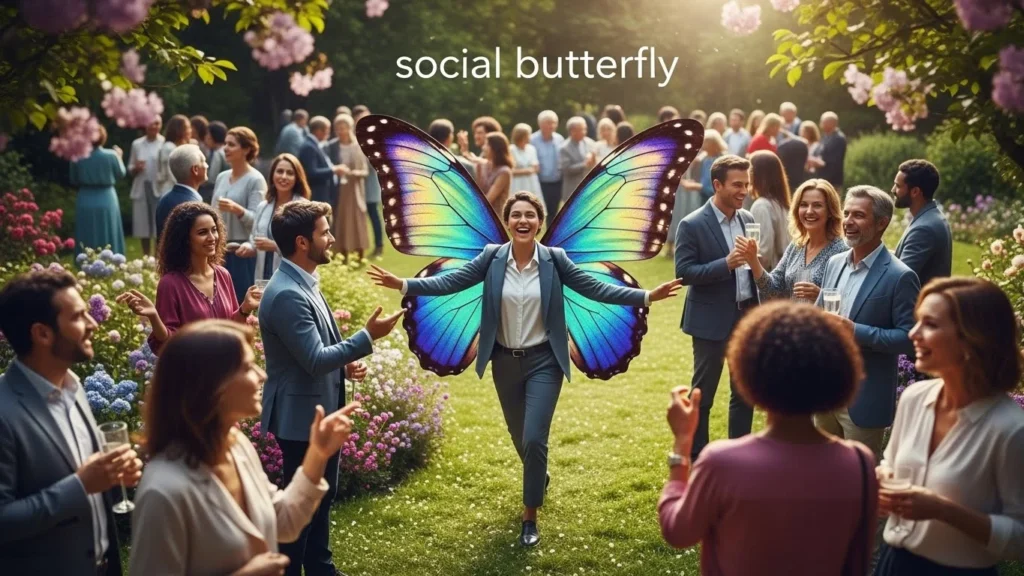
🦋 Social Butterfly Opposite
- Introvert – someone who prefers solitude.
- Homebody – person who enjoys staying at home.
- Recluse – avoids social interactions.
- Lone Wolf – independent, prefers being alone.
- Reserved Person – quiet and shy in groups.
- Wallflower – avoids attention at social events.
- Observer – watches social interactions but doesn’t participate.
- Solitary Individual – prefers individual activities.
- Anti-Social – dislikes or avoids social contact.
- Quiet Thinker – reflective rather than outgoing.
🔄 Social Butterfly Synonyms
- Socialite – very active in social circles.
- Extrovert – outgoing and sociable person.
- Party Animal – loves attending events.
- Networker – builds connections easily.
- Life of the Party – brings energy to social gatherings.
- Mingler – enjoys talking with different people.
- Connector – links people together socially.
- Chatty Cathy – talks a lot in social settings.
- Friendly Person – approachable and warm.
- Outgoing Individual – comfortable engaging with others.
✨ Social Butterfly Meaning Spiritual
- Someone who spreads positive energy in social settings.
- A person who connects with others on an emotional level.
- Engages in community and collective well-being.
- Symbolizes openness and warmth in relationships.
- Encourages harmony among social groups.
- Represents adaptability and emotional intelligence.
- Brings joy and lightness to interactions.
- Helps others feel included and valued.
- Reflects spiritual growth through human connections.
- Uses social interactions for personal and collective enlightenment.
🧬 Social Butterfly Personality
- Outgoing and friendly with everyone.
- Enjoys being the center of attention.
- Confident in large groups.
- Curious about different people and cultures.
- Thrives on social interaction and networking.
- Energetic and talkative.
- Can adapt to various social situations.
- Often popular and well-liked.
- Expressive and enthusiastic in conversations.
- Likes making new friends constantly.
⚠️ Social Butterfly Negative Meaning
- Can be seen as superficial or shallow.
- May prioritize socializing over responsibilities.
- Sometimes perceived as attention-seeking.
- Can spread gossip unintentionally.
- May struggle with deep one-on-one connections.
- Prone to distractions from constant socializing.
- Can be unreliable in commitments.
- Might neglect personal growth for social fun.
- Overextending oneself socially causing stress.
- Can be misunderstood as insincere.
❓ Is Social Butterfly a Bad Thing
- Not inherently bad – mostly positive traits.
- Can be negative if it leads to shallow relationships.
- Encourages social networking and connections.
- Helps in building confidence and communication skills.
- Negative only if it causes overcommitment.
- Not suitable for people who prefer quiet life.
- Can lead to spreading oneself too thin socially.
- Balanced social butterfly is healthy.
- Mislabeling introverts as “boring” is incorrect.
- Social butterfly traits can be used for personal growth.
🏛️ Social Butterfly Origin
- Originated in the early 20th century.
- Derived from metaphor comparing social people to butterflies.
- Popularized in American English slang.
- Used to describe someone who flits from one social event to another.
- First seen in magazines and newspapers in the 1920s.
- Reflects observation of outgoing, lively behavior.
- Metaphor emphasizes grace and lightness in interactions.
- Early use linked to upper-class socialites.
- Modern usage expanded to anyone outgoing socially.
- Often referenced in psychology and pop culture.
📝 Social Butterfly in a Sentence
- “Emma is a real social butterfly; she knows everyone at the party.”
- “Being a social butterfly helps him network for his career.”
- “She became a social butterfly after joining the drama club.”
- “Despite being shy at first, he turned into a social butterfly.”
- “Social butterflies often thrive in large gatherings.”
- “Her social butterfly personality makes her popular at school.”
- “Even introverts can admire a social butterfly’s charm.”
- “John’s social butterfly nature helps him connect people easily.”
- “Being a social butterfly has its pros and cons.”
- “The social butterfly floated from group to group with ease.”
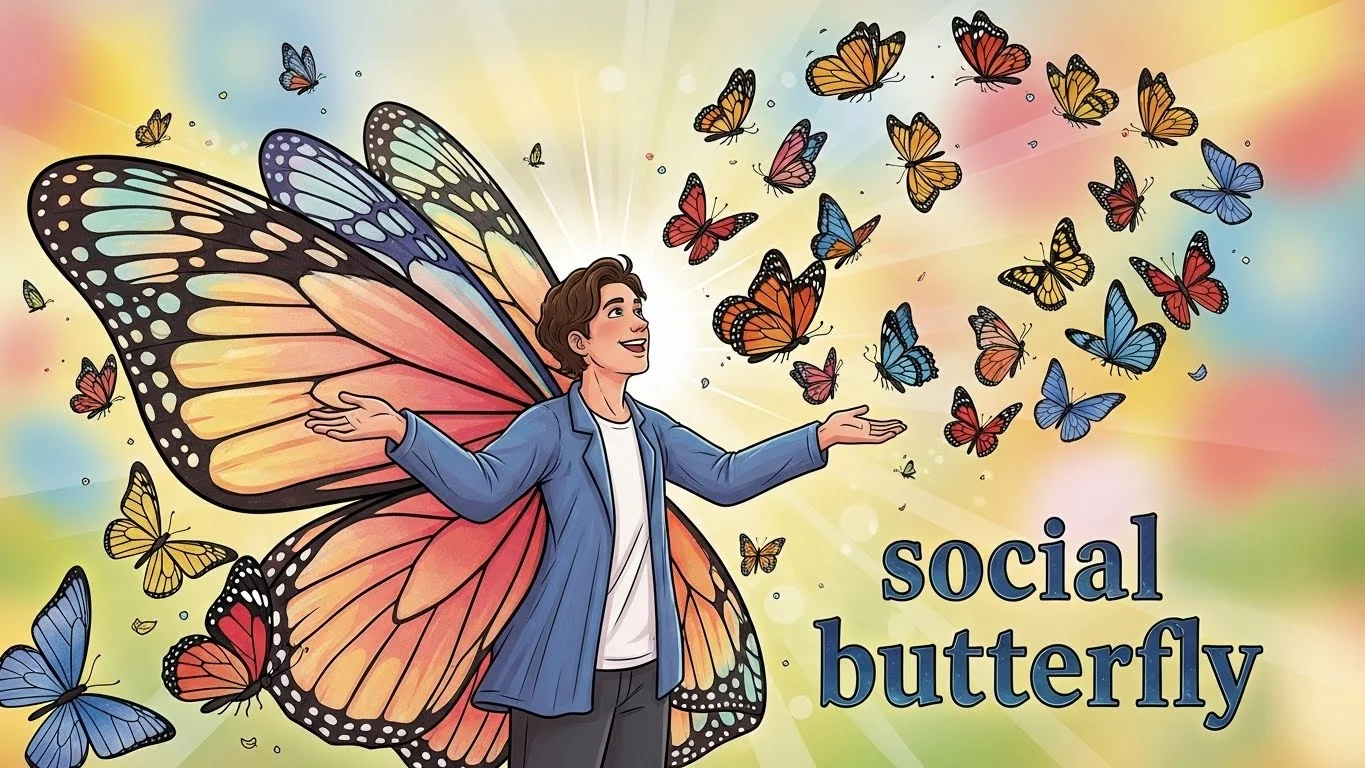
What Does “Social Butterfly” Mean?
A social butterfly is a person who is very social, outgoing, and comfortable interacting with many people.
In simple words:
A social butterfly enjoys meeting people, talking easily, and moving smoothly from one conversation to another.
This phrase is usually meant as a compliment, highlighting someone’s social confidence and friendliness.
Why Is It Called a “Social Butterfly”?
The phrase is a metaphor.
Just like a butterfly:
-
Moves from flower to flower
-
Is light, active, and visible
-
Attracts attention naturally
A social butterfly:
-
Moves from group to group
-
Enjoys variety in conversations
-
Feels energized by social interaction
The comparison paints a clear picture of someone who thrives in social environments.
Is “Social Butterfly” Positive or Negative?
Most of the time, social butterfly is positive.
It suggests someone is:
-
Friendly
-
Approachable
-
Confident in social settings
-
Good at networking or making friends
However, depending on tone or context, it can sometimes sound mildly critical, implying someone is overly chatty or not very deep. Context matters.
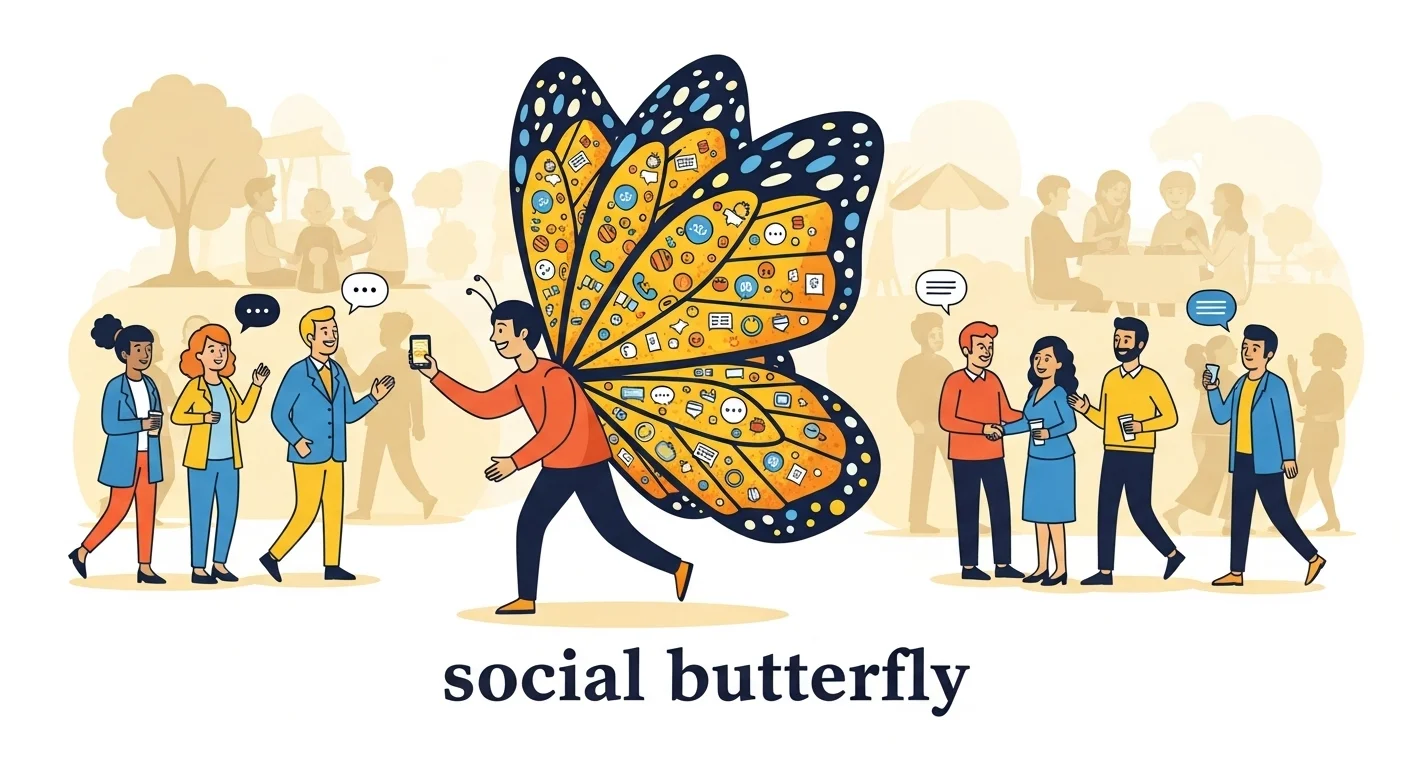
How People Use “Social Butterfly” in Real Life
In Everyday Conversations
-
“She’s a social butterfly—she knows everyone here.”
-
“I’m not shy, but I’m not a social butterfly either.”
Here, it’s used to describe natural social behavior.
In Schools and Childhood Contexts
Teachers and parents often say:
-
“Your child is a social butterfly in class.”
This usually means the child:
-
Makes friends easily
-
Talks a lot
-
Enjoys group activities
In Workplaces and Professional Settings
In professional language, it may suggest:
-
Strong communication skills
-
Networking ability
-
Team friendliness
Example:
“He’s a social butterfly at conferences—great for connections.”
Social Butterfly Meaning in Personality Terms
A social butterfly often shares traits like:
-
High extroversion
-
Strong verbal communication
-
Emotional openness
-
Curiosity about people
However, not all extroverts are social butterflies, and not all social butterflies are extroverts all the time.
Social Butterfly vs Introvert vs Extrovert
Social butterfly:
-
Enjoys many social interactions
-
Comfortable with strangers
-
Energized by social variety
Extrovert:
-
Gains energy from socializing
-
May prefer deeper or fewer interactions
Introvert:
-
Enjoys solitude or small groups
-
May socialize well but need recovery time
A social butterfly is more about behavior, not strict personality type.
Real-Life Examples Explained
Example 1:
“She walked into the party knowing no one and left with ten new friends.”
Explanation: Classic social butterfly behavior.
Example 2:
“He jumps between conversations nonstop.”
Explanation: Social energy and adaptability.
Example 3:
“I admire social butterflies—I get tired after small talk.”
Explanation: Comparison highlighting different social styles.
Social Butterfly in Social Media & Modern Culture
On platforms like Instagram, TikTok, and LinkedIn, “social butterfly” is often used to describe:
-
Influencers
-
Event hosts
-
Highly connected people
Example caption:
“Trying to be a social butterfly tonight.”
It often signals confidence and charm, sometimes with humor.
Common Misunderstandings About “Social Butterfly”
-
It doesn’t mean fake: Being social doesn’t equal being insincere.
-
It doesn’t mean shallow: Many social butterflies can form deep connections too.
-
It’s not universal: Someone can be a social butterfly in some settings but quiet in others.
When “Social Butterfly” Can Sound Negative
In rare cases, it may imply:
-
Talking too much
-
Not focusing deeply
-
Seeking attention
This depends entirely on tone and relationship between speaker and listener.
Related Words and Similar Phrases
-
People person – enjoys being around others
-
Outgoing – confident socially
-
Extroverted – energized by interaction
-
Life of the party – highly engaging presence
Internal linking opportunity:
Related articles like “extrovert meaning,” “people person meaning,” or “introvert vs extrovert” pair well with this topic.
How to Use “Social Butterfly Meaning” Naturally
You can use it to:
-
Compliment someone
-
Describe yourself casually
-
Explain social preferences
Examples:
-
“I’m more of a listener than a social butterfly.”
-
“She’s a natural social butterfly.”