
What Does “Taxonomy” Mean in Chat or Text?
Taxonomy is a noun that generally means:
The science of classification or categorization.
Example: “In biology, taxonomy helps classify plants and animals.”
In general use: Any system for organizing or grouping things logically.
Example: “The website has a clear taxonomy for its articles.”
Different Contexts
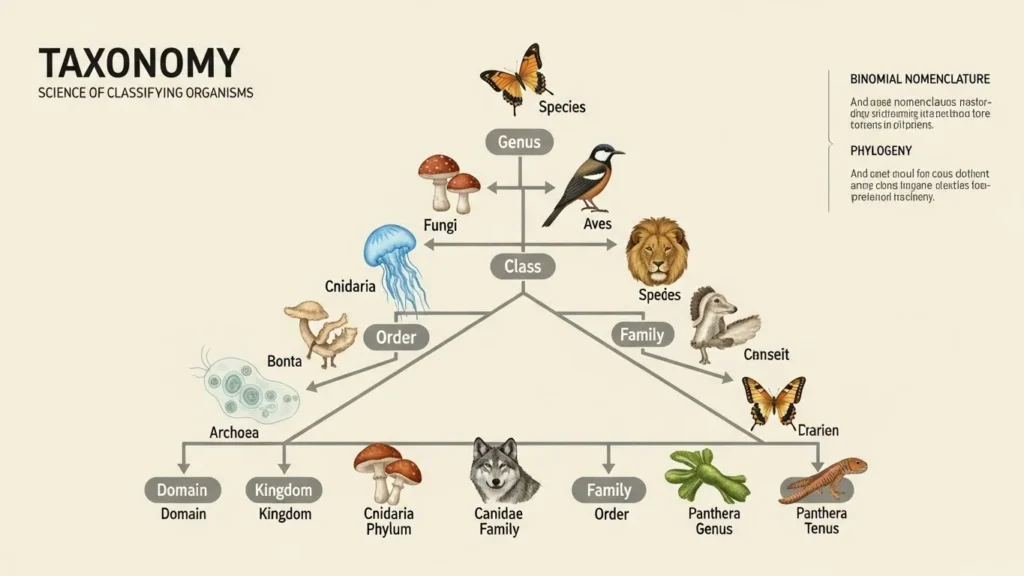
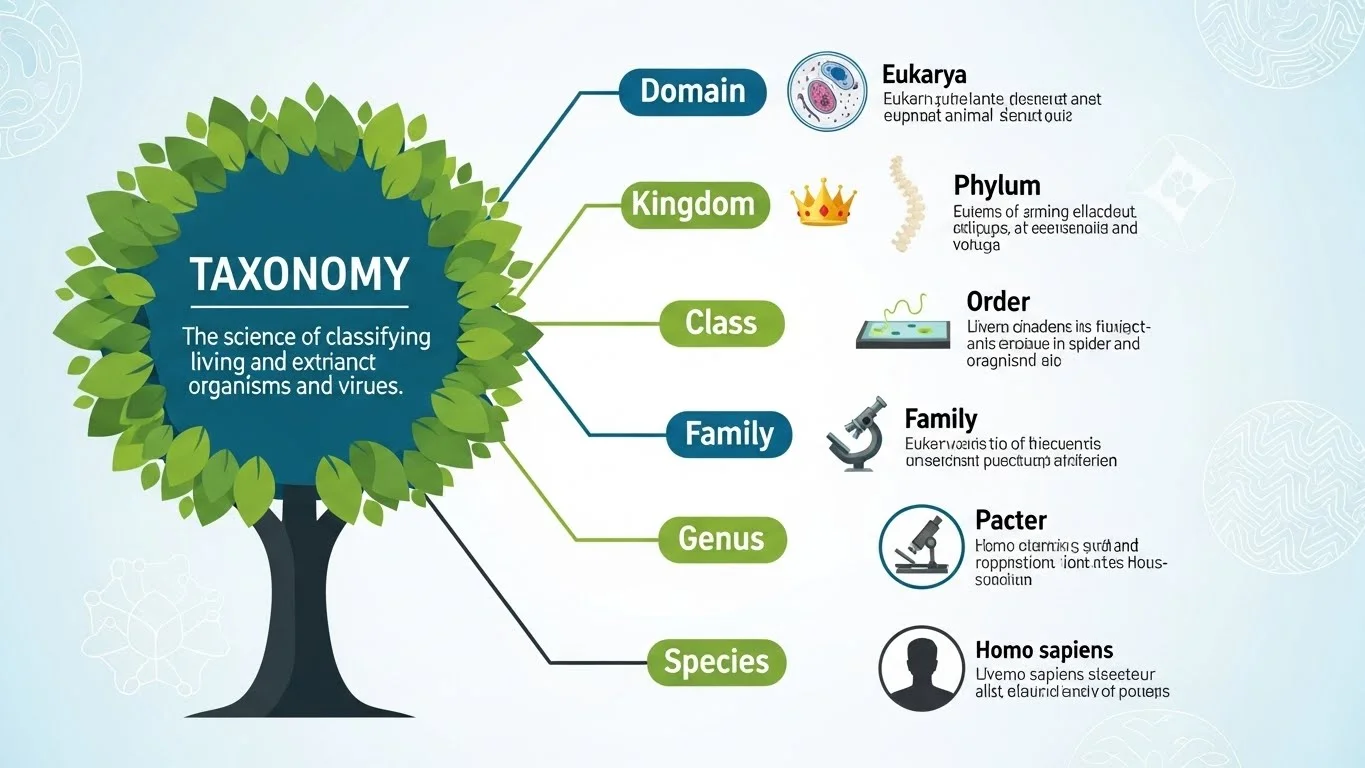
Biology/Science: Classification of living organisms into groups like species, genus, family, etc.
Digital & Knowledge Management: Organizing information, files, or products into categories.
Everyday Conversation: Referring to organized systems or classifications.
Origin & History
The word taxonomy comes from the Greek “taxis” (arrangement) and “nomos” (law). It was first widely used in the 18th century when Carl Linnaeus developed a system for classifying living organisms. Today, the concept of taxonomy extends beyond biology to any structured organization system.
How People Use “Taxonomy Meaning” in Real Conversations
Even outside science, taxonomy sometimes appears in everyday chat, work, or online discussions.
Platforms
Texting & Messaging Apps: “I need to understand the taxonomy of these topics for my project.”
Social Media: Posts about website design, content management, or biology often mention taxonomy.
Forums & Discord: Discussions about organizing knowledge, libraries, or games may include taxonomy.
Professional Contexts: Educators, scientists, or web designers frequently use the term.
Appropriate vs Awkward
Appropriate: Talking about organization, classification, or systems.
Awkward: Using it casually for trivial groupings, like “my socks have a taxonomy.” It can sound overly formal.
Real-Life Examples of “Taxonomy” in Text Messages
Here are some chat-style examples showing how “taxonomy” appears in conversations:
Friend A: “I’m confused about the plant categories in biology class.”
Friend B: “Don’t worry, Linnaeus’ taxonomy makes it easier to understand.”Work Chat:
Colleague 1: “The website’s taxonomy is messy; users can’t find articles easily.”
Colleague 2: “We should reorganize categories for better navigation.”Casual Chat:
User 1: “I made a taxonomy for my comic book collection.”
User 2: “Smart! That will make it easier to find your favorites.”
These examples show both scientific and practical uses of taxonomy in real life.
Common Mistakes & Misunderstandings
Even experienced writers and speakers sometimes misuse taxonomy:
Confusing taxonomy with labeling: Taxonomy implies logical organization, not just random tags.
Overusing in casual contexts: Saying “I made a taxonomy of my pens” sounds unnecessarily formal.
Mixing it with hierarchy only: Taxonomy includes classification but is not limited to ranking.
Pronunciation or spelling errors: Common mistakes include “taxanomy” or “taxanomny.”
Related Words & Concepts
Understanding related terms helps clarify usage:
Classification: Arranging things into categories or types.
Hierarchy: A system with levels of importance or rank.
Ontology: The study of how entities are related, often in data science.
Organization: General arrangement of things in order.
Systematics: Specifically in biology, studying evolutionary relationships.