
What Viscosity Means in Simple Words
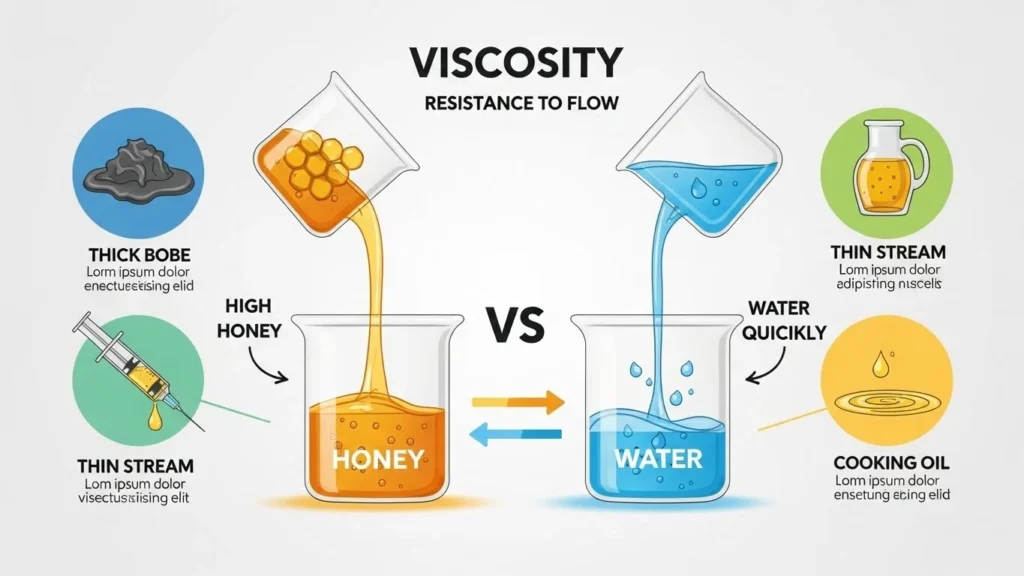
Viscosity means how thick or thin a liquid is and how easily it flows.
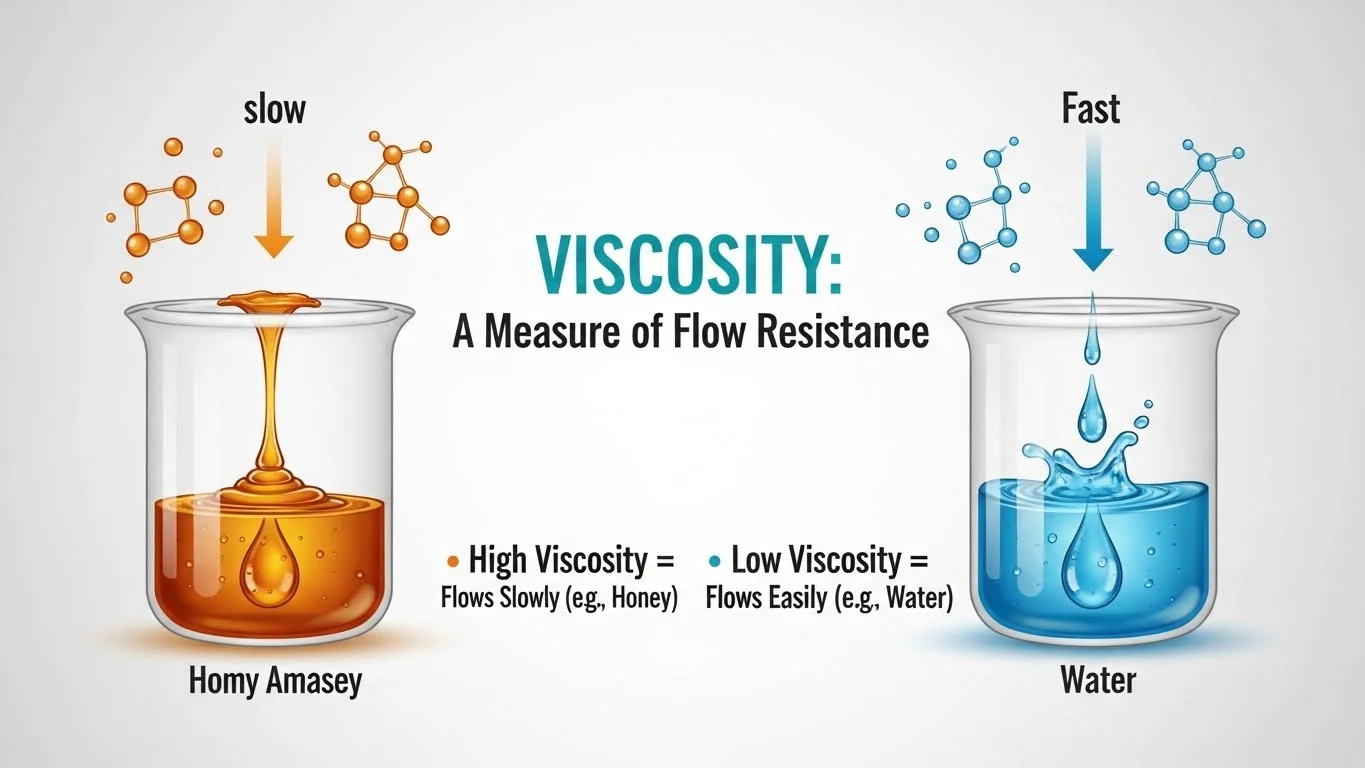
Thick liquids flow slowly
Thin liquids flow quickly
Basic Definition of Viscosity
Viscosity is a measure of a fluid’s resistance to flow.
High viscosity → thick and slow
Low viscosity → thin and fast
Viscosity Meaning in Science
In science, viscosity describes internal friction within a liquid.
It explains how much the liquid particles resist moving past each other.
Example:
Honey has high internal resistance
Water has low internal resistance
High vs Low Viscosity Explained
High Viscosity
Thick texture
Slow movement
Examples: honey, syrup, oil
Low Viscosity
Thin texture
Fast movement
Examples: water, alcohol, gasoline
Viscosity Meaning in Everyday Life
You experience viscosity when:
Pouring cooking oil
Using shampoo
Watching paint drip
Drinking juice or water
Each liquid flows differently because of viscosity.
Viscosity Meaning in Liquids and Gases
Liquids: Viscosity is easy to notice (thick vs thin)
Gases: Viscosity exists but is much lower than liquids
Air, for example, has very low viscosity.
Viscosity Meaning in Physics
In physics, viscosity measures how much force is needed to make a fluid flow.
It plays a key role in:
Fluid motion
Energy loss
Mechanical systems
Viscosity Meaning in Engineering
Engineers consider viscosity when designing:
Engines
Lubrication systems
Pipelines
Hydraulic machines
Correct viscosity ensures smooth and safe operation.
Viscosity Meaning in Chemistry
In chemistry, viscosity helps identify:
Chemical composition
Purity of liquids
Reaction behavior
Changes in viscosity can indicate chemical changes.
How Temperature Affects Viscosity
Heating a liquid lowers viscosity (it flows faster)
Cooling a liquid raises viscosity (it flows slower)
Example: Cold honey flows slower than warm honey.
Units Used to Measure Viscosity
Viscosity is measured using units like:
Pascal-second (Pa·s)
Poise (P)
Centipoise (cP)
Why Viscosity Is Important
Viscosity matters because it affects:
Fuel efficiency
Machine performance
Food texture
Medical fluids
Industrial safety
Common Examples of Viscosity
Honey → very high viscosity
Oil → medium viscosity
Water → low viscosity
Air → extremely low viscosity
Common Misunderstandings About Viscosity
Viscosity does not mean weight
Thick does not always mean sticky
All fluids have viscosity, even gases
How to Use Viscosity in a Sentence
Examples:
“Honey has a higher viscosity than water.”
“The viscosity of oil changes with temperature.”
“Engine oil must have proper viscosity to work well.”