What Does Wanton Mean?
Wanton means showing a reckless lack of care, control, or moral restraint. It often describes actions done deliberately and without concern for the harm they may cause.
In simple words, wanton behavior is careless, uncontrolled, or intentionally irresponsible.
Origin and Background of Wanton
The word wanton comes from older English usage and was originally linked to the idea of being undisciplined or unrestrained. Over time, its meaning expanded to include reckless or intentional disregard for rules, safety, or ethics.
Today, wanton is commonly used in formal writing, law, and literature.
Wanton Meaning in Modern Usage
In modern English, wanton is often used to describe:
Reckless actions
Unnecessary destruction
Deliberate misconduct
Lack of respect for consequences
It is frequently paired with nouns like:
Wanton behavior
Wanton destruction
Wanton disregard
Wanton Meaning in Legal and Formal Contexts
In legal or official language, wanton has a specific tone.
It may refer to actions that are:
Done knowingly
Done without justification
Likely to cause harm
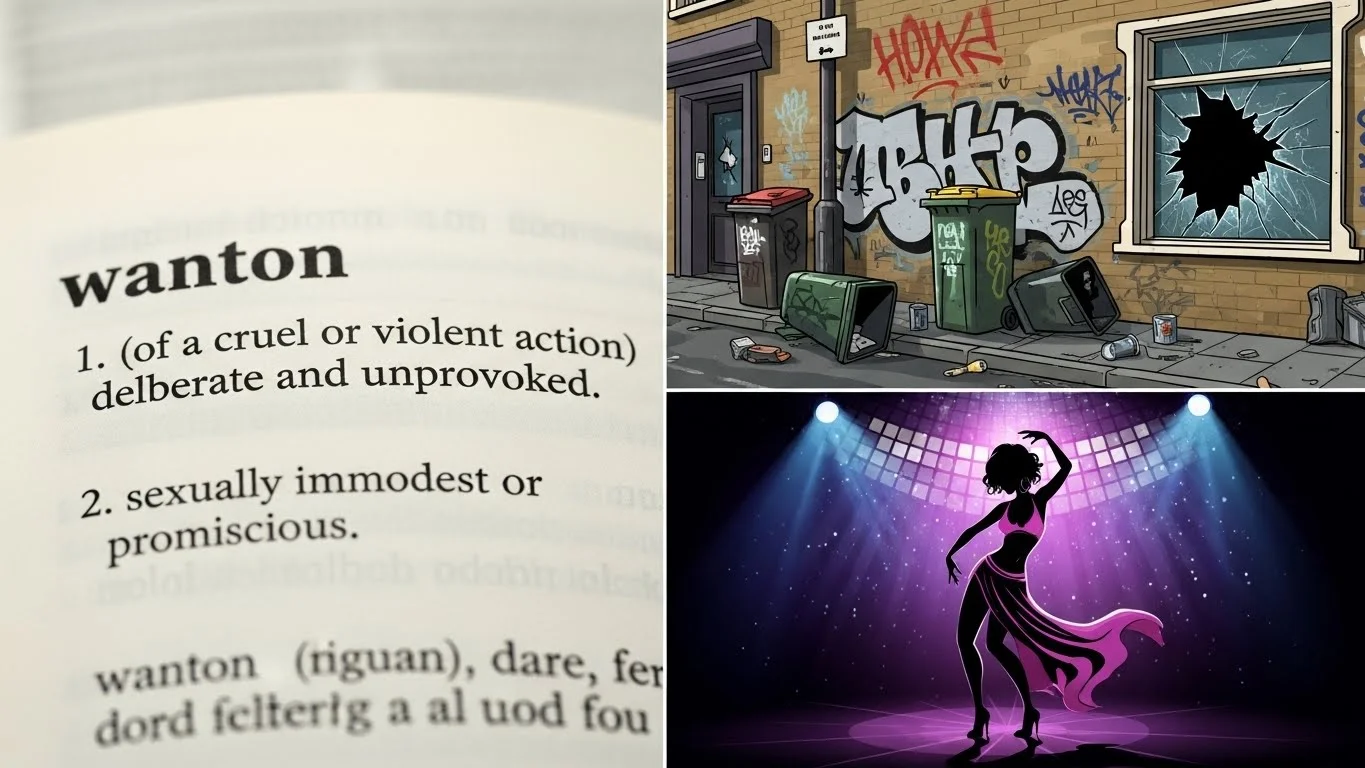
For example, wanton damage implies destruction that was intentional and unjustified, not accidental.
Wanton in Everyday Language
While less common in casual speech, wanton may still appear in conversation or media.
Examples:
“The wanton destruction shocked the community.”
“His wanton disregard for safety caused problems.”
In everyday use, the word carries a strong negative judgment.
Common Misunderstandings About Wanton
People often misunderstand wanton by:
Thinking it means accidental
Confusing it with simple carelessness
Assuming it always refers to moral behavior
In reality, wanton usually implies intent or awareness, not ignorance.
Synonyms and Related Words
Words similar to wanton include:
Reckless
Careless
Unrestrained
Deliberate
Irresponsible
Each synonym overlaps in meaning but may differ in strength or formality.
Why Understanding Wanton Matters
Knowing the wanton meaning helps you:
Understand legal and formal writing
Interpret news and literature accurately
Use strong descriptive language correctly
It’s a powerful word that adds serious weight to a statement.