
🌍 Theocracy Countries
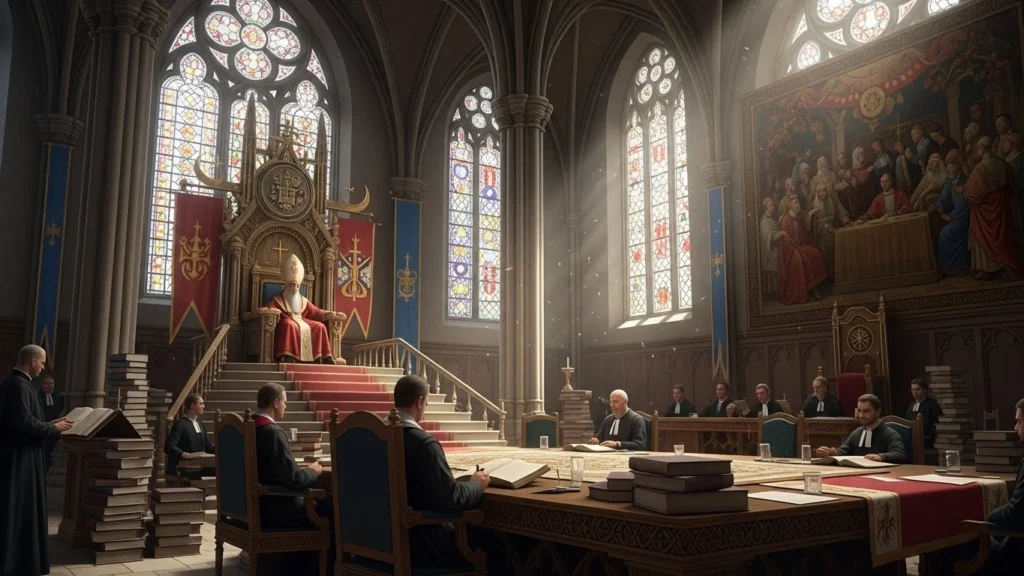
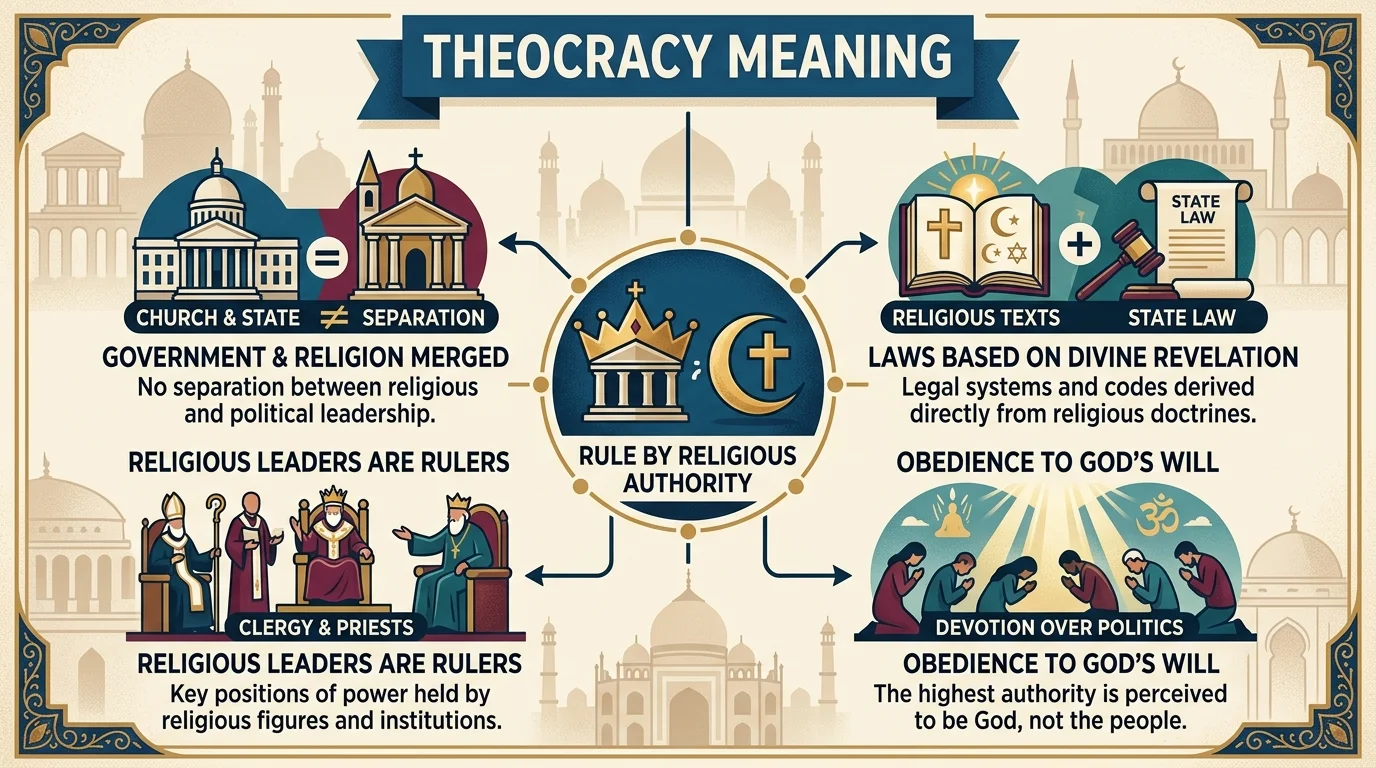
- A theocracy is a country ruled by religious leaders or religious law
- Modern examples often include Iran and Vatican City
- Religious authority strongly influences government decisions
- Laws may be based on religious texts
- Leaders can also be religious figures
- Different countries practice different levels of theocracy
- Some combine democracy with religious influence
- The system has existed throughout history
- Often connected with official state religions
- A political and religious form of government
📚 Theocracy Examples
- Iran
- Vatican City
- Historical example: ancient Tibet under religious leadership
- Some ancient civilizations used theocratic systems
- Religious law guided political decisions
- Leaders were viewed as chosen by God
- Common in ancient history
- Still discussed in politics today
- Shows religion-government connection
- Important political concept
🔄 Theocracy Synonym
- Religious government
- Church-state rule
- Ecclesiastical rule
- Divine rule
- Clerical government
- Sacred authority
- Religious regime
- Spiritual rule
- Faith-based government
- Priest-led state
🇸🇦 Theocracy Meaning in Arabic
- In Arabic, theocracy means حكم ديني (ḥukm dīnī)
- Means religious rule or government
- Refers to leadership based on religion
- Used in political discussions
- Same meaning as English
- Common in history and government studies
- Indicates religion-based authority
- Formal political term
- Widely understood in Arabic
- Used in academic context
🏛️ Theocracy Meaning in History
- In history, theocracy refers to governments ruled by religious authority
- Ancient societies often used this system
- Kings or leaders were seen as divine representatives
- Religion and politics were closely connected
- Common in ancient Egypt and medieval states
- Religious laws controlled society
- Important historical government system
- Influenced culture and law
- Studied in political history
- A major historical concept
✍️ Theocracy Meaning Example
- Example sentence:
- “In a theocracy, religious leaders have political power.”
- Another example:
- “The country followed laws based on religion.”
- Shows government controlled by faith
- Combines religion and politics
- Common in history and civics studies
- Used in academic writing
- Helps explain political systems
- Easy to understand concept
- Important in world history
- A political science term
🇨🇳 Theocracy Meaning in Chinese
- In Chinese, theocracy means 神权政治 (shénquán zhèngzhì)
- Refers to rule by religious authority
- Same meaning as English
- Used in politics and history
- Common in academic studies
- Indicates religion-based government
- Formal political term
- Used in educational materials
- Easy translation
- Widely understood concept
🏛️ Theocracy Government
- A theocracy government is a system where religious leaders rule the state
- Laws are often based on religious teachings
- Religion strongly influences politics
- Leaders may claim divine authority
- Different from secular government
- Common in some historical societies
- Can affect education and law
- Important political structure
- Discussed in civics and history
- A religion-based government system
What Does “Theocracy” Meaning?
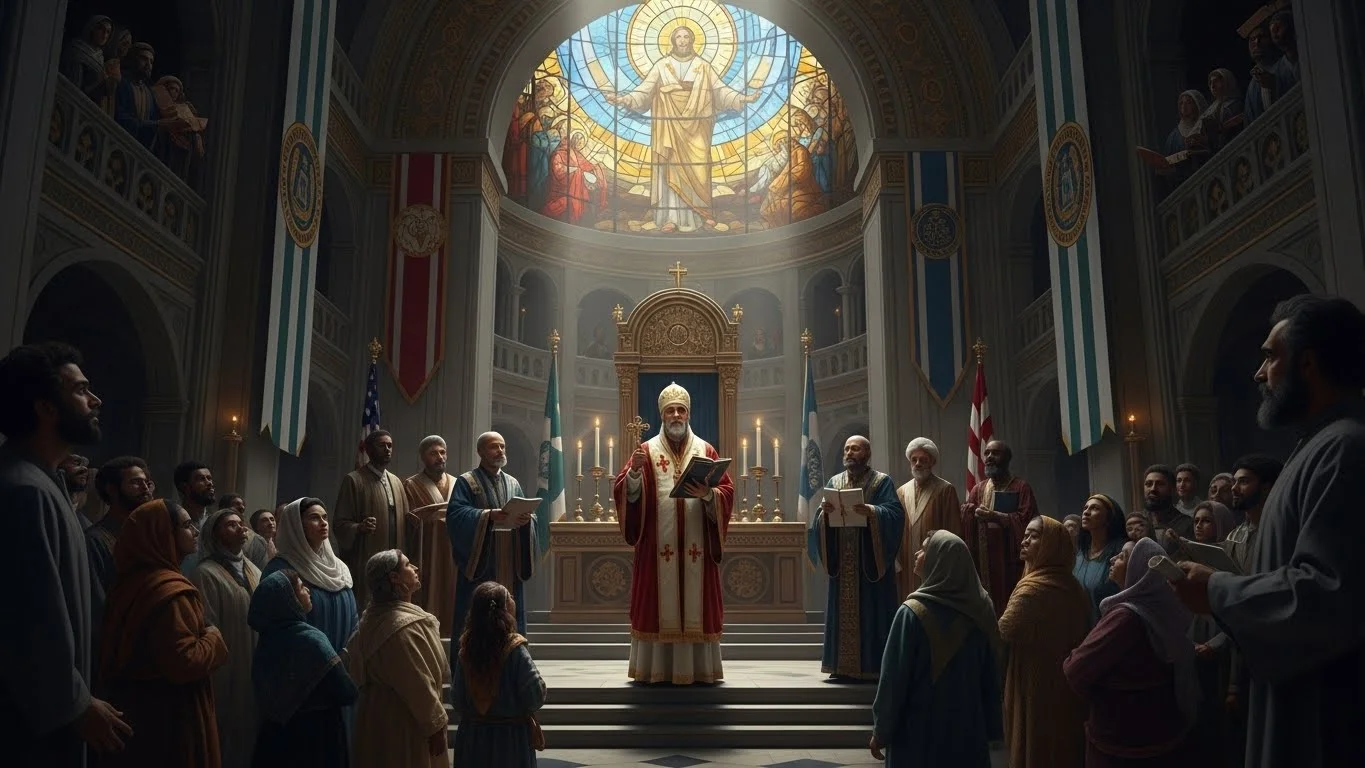
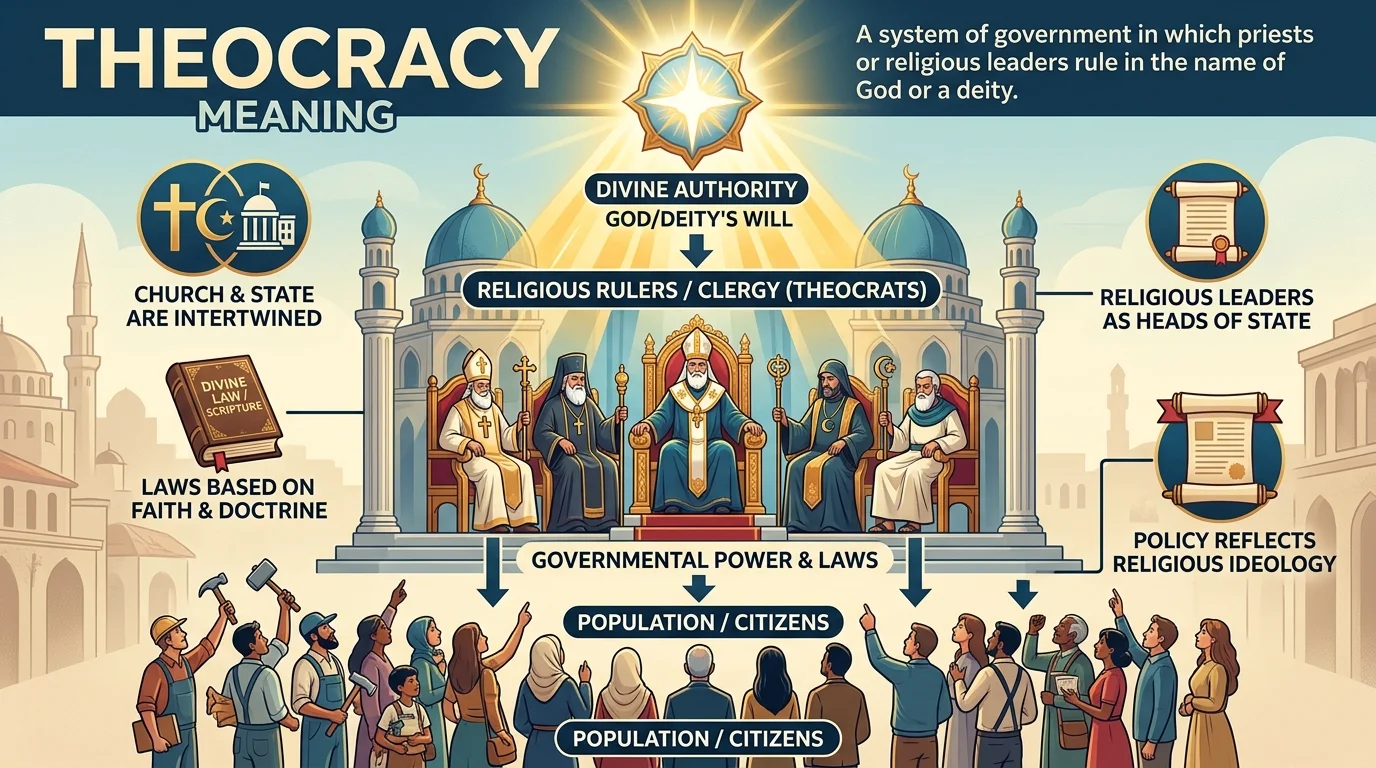
Theocracy is a form of government in which religious leaders or principles hold supreme authority.
Key Points:
Laws and policies are based on religious doctrines.
Religious leaders often govern directly or influence rulers.
Citizens’ rights, laws, and governance are closely tied to religious teachings.
Example: A government where religious texts guide all laws and priests or clerics hold leadership roles.
Origin of the Word
Comes from Greek “theos” (God) and “kratos” (rule or power).
Literally means “rule by God”.
Used to describe governments where divine authority directly guides political decisions.
How Theocracy Works
Leadership
Clergy-Led: Religious leaders hold government positions.
Divinely Guided: Leaders claim to follow God’s will in governance.
Blended Rule: Some theocracies mix political and religious authority.
Laws & Governance
Based on Sacred Texts: Laws often reflect holy scriptures or religious codes.
Enforcement: Legal and moral codes are intertwined; violations may have both civil and spiritual consequences.
Citizens & Society
Citizens may be expected to follow religious practices as part of law.
Religious dissent may be limited in strict theocracies.
Historical and Modern Examples
Historical
Ancient Egypt: Pharaohs were considered divine rulers.
Tibet (pre-1950s): Ruled by the Dalai Lama with religious authority.
Modern
Iran: Religious leaders (Supreme Leader) hold ultimate political authority.
Vatican City: The Pope governs both spiritually and politically.
Real-Life Examples
Example 1 (Governance):
Sentence: “Iran’s government is a theocracy where Islamic law guides politics.”
Explanation: Religious leaders and laws influence political decisions.
Example 2 (Historical):
Sentence: “Ancient Egypt operated as a theocracy with Pharaohs considered gods.”
Explanation: Leadership was directly tied to divine authority.
Example 3 (Modern Society):
Sentence: “In Vatican City, the Pope exercises both religious and political power.”
Explanation: Example of a modern theocracy where spiritual authority governs civic affairs.
Common Misunderstandings
Theocracy is the same as religion: Not exactly. Religion influences the government, but a theocracy is a political system guided by religion.
All citizens must be religious: Citizens may vary in belief, but strict theocracies often enforce religious practices.
Theocracy is widespread today: True theocracies are rare; most countries are secular or have a mix of religious influence.
Tip: Recognize the distinction between religious influence in politics and full theocratic rule.
Related Words & Concepts
Autocracy: Rule by a single leader with absolute power.
Monarchy: Rule by a king or queen; sometimes combined with religion.
Sharia Law: Legal system based on Islamic principles; often linked to theocratic governance.
Secular Government: Separation of religion and state.
Clerical Rule: Leadership by religious officials.
Internal Linking Opportunity: Could link to articles like secular meaning, autocracy meaning, or clergy meaning.