Jamoke Meaning in English
- “Jamoke” is a slang word used mainly in American English
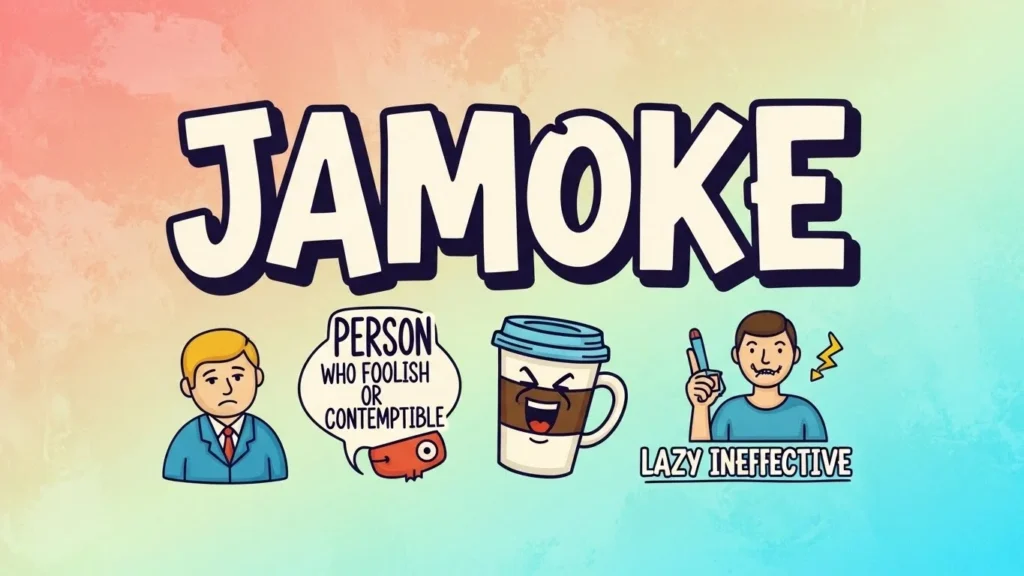
- It usually means a fool, silly person, or ordinary guy
- Example: “Don’t act like a jamoke.”
- It can be playful or insulting depending on tone
- Sometimes used like “idiot” or “jerk” (mildly)
- Also historically used as slang for coffee in older American usage
- Not a formal word
- Mostly found in casual speech or old slang
- Meaning depends strongly on context
- Can be friendly teasing among friends
⚠️ Jamoke Offensive?
- Yes, it can be offensive depending on tone
- Can mean “stupid person” or “loser” in insulting contexts
- But sometimes used jokingly among friends
- Not highly vulgar, but still disrespectful if serious
- Tone and situation matter a lot
- Can sound rude in arguments
- Better avoided in formal conversation
- Mild insult rather than strong abuse
- Can be humorous in comedy contexts
- Context decides impact
🔊 Jamoke Pronunciation
- Pronounced: juh-MOAK
- Sounds like: juh-mohk
- Two syllables
- Stress on second syllable
- Informal spoken word
- Easy pronunciation in American English
- Often said casually
- No strict formal pronunciation rules
- Slang-style delivery
- Simple phonetic structure
📜 Jamoke Meaning Origin
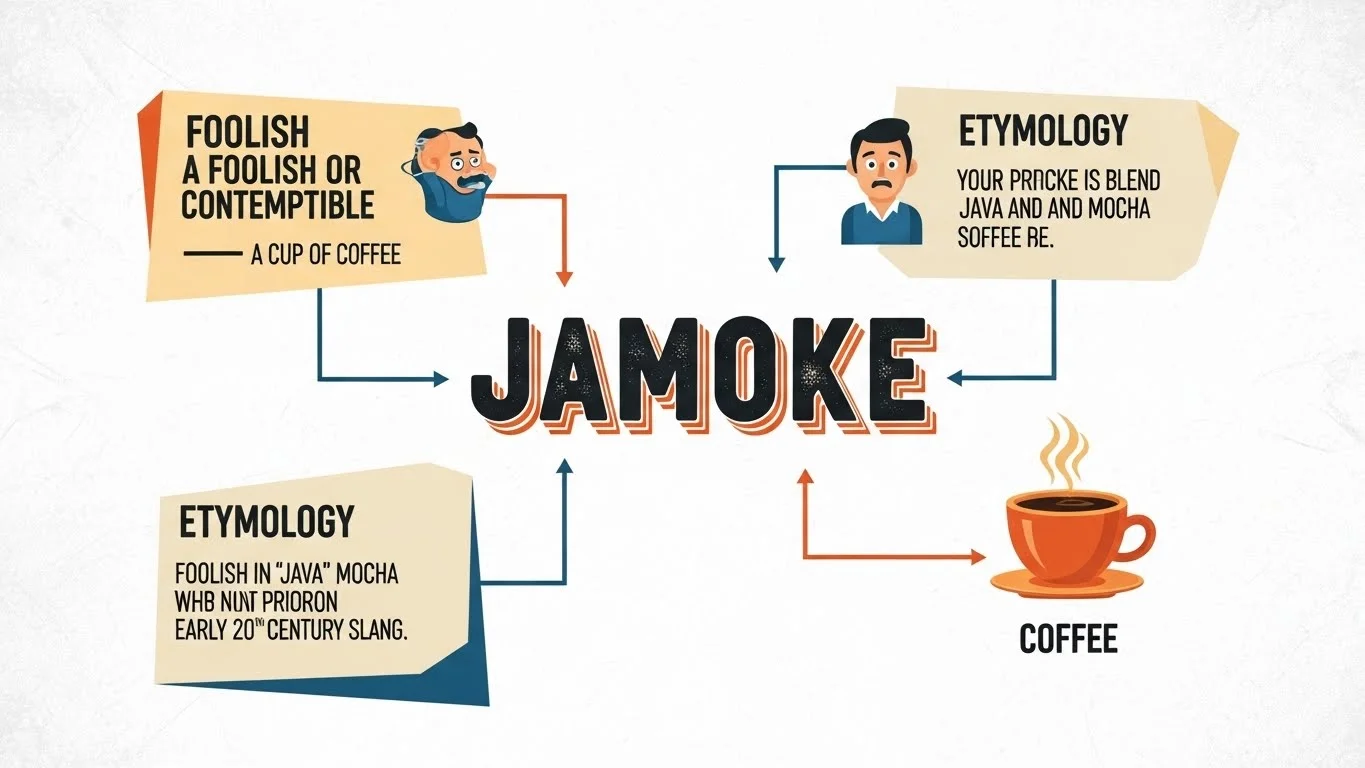
- Likely comes from early American slang (early 1900s)
- Possibly a blend of “Java” (coffee) + “mocha” in old usage
- Later evolved into meaning a foolish or average person
- Used in New York and American street slang
- Became popular in informal speech
- Meaning shifted over time
- Not standard dictionary formal word
- Has cultural slang history
- Sometimes used in comedy writing
- Origin is somewhat uncertain
👤 Jamoke Person Meaning
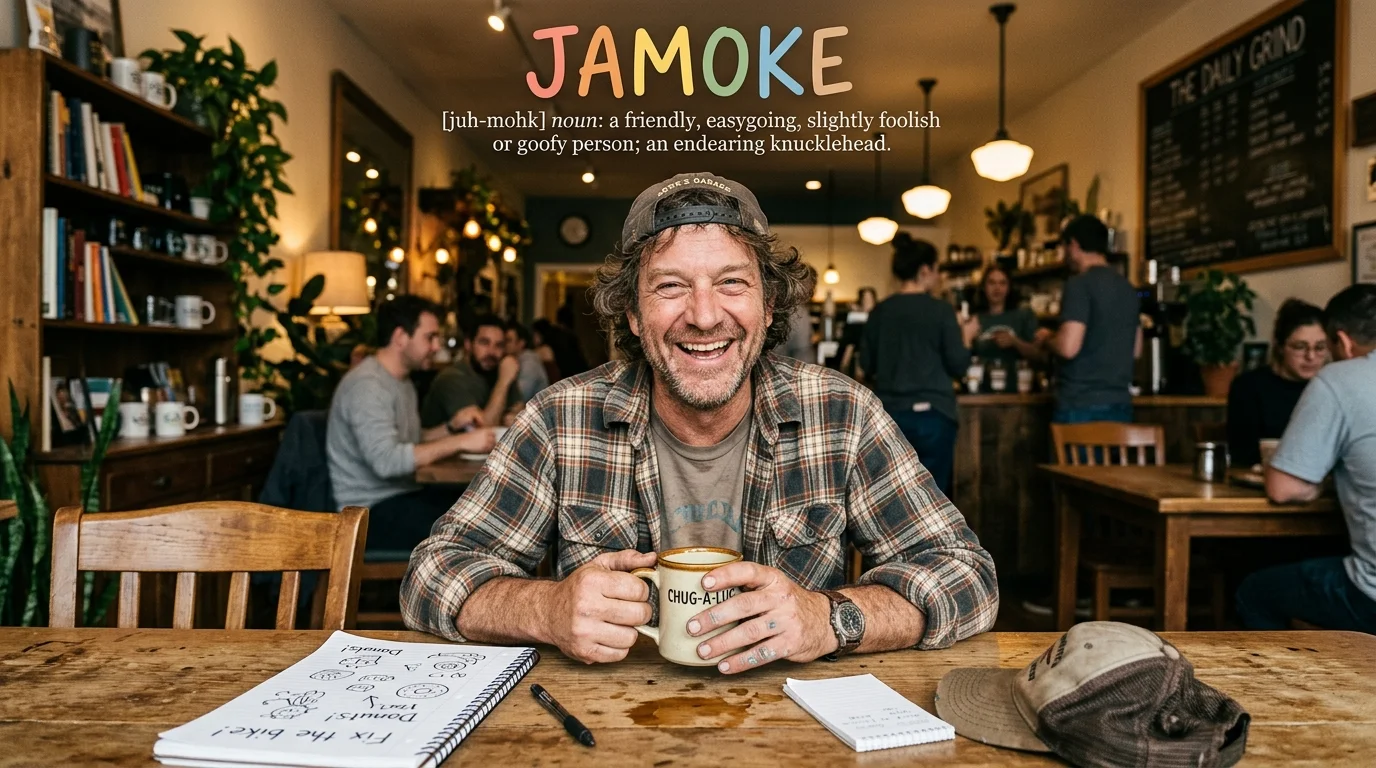
- A jamoke person means a silly, clueless, or average guy
- Example: “He’s acting like a jamoke.”
- Can be teasing or insulting
- Often used informally
- Not a respectful term
- Suggests lack of intelligence or awareness
- Common in slang storytelling
- Depends on tone (funny vs rude)
- Used in casual conversations
- Not professional language
🔄 Jamook Meaning
- “Jamook” is a spelling variation of jamoke
- Same meaning: foolish or awkward person
- Used in similar slang contexts
- Example: “Don’t be such a jamook.”
- Popular in some American dialects
- Informal and playful insult
- Not standard English spelling
- Same pronunciation idea
- Context-based meaning
- Often interchangeable with jamoke
🔁 Jamoke Synonym
- Fool
- Idiot
- Jerk
- Goof
- Clown
- Dummy
- Buffoon
- Foolish person
- Simpleton
- (informal) dope
🎬 Jamoke Meaning Riddick
- In pop culture references (like movies such as Riddick), “jamoke” is sometimes used as a slang insult
- Means weak, foolish, or unimportant person
- Used to show disrespect in dialogue
- Not an official term in the film universe
- Just casual character slang
- Adds rough or street-style tone
- Similar to “punk” or “loser”
- Context-based insult
- Used for character expression
- Not a technical or official meaning
What Does Jamoke Mean?
Jamoke is a slang word that usually means a foolish, silly, or annoying person.
It can also be used in a lighthearted or teasing way, depending on tone and context.
Jamoke Meaning in Simple Terms
In simple language, jamoke means:
A goofy or clueless person
Someone acting silly
A mild insult, often playful
It’s rarely meant to be deeply offensive.
Origin of the Word Jamoke
Jamoke comes from early American slang.
One theory links it to a blend of words related to coffee
Another theory connects it to playful slang for an ordinary or foolish person
Its exact origin isn’t fully certain, but it became popular in casual speech in the mid-1900s.
How Jamoke Is Used in Daily Life
Jamoke is used mostly in:
Casual conversations
Friendly teasing
Humorous situations
It’s not commonly used in formal or professional settings.
Jamoke in Casual Conversations
Examples of how it sounds naturally:
“Don’t listen to that jamoke.”
“I was acting like a total jamoke earlier.”
Tone matters more than the word itself.
Jamoke as an Insult
Jamoke can be an insult, but it’s usually:
Mild
Non-aggressive
More joking than serious
It’s closer to calling someone “goofball” than something harsh.
Jamoke as Self-Description
People sometimes use jamoke to describe themselves:
To admit a mistake
To sound humble
To add humor
Example:
“I forgot my keys again—I’m such a jamoke.”
Jamoke vs Strong Insults
Jamoke: Light, humorous, playful
Strong insults: Harsh, offensive, aggressive
Jamoke is much softer and less serious.
Jamoke in Modern English
In modern usage, jamoke is:
Less common than before
Mostly informal
Understood through context
It may sound old-fashioned to some listeners.
Jamoke in Movies and TV
Jamoke often appears in:
Classic films
Older TV shows
Comedic dialogue
This gives it a nostalgic tone.
Tone and Context Matter
Jamoke can sound:
Funny
Friendly
Slightly insulting
How it’s received depends on who says it and how.
When Not to Use Jamoke
Avoid using jamoke:
In professional settings
With strangers
In serious arguments
It works best among friends or in humor.
Common Misunderstandings
Jamoke is not a modern internet abbreviation
It is not highly offensive
It is not used formally
It’s an old-school slang term.
Related Slang Words
Goofball
Dummy
Clown
Fool
These words share a similar casual tone.
Jamoke in Writing
Writers may use jamoke to:
Add humor
Show character personality
Create informal dialogue
It’s best used sparingly.
Is Jamoke Still Used Today?
Yes, but mostly:
In casual speech
By older speakers
For humor or nostalgia
It’s less common among younger generations.
Why People Still Use Jamoke
People use jamoke because:
It sounds playful
It’s not harsh
It adds character to speech
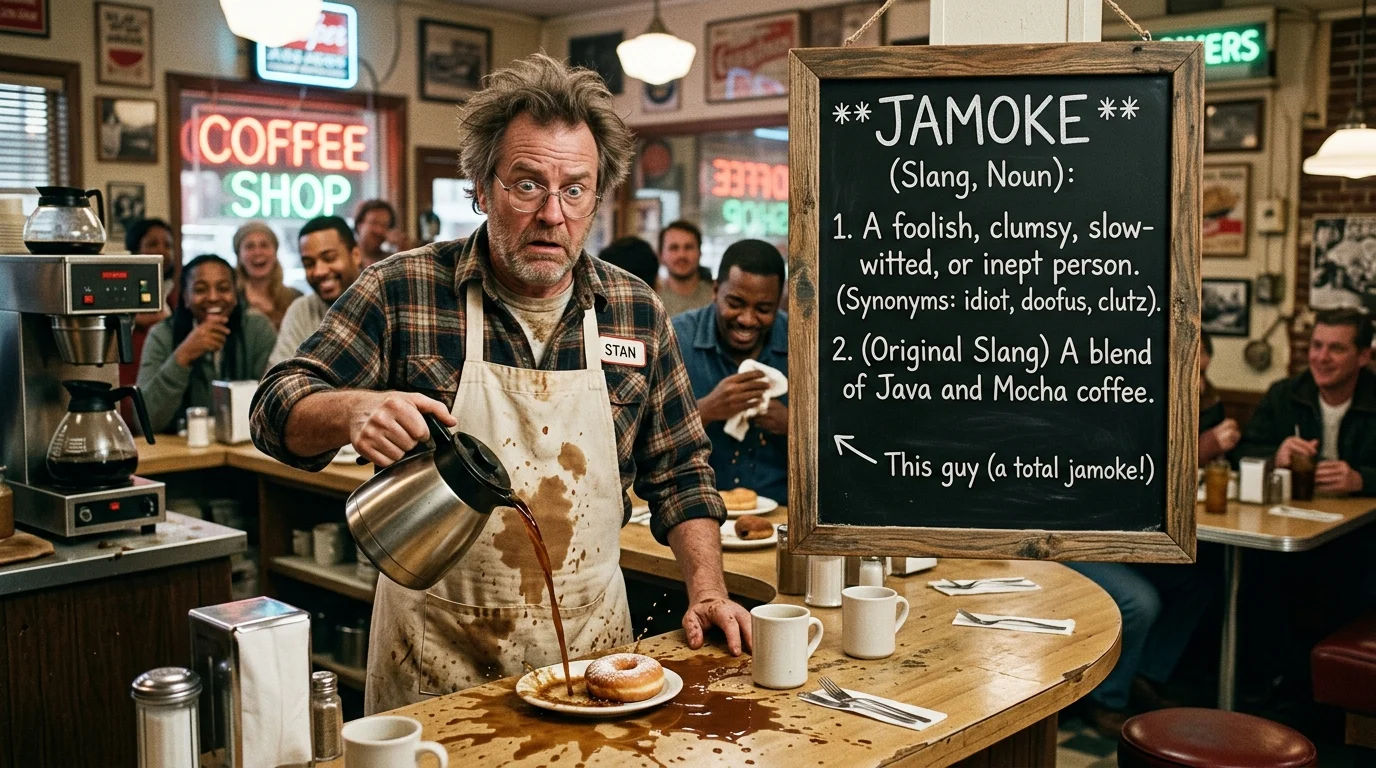
Cultural Feel of the Word Jamoke
Jamoke often feels:
Old-fashioned
Lighthearted
Informal
It’s part of classic American slang.
Examples of Jamoke in Sentences
That jamoke spilled coffee everywhere.
I felt like a real jamoke after that mistake.
Don’t be a jamoke—pay attention.