

What Does Cudgel Meaning
The word cudgel has two main meanings depending on how it is used.
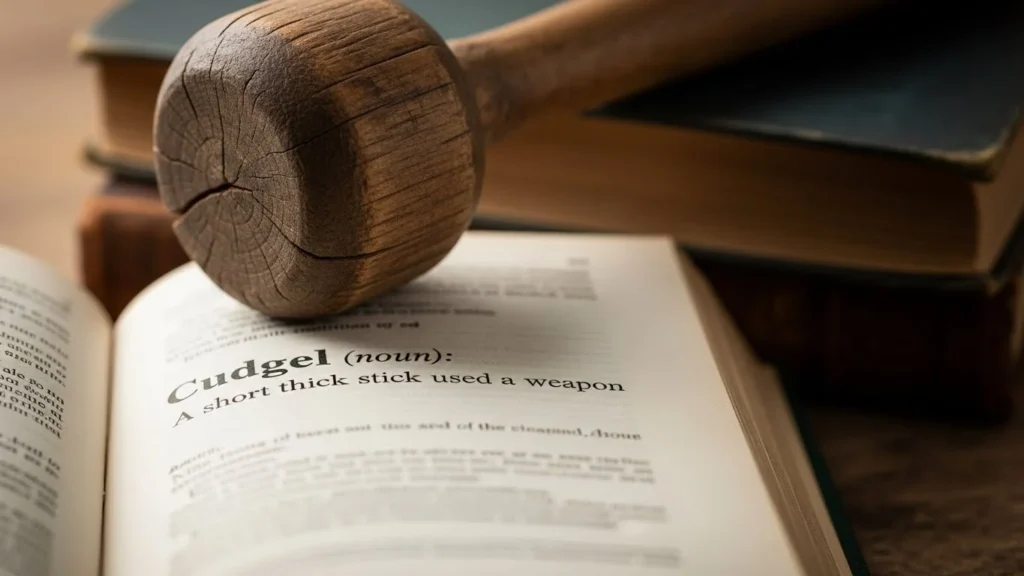
As a noun, a cudgel is a short, thick stick or club, traditionally used as a weapon. It is heavier than a normal stick and designed for striking.
As a verb, cudgel means to strike with a club or, more commonly today, to think very hard or apply mental effort.
Both meanings share the idea of force or pressure, whether physical or mental.
Literal Meaning of Cudgel
In its original sense, a cudgel refers to a weapon. Before modern weapons existed, people used cudgels for protection or fighting.
A cudgel is:
Short and thick
Made of wood or similar material
Used for striking rather than cutting
This meaning is mostly found in historical writing, literature, and old records.
Figurative Meaning of Cudgel
In modern English, cudgel is more often used figuratively.
The most common expression is:
“to cudgel your brain” or “to cudgel your mind”
This means:
To think very hard
To struggle mentally
To force yourself to remember or solve something
No physical violence is involved in this usage. It simply describes intense mental effort.
Origin and History of the Word
The word cudgel comes from Middle English, where it referred to a club or stick used in combat. Over time, English speakers began using it metaphorically to describe mental struggle, because the idea of “force” fit both physical and mental effort.
This shift from literal to figurative meaning is common in English and explains why cudgel still appears in modern writing.
How Cudgel Is Used in Sentences
Here are simple examples to show both meanings clearly.
Literal use:
He picked up a cudgel to defend himself.
The guard carried a heavy cudgel.
Figurative use:
She cudgelled her brain trying to remember the answer.
He cudgelled his mind for a solution.
Where You Commonly See the Word Cudgel
Cudgel is not very common in casual speech today, but it appears often in:
Books and novels
Academic or formal writing
News articles
Exams and vocabulary tests
Its figurative meaning is especially popular in written English.
Common Mistakes and Misunderstandings
Many people think cudgel only means a weapon. This is incorrect, as the figurative meaning is very common.
Some also assume cudgel means any stick. In reality, a cudgel is specifically thick and heavy, designed for striking.
Another misunderstanding is thinking “cudgel your brain” involves anger or violence. It simply means thinking very hard.
Similar Words and Related Terms
Words similar to cudgel include:
Club – a blunt weapon
Bludgeon – to strike heavily
Baton – a stick used by authority
Rack your brain – a similar figurative phrase
Each word has a slightly different tone, but all relate to force or effort.
Why Cudgel Is Still Relevant Today
Even though people no longer use cudgels as weapons, the word remains useful because its figurative meaning is expressive and precise. Writers use it to describe mental struggle in a strong, vivid way.
That’s why cudgel continues to appear in modern English.