
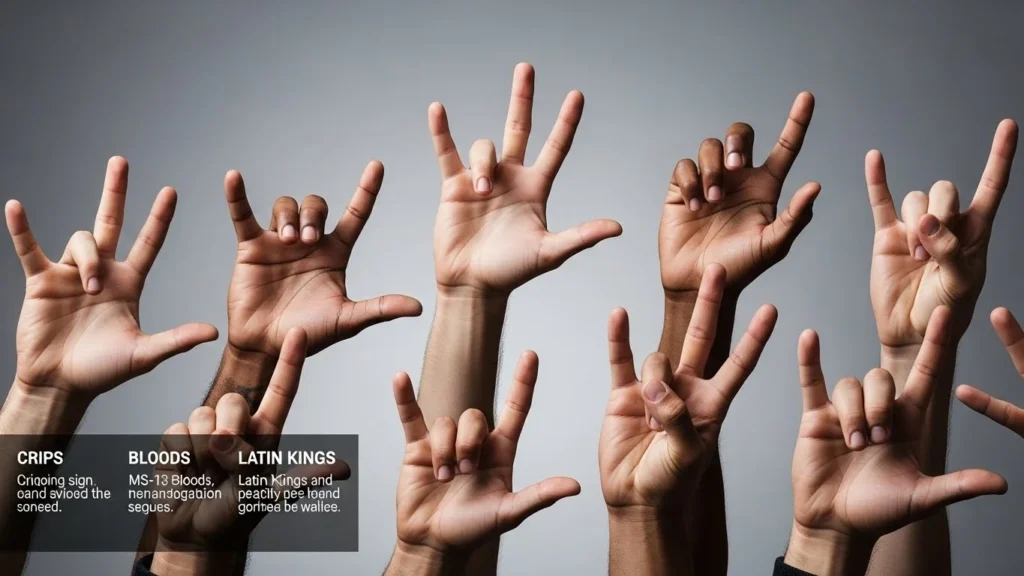
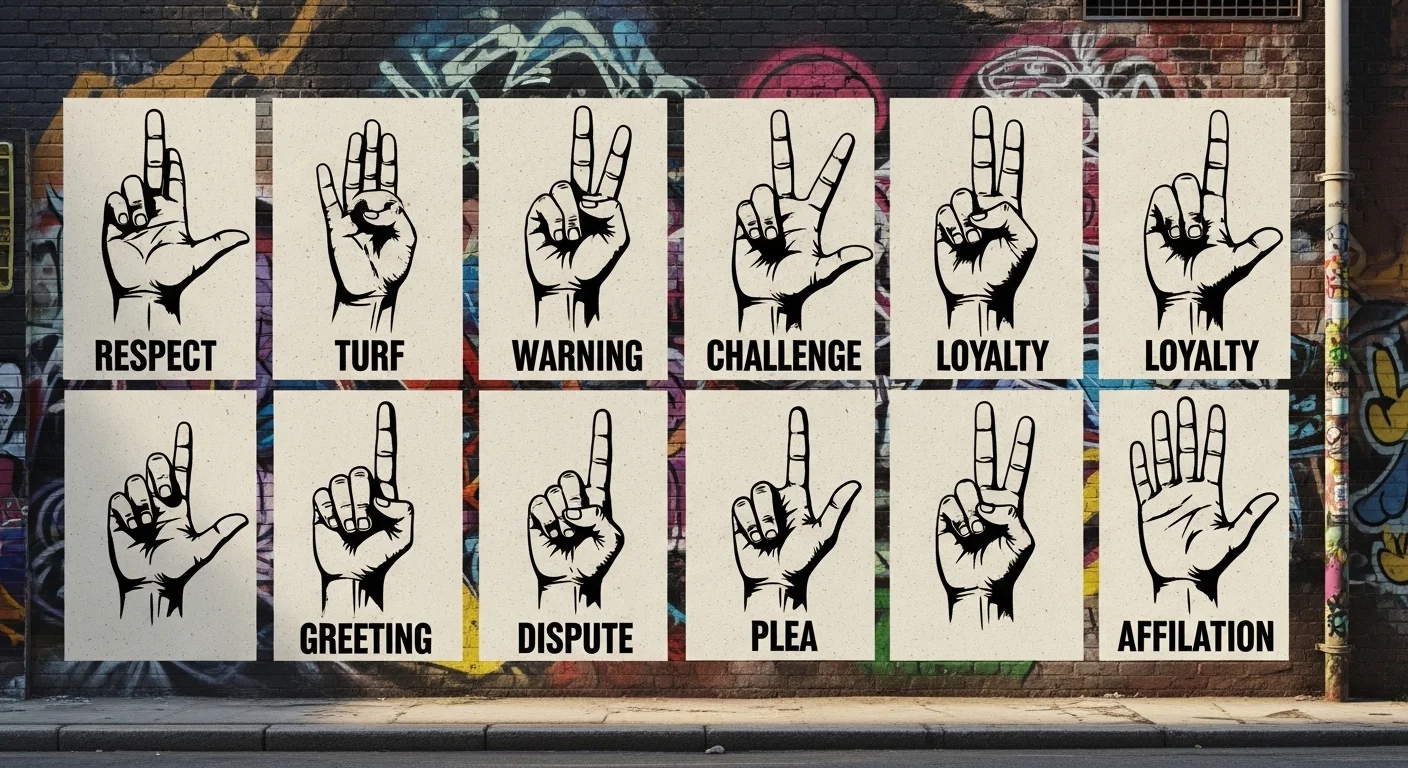
✋ 13 Hand Sign Meaning
- I flash a number that’s not just math, but a code from the street—what do I mean?
- With one hand I show thirteen, not for counting but for identity—who am I?
- I’m a symbol tied to letters and loyalty, hidden in plain sight—what am I?
- I turn numbers into a message only some can read—what sign am I?
- I look simple, but I represent a deeper connection—what do I stand for?
- My meaning changes depending on where you see me—what am I?
- I am a silent signal that speaks loudly in certain circles—what am I?
- I connect numbers and culture in a single gesture—what is it?
- I’m more than fingers—I’m a statement—what am I?
- I appear in photos, but my message isn’t always obvious—what am I?
🖐️ Gang Signs with Hands
- I’m a language without words, spoken through fingers—what am I?
- I can mean friendship to some and warning to others—what am I?
- I’m quick to form but long to understand—what am I?
- I turn hands into symbols of identity—what am I?
- I’m seen in pictures but understood by few—what am I?
- I carry meaning depending on who uses me—what am I?
- I can unite a group or divide others—what am I?
- I’m silent but powerful in the right context—what am I?
- I change meaning across cities and cultures—what am I?
- I’m often misunderstood by outsiders—what am I?
🤟 Gang Signs Meaning 3 Fingers
- I raise three fingers, but I’m not counting—what am I saying?
- I can represent letters, numbers, or loyalty—what am I?
- I’m simple in form but complex in meaning—what am I?
- I mean different things in different places—what am I?
- I’m a small gesture with a big message—what am I?
- I can symbolize unity or identity—what am I?
- I appear harmless but carry hidden meaning—what am I?
- I’m used to communicate without speaking—what am I?
- I’m seen in photos, but not everyone knows my story—what am I?
- I’m a sign that depends on context to be understood—what am I?
📊 Gang Signs Chart
- I organize symbols so people can compare them—what am I?
- I turn gestures into something easy to study—what am I?
- I help decode meanings behind different signs—what am I?
- I’m often used for learning and awareness—what am I?
- I present information in a structured way—what am I?
- I group similar symbols together—what am I?
- I make complex meanings easier to understand—what am I?
- I’m a visual guide for curious minds—what am I?
- I help people recognize patterns—what am I?
- I turn confusion into clarity—what am I?
📸 Gang Signs Pictures
- I capture a moment, but also a message—what am I?
- I show gestures frozen in time—what am I?
- I can be shared online but misunderstood—what am I?
- I tell stories without words—what am I?
- I reveal signs through visuals—what am I?
- I can educate or confuse viewers—what am I?
- I display symbols in a single frame—what am I?
- I help people recognize gestures—what am I?
- I show what hands can say—what am I?
- I can spread awareness or curiosity—what am I?
⚖️ Why Are Gang Signs Illegal
- I’m not always banned, but I can cause trouble—what am I?
- I can be seen as a threat depending on where I’m used—what am I?
- I may lead to misunderstandings or conflict—what am I?
- I’restricted in certain places for safety reasons—what am I?
- I can represent groups that authorities monitor—what am I?
- I might be considered suspicious behavior—what am I?
- I’m linked to rules meant to protect communities—what am I?
- I can carry meanings that lead to legal issues—what am I?
- I’m not just a gesture—I can be evidence—what am I?
- I exist in a gray area of law and culture—what am I?
🖼️ Pictures of Gang Signs with Hands and Meanings
- I combine visuals with explanations—what am I?
- I show both the sign and what it represents—what am I?
- I help people learn by seeing and reading—what am I?
- I make hidden meanings easier to understand—what am I?
- I’m used for awareness and education—what am I?
- I turn confusion into knowledge—what am I?
- I connect images with information—what am I?
- I reveal stories behind simple gestures—what am I?
- I guide viewers to better understanding—what am I?
- I explain what hands are saying—what am I?
👉 East Side Gang Sign
- I point in a direction, but it’s more than location—what am I?
- I represent a side, not just a place—what am I?
- I’m tied to identity and area—what am I?
- I show belonging without words—what am I?
- I can signal where someone stands—what am I?
- I’m simple but meaningful—what am I?
- I connect people to a specific side—what am I?
- I can be seen as pride or warning—what am I?
- I’m a gesture linked to geography and culture—what am I?
- I say “where” without speaking—what am I?
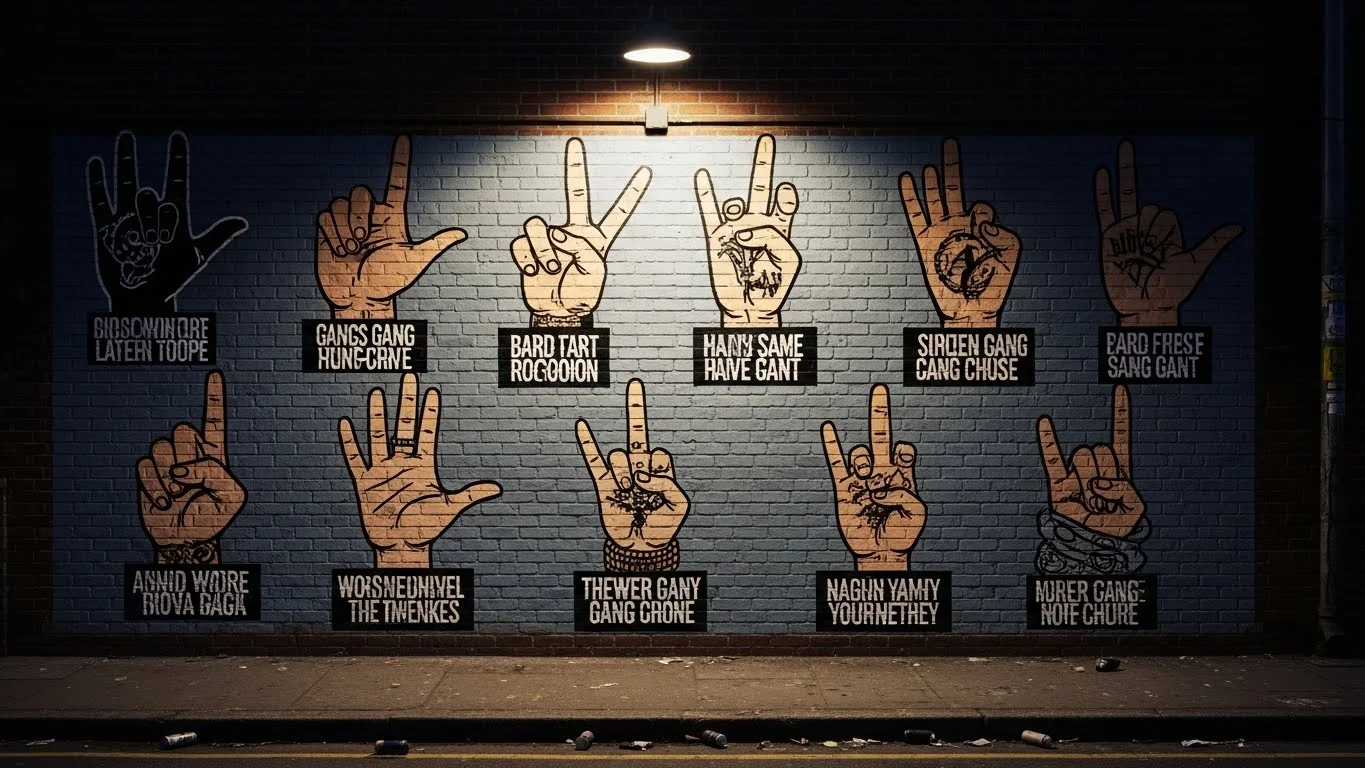
What Are Gang Signs?
Gang signs are hand gestures, symbols, or visual markers used by gangs to:
Identify membership
Show loyalty
Communicate messages to other members
Claim territory or affiliation
In simple words:
Gang signs are a way for members to signal “we belong together” or “this area is ours.”
Gang Signs as Symbols
Gang signs are not random gestures — they carry specific meanings, often understood only within the gang or local community.
Hand signs may represent letters, numbers, or gang initials
Tattoos or graffiti often reinforce these symbols
Colors, clothing, and accessories may also act as gang markers
Why People Use Gang Signs
Gang signs are used for several reasons:
Identification: Show which gang they belong to
Communication: Signal messages without speaking
Respect or intimidation: Express dominance or loyalty
Tradition: Continue cultural or historical gang practices
They are a visual language, often with strict rules for proper use.
Examples of Common Gang Sign Uses
Hand shapes forming letters: Represent the gang’s initials
Two fingers crossed or specific finger positions: Show loyalty
Graffiti symbols: Mark territory or memorialize members
Color combinations in clothing: Reinforce gang identity
It’s important to note that misusing or mimicking gang signs can be dangerous in real-life situations.
Gang Signs in Media vs Reality
Movies, music videos, and social media often glamorize gang signs, but real-life use is serious:
Real gang signs are tied to danger, crime, and territory
Misinterpretation can lead to conflict or legal issues
Media portrayal may oversimplify or exaggerate their meaning
Always approach the topic with awareness and caution.
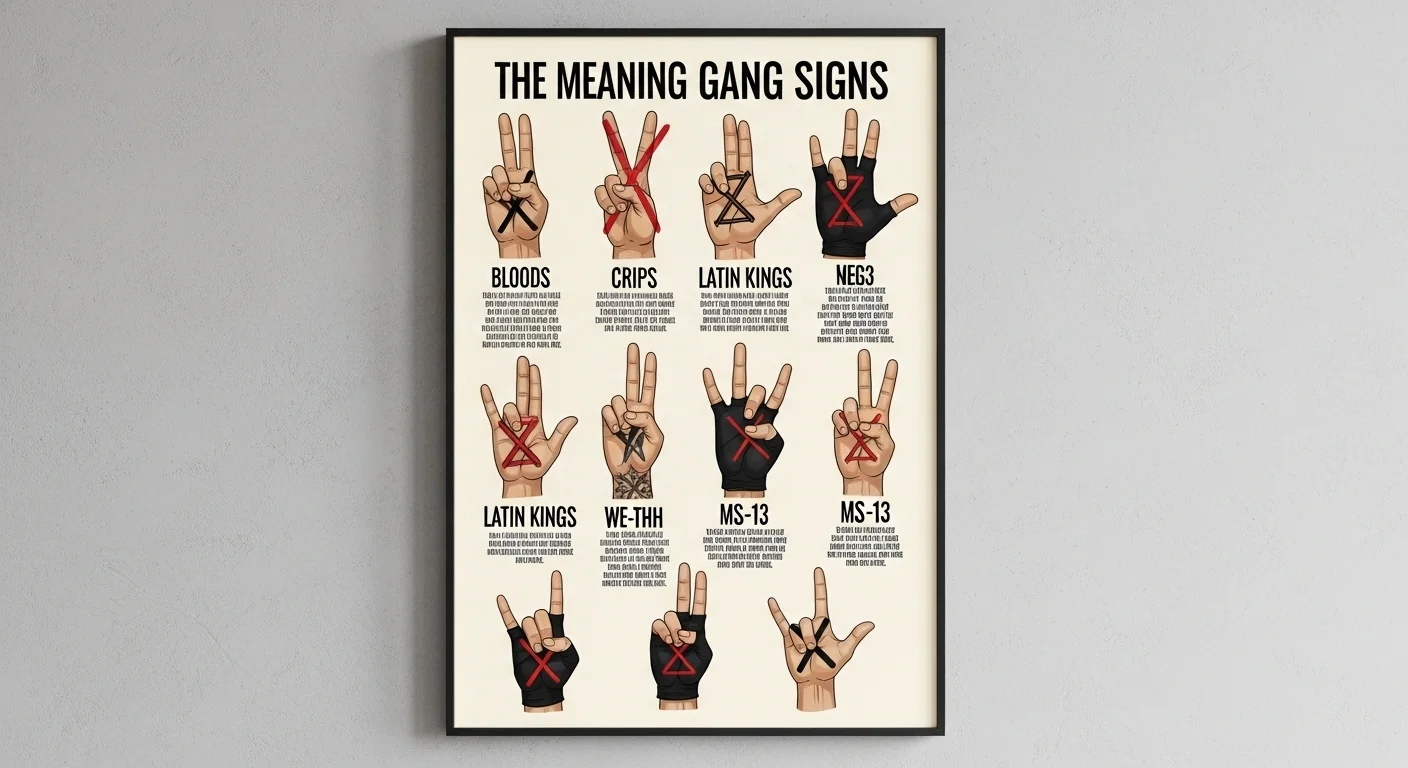
Common Misunderstandings
People often misunderstand gang signs:
Assuming all hand signs are harmless
Thinking they are a universal symbol
Confusing gang signs with casual gestures or dance moves
Important clarification:
Gang signs have specific cultural and social contexts; using them without understanding can be risky.
Gang Signs Meaning and Safety Awareness
Knowing about gang signs helps with:
Avoiding dangerous situations
Recognizing warning signs in your neighborhood
Educating youth about gang involvement risks
Understanding local culture without participation
Awareness is key — not imitation.
Related Terms
Words and concepts connected to gang signs include:
Graffiti
Turf or territory
Gang colors
Initiation symbols
Hand signs
These terms often appear in discussions about street culture and safety.