The word salty meaning has both a literal and a slang meaning in English. Literally, it describes something that contains salt or tastes like salt, such as salty food or seawater. However, in modern slang, salty is commonly used to describe someone who is upset, annoyed, or bitter about something, especially after losing, being teased, or feeling frustrated. Understanding the meaning of salty is important because it is widely used in online conversations, gaming communities, and social media. For example, a person might be called “salty” if they are angry about losing a game or reacting negatively to a small situation. The term can be playful or mildly teasing depending on context. This article explores the definition, slang usage, and examples of “salty,” helping you clearly understand how this word is used in both literal and emotional contexts.
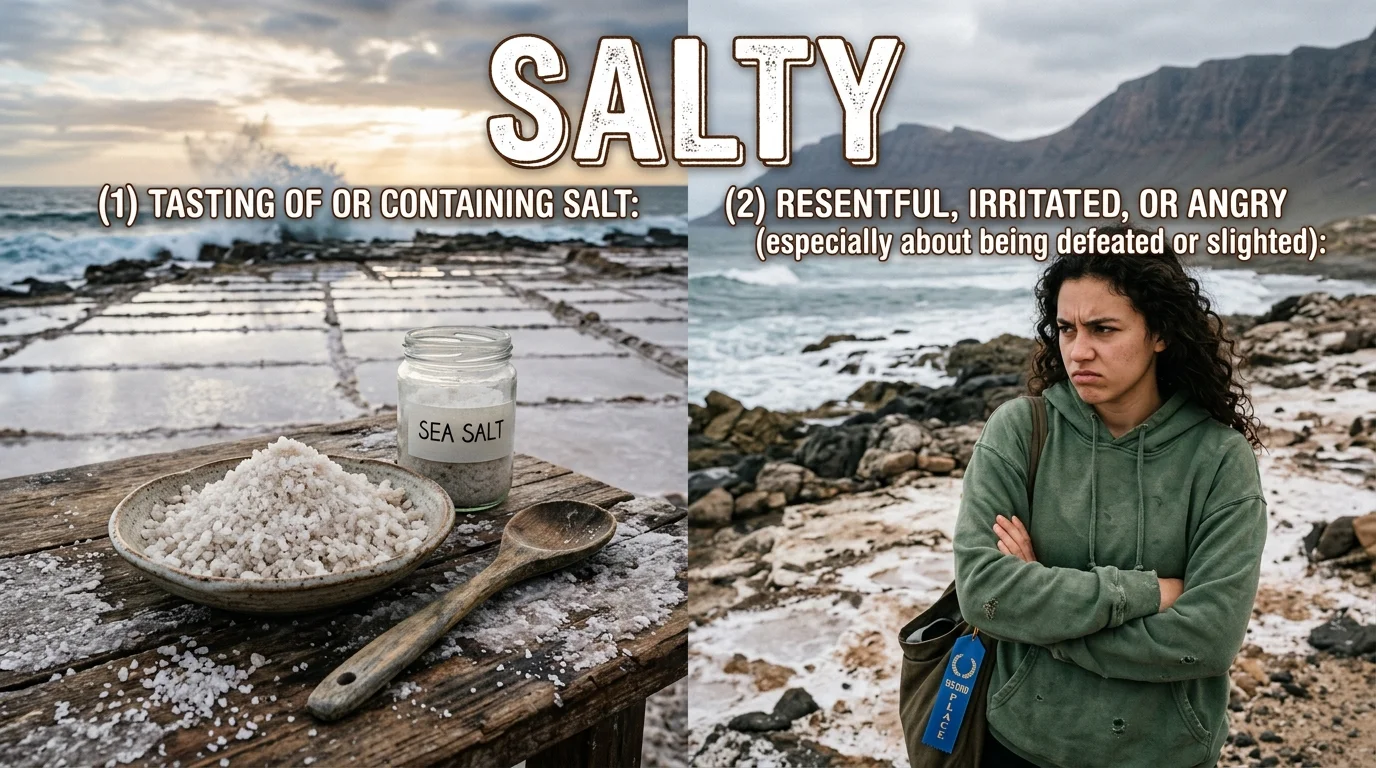
🧂 Salty meaning slang
- In slang, salty means being upset, annoyed, or bitter
- Often used when someone is reacting angrily to something small
- Common in gaming and online conversations
- Can describe someone who is mad after losing or being teased
- Used when someone is holding a grudge
- Popular in Gen Z internet language
- Can mean emotionally irritated or “sore” about something
- Often used jokingly among friends
- Not related to taste in this context
- Very common on social media and memes
😏 Don’t be salty meaning
- Means don’t be angry or bitter about it
- Used to calm someone down after they lose or get upset
- Often said in playful or teasing situations
- Can mean “don’t take it personally”
- Common in gaming after competition
- Used when someone is overreacting emotionally
- Can be friendly or sarcastic depending on tone
- Popular phrase in online chats and memes
- Encourages people to stay relaxed
- Modern informal English expression
😤 Salty person meaning
- A salty person is someone who gets easily annoyed
- May hold grudges over small things
- Often reacts with irritation or bitterness
- Can be upset about losing or being corrected
- Used casually in slang conversations
- Common in sports and gaming culture
- Sometimes used jokingly among friends
- Not always a serious insult
- Describes emotional sensitivity to criticism
- Popular Gen Z descriptive term
🧂 Salty meaning Gen Z
- Gen Z uses “salty” to mean slightly angry or annoyed
- Often used in a funny or sarcastic way
- Common in TikTok, Instagram, and gaming chats
- Describes someone being upset over a small issue
- Can mean “low-key mad” or “petty”
- Frequently used in memes and reactions
- Not a strong insult in modern usage
- Often used playfully between friends
- Can also mean still upset about losing
- Very common internet slang today
📘 Salty meaning in English
- Salty literally means tasting like salt
- In slang, it means irritated or bitter
- Describes emotional annoyance or frustration
- Used in informal conversation and internet speech
- Can refer to negative emotional reactions
- Common in modern American English slang
- Opposite of calm or satisfied
- Often used in humorous tone
- Widely understood in pop culture
- Has both literal and slang meanings
😠 Salty meaning emotion
- Emotionally, salty means feeling irritation or resentment
- Often linked with frustration or disappointment
- Can include jealousy or bitterness
- Usually triggered by small conflicts or losses
- Common emotional reaction in competitive situations
- Often short-term and not deep anger
- Can be expressed sarcastically or jokingly
- Frequently seen in online arguments
- Part of informal emotional vocabulary
- Describes a “slightly upset” mood
👩 She is salty meaning
- Means she is annoyed or upset about something
- Often used when someone is reacting emotionally
- Can refer to jealousy or frustration
- Common in casual or online conversations
- Sometimes used jokingly among friends
- May indicate she didn’t like a situation
- Not always serious or offensive
- Popular in memes and social media posts
- Describes temporary irritation
- Informal slang expression
🇨🇳 Salty meaning in Chinese
- In Chinese slang, “salty” is often translated as “酸” (suān) meaning jealous or bitter
- Can also relate to feeling annoyed or resentful
- Internet slang may use “咸” (xián, literally salty) humorously
- “酸” is more commonly used for emotional jealousy or jealousy-bitter feeling
- Used in social media and online chats
- Describes emotional jealousy or dissatisfaction
- Similar to English slang “salty” in tone
- Context matters in interpretation
- Often used in informal digital communication
- May differ depending on region and usage

What Does “Salty” Meaning in Slang or Text?
In modern slang, salty describes someone who is bitter, annoyed, or upset, often over something minor.
Key Points About Salty
-
Feeling irritated or bitter: Often over a small loss, insult, or disappointment
-
Used jokingly: Can tease friends for being overly dramatic or frustrated
-
Not necessarily serious: Usually casual or playful
Origin of Salty
-
Comes from the literal taste of salt, which is sharp or biting
-
First appeared in American slang in the 1930s to describe irritation
-
Popularized in gaming and internet culture to describe frustrated players
How People Use “Salty” in Real Conversations
Salty is versatile and appears in texts, social media, and casual chat.
Platforms Where Salty Appears
-
Text messaging with friends
-
Gaming chats (Discord, Twitch, Fortnite)
-
Twitter/X, Instagram, and TikTok comments
-
Online forums and meme culture
Situations Where Salty Fits
-
Teasing a friend for being annoyed: “You’re salty because you lost!”
-
Commenting on someone’s reaction online: “She’s salty about the spoilers.”
-
Gaming frustration: “Don’t be salty, it’s just a game.”
When It’s Awkward
Real-Life Examples of “Salty” in Text Messages
Example 1
“Stop being salty about missing the party.”
Explanation: Teasing someone for feeling upset about missing out.
Example 2
“He’s salty because his team lost again.”
Explanation: Showing frustration after a minor defeat.
Example 3
“Don’t get salty over a little criticism.”
Explanation: Advising someone not to overreact.
Example 4
“She was salty in the group chat all morning.”
Explanation: Someone expressing irritation online.
Example 5
“Salty vibes after that game!”
Explanation: Describing a situation where multiple people are frustrated.
Common Mistakes & Misunderstandings
-
Assuming salty is always serious: It’s often playful or teasing.
-
Using it in professional settings: Can seem disrespectful or casual.
-
Confusing salty with angry: Salty is more bitter or annoyed, not furious.
-
Overusing it: Can make your speech or text sound repetitive.

Related Slangs & Abbreviations
Words similar to salty in slang:
-
Bitter: Upset or resentful
-
Triggered: Strong emotional reaction, often online
-
Petty: Focusing on minor annoyances
-
Grumpy: Irritable or short-tempered
-
Tilted: Gaming slang for frustrated or annoyed
Internal linking tip: These pair well with articles like triggered meaning, tilted meaning, or bitter meaning slang.
FAQs
What does salty mean in slang?
Salty means irritated, bitter, or annoyed, often over a minor issue.
Is salty a negative word?
It can be teasing or playful, but it also highlights frustration or bitterness.
Can salty be used online?
Yes, it’s widely used in texts, social media, gaming chats, and memes.
Where did salty slang come from?
It originated from the sharp, biting taste of salt and has been slang since the 1930s.
Is salty the same as angry?
Not exactly. Angry is stronger, while salty usually means bitter or annoyed.
Conclusion
The salty meaning is all about annoyance, bitterness, or frustration, often expressed casually or playfully. From gaming to texting, using “salty” correctly helps you understand emotions and reactions in everyday conversation.