

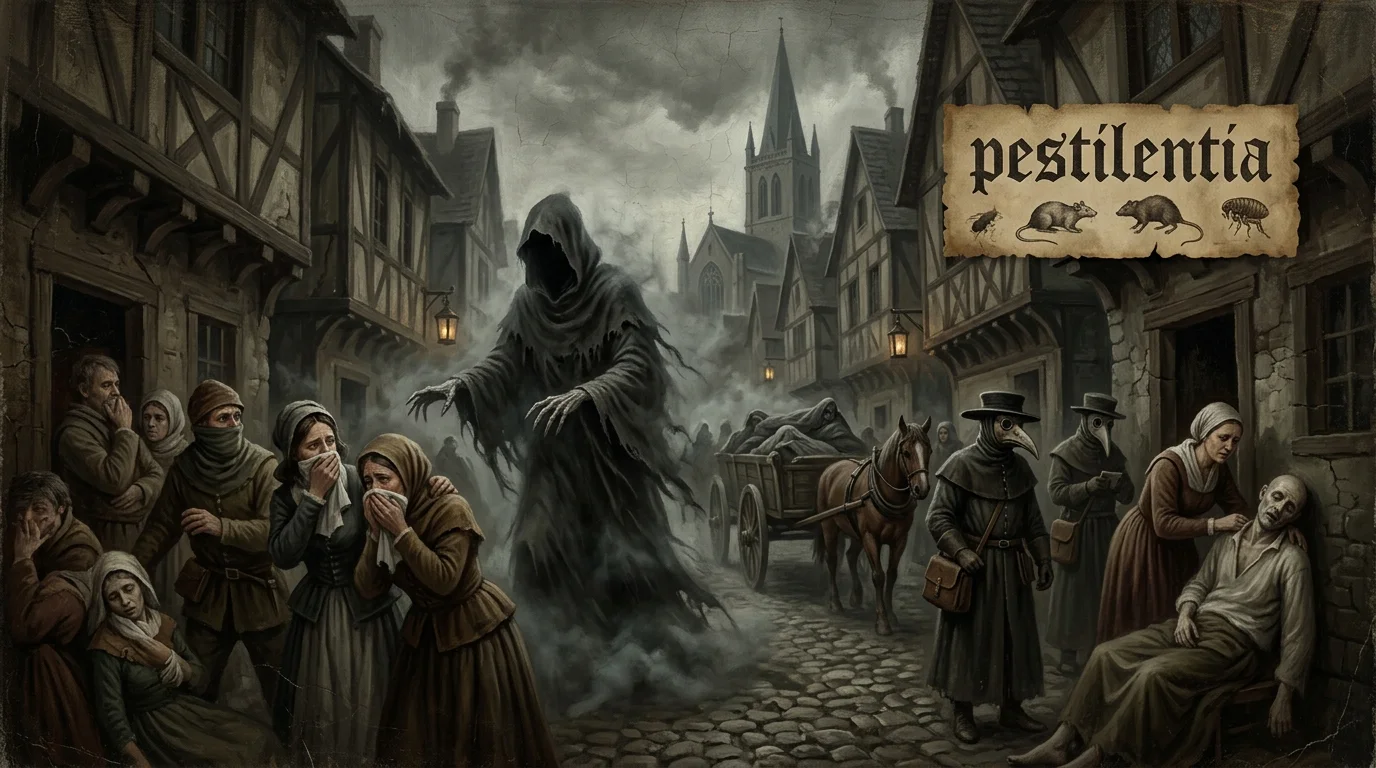

The word plagueb meaningmost commonly refers to a serious infectious disease that spreads rapidly and causes widespread illness or death. Historically, the term is strongly associated with major disease outbreaks such as the ****, which had a devastating impact on populations around the world. In modern usage, the meaning of plague can also extend beyond disease to describe any ongoing problem or trouble that causes suffering or difficulty, such as a “plague of corruption” or a “plague of insects.” Understanding the meaning of plague is important because the word appears in history, medicine, literature, and everyday language. It often conveys the idea of something harmful spreading widely and causing major disruption. This article explores the definition, history, and examples of “plague,” helping you clearly understand its different uses and significance.

🦠 Plague meaning slang
- In slang, plague can mean something or someone very annoying or persistent
- Used when someone keeps bothering or following you
- Can describe a situation that won’t go away
- Example: “Stop being a plague” = stop being annoying
- Not very common in modern slang
- More often used in serious or historical contexts
- Can also be used jokingly among friends
- Sometimes used to exaggerate frustration
- May imply something spreading badly (like drama)
- Informal and context-dependent usage
🇵🇰 Plague meaning in Urdu
- Plague = طاعون
- Refers to a serious infectious disease
- Can also mean a widespread problem or trouble
- Used in both medical and historical contexts
- Example: “طاعون ایک خطرناک بیماری ہے”
- Can symbolize disaster or epidemic
- Common in health and history topics
- May also mean constant annoyance in informal use
- Strong negative meaning
- Often linked to epidemics and outbreaks
🇮🇷 Plague meaning in Farsi
- Plague = طاعون (ta’oon)
- Refers to a deadly infectious disease
- Can also mean widespread disaster or calamity
- Used in historical and medical writing
- Sometimes used metaphorically for serious problems
- Example: “طاعون یک بیماری خطرناک است”
- Strong negative meaning in Persian
- Often associated with epidemics
- Can describe something spreading uncontrollably
- Common in formal language
🧾 Plaque meaning
- Plaque is different from plague
- Plaque can mean a decorative metal or stone plate (award or sign)
- In dentistry, plaque means sticky bacteria on teeth
- Can also refer to deposits in arteries (medical term)
- Example: “tooth plaque causes cavities”
- Often confused with “plague” due to spelling
- Used in health, awards, and biology contexts
- Neutral or technical meaning
- Very common in medical discussions
- Important to distinguish from “plague”
🦠 Plague meaning disease
- Plague is a serious infectious disease caused by bacteria
- Historically known for major pandemics (e.g., Black Death)
- Spread through fleas, rodents, or contact
- Symptoms include fever, swelling, and infection
- Can be fatal if untreated
- Still exists in rare cases today
- Requires antibiotics for treatment
- Classified as a dangerous epidemic disease
- Important in medical history
- Highly contagious in certain forms
📘 Plague meaning in English
- Plague means a dangerous infectious disease
- Can also mean something that causes continuous trouble
- Used both literally and figuratively
- Example: “He was plagued by problems”
- Can mean persistent annoyance or suffering
- Often linked to historical epidemics
- Strong negative word
- Used in medical and everyday language
- Can describe emotional or physical distress
- Common in literature and news
🔊 Plague meaning pronunciation
- Pronounced: playg
- Phonetic: /pleɪɡ/
- Rhymes with “vague” and “plague”
- One syllable word
- Starts with “pl” sound
- Ends with hard “g” sound
- Different from “plaque” (sounds like “plak”)
- Commonly used in speech and writing
- Easy but often confused spelling word
- Important distinction in pronunciation vs plaque
🔁 Plague meaning synonyms
- Epidemic
- Disease
- Infection
- Contagion
- Pestilence
- Curse
- Burden
- Nuisance
- Affliction
- Trouble

Table of Contents
ToggleWhat Does Plague Mean?
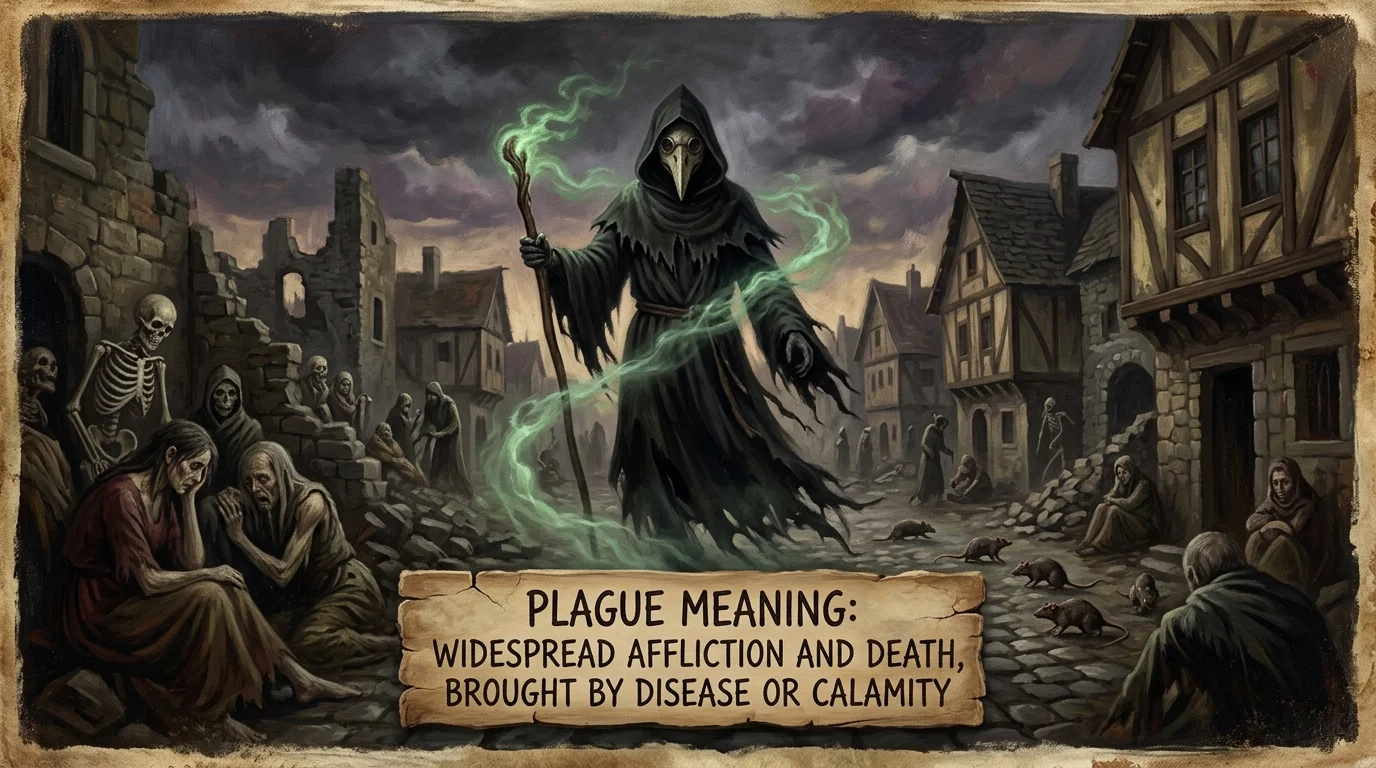
At its core, plague means a serious and widespread problem that causes suffering or damage.
It can refer to:
A severe infectious disease
A persistent trouble or hardship
Something that causes ongoing harm or distress
The meaning depends on whether it’s used literally or figuratively.
Plague Meaning in a Medical Context
In medicine, plague refers to a dangerous infectious disease caused by bacteria.
Key points:
It spreads quickly without treatment
Historically caused large outbreaks
Often associated with high death rates in the past
This is the most literal and serious use of the word.
Historical Meaning of Plague
Historically, the word plague is strongly linked to major disease outbreaks.
Examples include:
The Black Death in the 14th century
Large-scale epidemics that affected entire regions
Because of this history, the word still carries a heavy and serious tone today.
Plague Meaning in Everyday Language
In everyday speech, plague is often used figuratively.
It can mean:
A problem that won’t go away
Something that causes constant annoyance
A situation that negatively affects many people
Example:
“Traffic jams continue to plague the city.”
Here, plague means to cause ongoing trouble.
Plague as a Verb
Plague is commonly used as a verb.
When used this way, it means:
To cause continuous problems
To trouble repeatedly
To negatively affect over time
Example:
“Technical issues plagued the project.”
Plague as a Noun
As a noun, plague refers to:
A disease
A widespread disaster
A serious ongoing problem
Example:
“The town was hit by a plague.”
Plague Meaning in News and Media
In news reporting, plague is often used to emphasize severity.
Examples:
“Floods plague the region”
“Corruption continues to plague the system”
This usage highlights scale and seriousness, not minor inconvenience.
Emotional Weight of the Word Plague
The word plague carries a strong emotional impact.
It often suggests:
Long-term damage
Widespread suffering
Difficulty controlling the problem
That’s why it’s rarely used for small or temporary issues.
Common Situations Where Plague Is Used
Plague is commonly used when talking about:
Health crises
Social problems
Economic issues
Environmental challenges
Persistent personal struggles
It adds emphasis and urgency to the situation.
Plague vs Similar Words
Plague is stronger than many related words.
Problem: General issue
Trouble: Mild difficulty
Crisis: Urgent situation
Plague: Severe, ongoing, and widespread issue
Understanding this difference helps with accurate usage.
Is Plague Always Negative?
Yes. Plague is always negative in meaning.
It describes:
Harm
Suffering
Distress
Persistent difficulty
There are no positive uses of the word plague.
Common Misunderstandings About Plague
Thinking plague only means one specific disease
Using it for minor inconveniences
Ignoring its strong emotional tone
Because of its seriousness, it should be used carefully.
Can Plague Be Used Figuratively?
Yes, and it often is.
Figurative usage includes:
“Rumors plagued the company”
“Doubts plagued his mind”
In these cases, plague means constant or repeated trouble.
Plague Meaning in Literature and Writing
Writers use plague to:
Create a serious tone
Emphasize suffering
Describe widespread impact
It’s commonly found in novels, essays, and historical writing.
Plague in Modern Conversations
In modern speech, plague is still relevant but used selectively.
People use it when:
Describing long-term problems
Speaking formally or seriously
Writing articles or reports
It’s less common in casual chat.
When Not to Use the Word Plague
Avoid using plague when:
Describing small issues
Speaking casually with friends
Trying to sound light or humorous
It can sound too dramatic in the wrong context.
How to Use Plague Correctly in a Sentence
Examples:
“The region was plagued by drought.”
“Poor management plagued the organization.”
“Health concerns continued to plague the community.”
Each example shows long-lasting impact.
Why Understanding Plague Meaning Matters
Knowing the plague meaning helps you:
Understand news and reports
Use strong language accurately
Avoid exaggeration
Communicate clearly and responsibly
FAQs
What is the basic meaning of plague?
It means a serious and widespread problem or disease.
Is plague only a disease?
No, it can also mean ongoing trouble or hardship.
Is plague always negative?
Yes, it always describes harm or suffering.
Can plague be used as a verb?
Yes, it often means to cause repeated problems.
Is plague still used today?
Yes, especially in formal writing and serious discussions.
Conclusion
The plague meaning goes beyond disease. While it originally described deadly illnesses, today it also refers to any serious, long-lasting problem that causes widespread harm or distress.
By understanding its full meaning and proper usage, you can read, write, and communicate more clearly in 2026 and beyond.