

🇮🇷 Alibi Meaning in Farsi
- In Farsi, alibi means دلیل غیبت (dalil-e gheibat) or مدرک حضور در جای دیگر
- Refers to proof that someone was elsewhere
- Used in legal and daily language
- Shows innocence in a situation
- Common in crime discussions
- Similar to English meaning
- Used in formal context
- Indicates absence from a scene
- Important in legal defense
- Clear and practical meaning
⚖️ Alibi Meaning in Law
- In law, an alibi is evidence that a person was somewhere else when a crime happened
- Used as a legal defense
- Helps prove innocence
- Must be supported with proof (witness, records)
- Common in criminal cases
- Presented in court
- Important for suspects
- Can dismiss accusations
- A key legal concept
- Widely used in investigations
❤️ Alibi Meaning in Love
- In relationships, alibi can mean an excuse or cover story
- Sometimes used when hiding something
- Example: giving an alibi to avoid questions
- Can imply dishonesty
- Used in casual conversation
- Not a formal meaning
- Suggests secrecy in relationships
- May indicate trust issues
- Context-based meaning
- A figurative use
📘 Alibi Meaning in English
- Alibi means proof that someone was in another place at a specific time
- Example: “He has an alibi for that night.”
- Used in both legal and everyday language
- Can also mean an excuse informally
- A noun in English
- Common in crime stories
- Indicates innocence or justification
- Widely understood term
- Used globally
- Simple and clear meaning
🇫🇷 Alibi Meaning in French
- In French, alibi also means proof of being elsewhere
- Same spelling and meaning as English
- Used in legal and daily language
- Example: “Il a un alibi” (He has an alibi)
- Common in criminal context
- Borrowed from Latin origin
- Easy to understand
- Used in formal situations
- A shared international term
- Same pronunciation style
🗣️ I Have an Alibi Meaning
- “I have an alibi” means “I can prove I was somewhere else”
- Used to defend against accusation
- Example: in crime or misunderstanding
- Shows innocence
- Often used in movies and real life
- Can also be used jokingly
- Indicates proof or evidence
- A clear defensive statement
- Common phrase
- Easy to understand
🇨🇳 Alibi Meaning in Chinese
- In Chinese, alibi means 不在场证明 (bù zài chǎng zhèng míng)
- Literally means “proof of not being present”
- Used in legal context
- Same meaning as English
- Common in crime discussions
- Used in formal language
- Indicates innocence
- Important in investigations
- Widely understood term
- A legal phrase
🇸🇦 Alibi Meaning in Arabic
- In Arabic, alibi means حجة الغياب (hujjat al-ghiyab)
- Refers to proof of being elsewhere
- Used in legal and formal context
- Indicates innocence
- Common in legal discussions
- Same concept as English
- Used in courts and investigations
- A formal expression
- Important in defense cases
- Clear and direct meaning
What Does Alibi Mean?
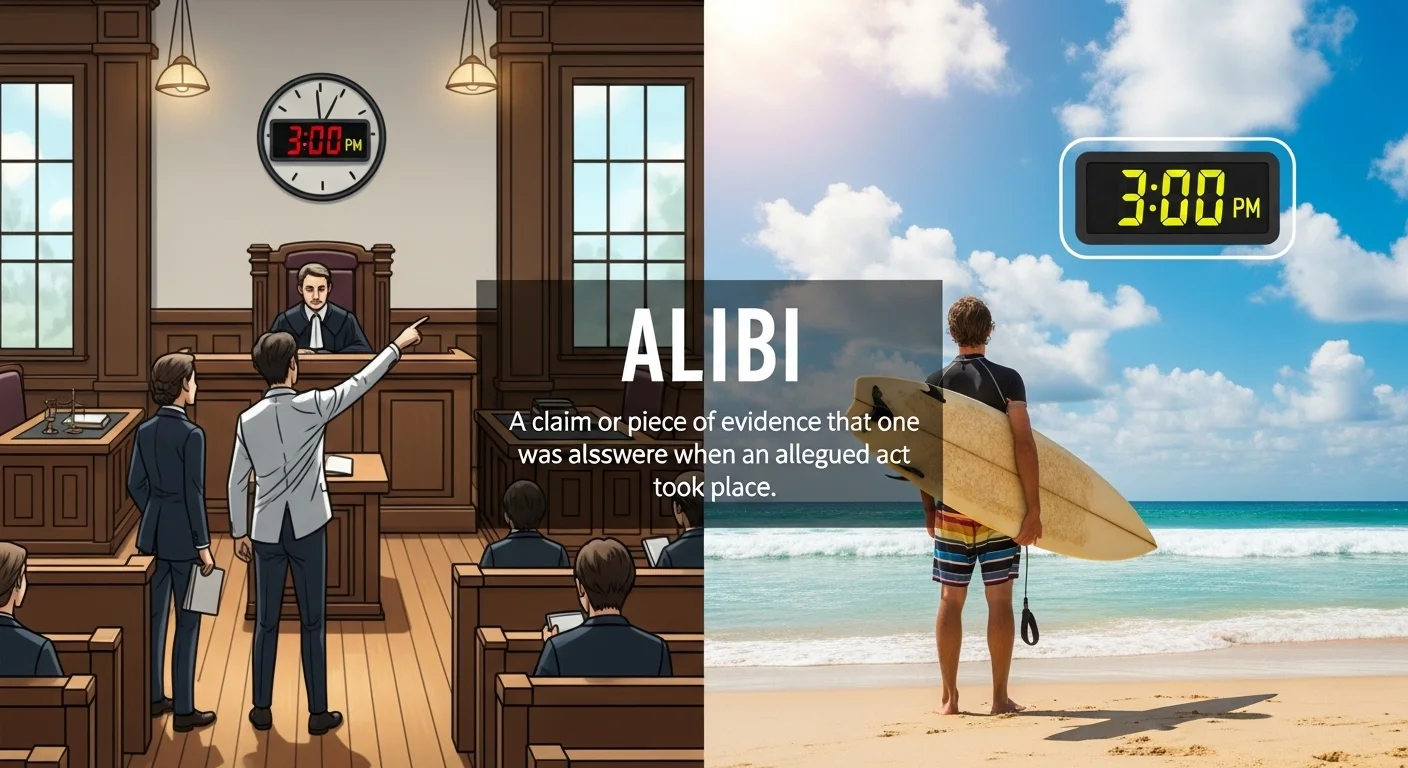
An alibi is proof or a claim that a person was somewhere else when an event happened, especially when they are accused of doing something wrong.
In simple words, an alibi is evidence or an explanation that shows you could not have been involved because you were in another place.
Origin and Background of the Word Alibi Meaning
The word alibi comes from Latin, meaning “elsewhere.”
Over time, it became a legal term used to describe a defense that places someone away from the scene of an incident.
Today, the word is used both formally and casually.
Alibi Meaning in Legal Context
In legal settings, an alibi is:
A defense strategy
Supported by evidence
Used to show physical absence from the event
Examples of alibi evidence include:
Witness statements
Security camera footage
Phone location data
Receipts or timestamps
A strong alibi must be verifiable and consistent.
Alibi Meaning in Everyday Language
Outside of legal situations, alibi is often used more casually. People may say:
“That’s just an alibi.”
“He made an alibi for being late.”
In this sense, alibi can mean an excuse or justification, even if it’s not formally proven.
Real-Life Examples of Alibi
Here are simple examples to clarify usage:
“She had an alibi proving she was at work during the incident.”
“His phone records served as an alibi.”
“He used traffic as an alibi for missing the meeting.”
Each example shows how context changes the strength of the word.
Common Misunderstandings About Alibi
People often misunderstand alibi in these ways:
Thinking an alibi is always fake
Using alibi as a synonym for a lie
Believing excuses and alibis are the same
An alibi can be true or false, but its purpose is always to explain absence.
Related Words and Similar Terms
Words often associated with alibi include:
Excuse
Defense
Justification
Explanation
Proof of absence
These terms are related but not always interchangeable.