
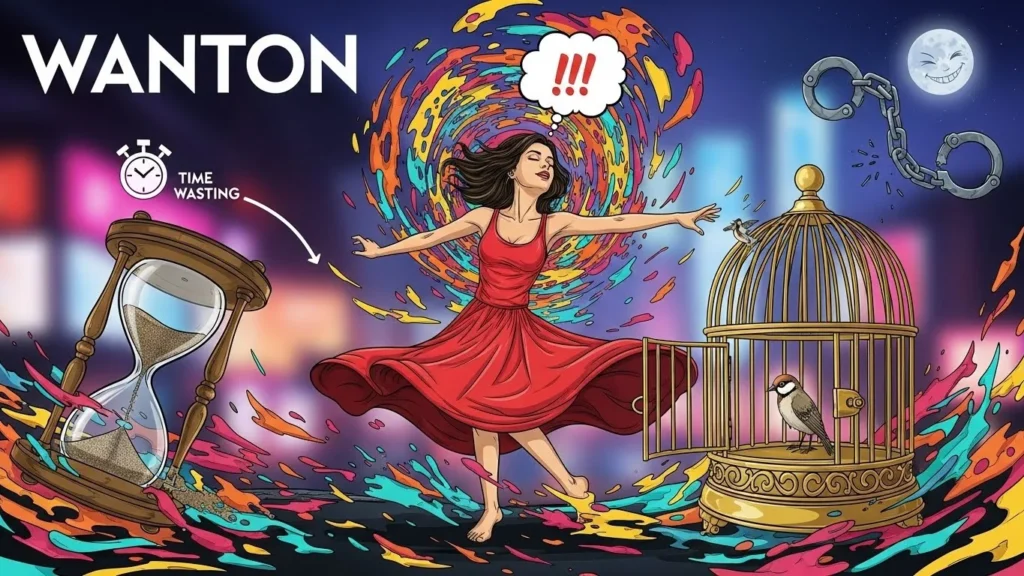

😈 Wanton meaning slang
- In slang, wanton can mean someone acting wild or uncontrolled
- Often implies behaving without care for rules or consequences
- Sometimes used in older or dramatic slang for “sexually reckless” behavior
- Can describe someone being playful in a bold or excessive way
- Not very common in modern casual slang
- Often sounds old-fashioned or literary today
- Can carry a negative or judgmental tone
- May suggest impulsive or chaotic behavior
- Used more in stories, movies, or formal speech
- Context is important because meaning can feel harsh
🍜 Wanton meaning food
- “Wonton” (often confused with wanton) is a Chinese dumpling
- Filled with meat, shrimp, or vegetables
- Common in soups or fried dishes
- Popular in Chinese and Asian cuisine
- Usually wrapped in thin dough
- Served boiled, steamed, or deep-fried
- Often eaten in broth as wonton soup
- Known for soft texture and light flavor
- Different spelling: wonton ≠ wanton
- Very common in restaurants worldwide
🇮🇷 Wanton meaning in Farsi
- Wanton = بیپروا / بیبندوبار
- Can also mean هرزهکار یا افسارگسیخته (depending on context)
- Describes uncontrolled or immoral behavior
- Sometimes means بیقید و بیمسئولیت
- Can be used for actions done without care
- Literary or formal tone in Persian usage
- May sound negative or judgmental
- Used in emotional or descriptive writing
- Can refer to reckless actions or behavior
- Meaning depends strongly on context
📘 Wanton meaning in English
- Wanton means without control, restraint, or care
- Can describe reckless or excessive behavior
- Often implies morally wrong or irresponsible actions
- Used in formal, literary, or legal English
- Can describe destruction done unnecessarily
- May refer to emotional or physical excess
- Example: wanton violence or destruction
- Sometimes used for immoral behavior
- Strong descriptive adjective
- Often has a negative meaning
👩 Wanton woman meaning
- Refers to a woman seen as sexually reckless or immoral (old-fashioned/negative)
- Historically used in literature with judgmental tone
- Can imply lack of restraint in behavior
- Considered offensive or outdated in modern usage
- Often found in older books or poetry
- Not commonly used in respectful conversation today
- Can reflect moral judgment or stereotype
- Strong and sensitive word depending on context
- Modern usage is generally avoided
- Should be used carefully or not at all
📖 Desiree meaning
- Desiree is a feminine name of French origin
- Means “desired” or “longed for”
- Comes from the French word désirée
- Often symbolizes love and being wanted
- Popular in European and Western naming
- Elegant and classic-sounding name
- Can be spelled “Desirée” with accent
- Used widely as a first name
- Carries romantic and emotional meaning
- Associated with beauty and affection
⚖️ Wanton meaning in law
- In law, wanton means reckless disregard for safety or rights
- Refers to actions done with no concern for consequences
- Often used in criminal or civil cases
- Can describe “wanton negligence” or “wanton damage”
- Stronger than ordinary negligence
- May imply intentional or extreme carelessness
- Used in legal judgments and reports
- Can increase severity of liability or punishment
- Common in tort law and criminal law contexts
- Means behavior showing conscious disregard
🇫🇷 Wanton meaning in French
- Wanton can be translated depending on context
- Reckless/irresponsible: irréfléchi, déchaîné
- Immoral/sexual tone: licencieux, débauché
- Violent destruction: sauvage, excessif
- Meaning changes based on usage
- Often used in literary or formal French
- Not a direct one-word equivalent
- Context is very important
- Can carry strong negative tone
- Usually appears in descriptive writing or translation contexts
What Does Wanton Mean?
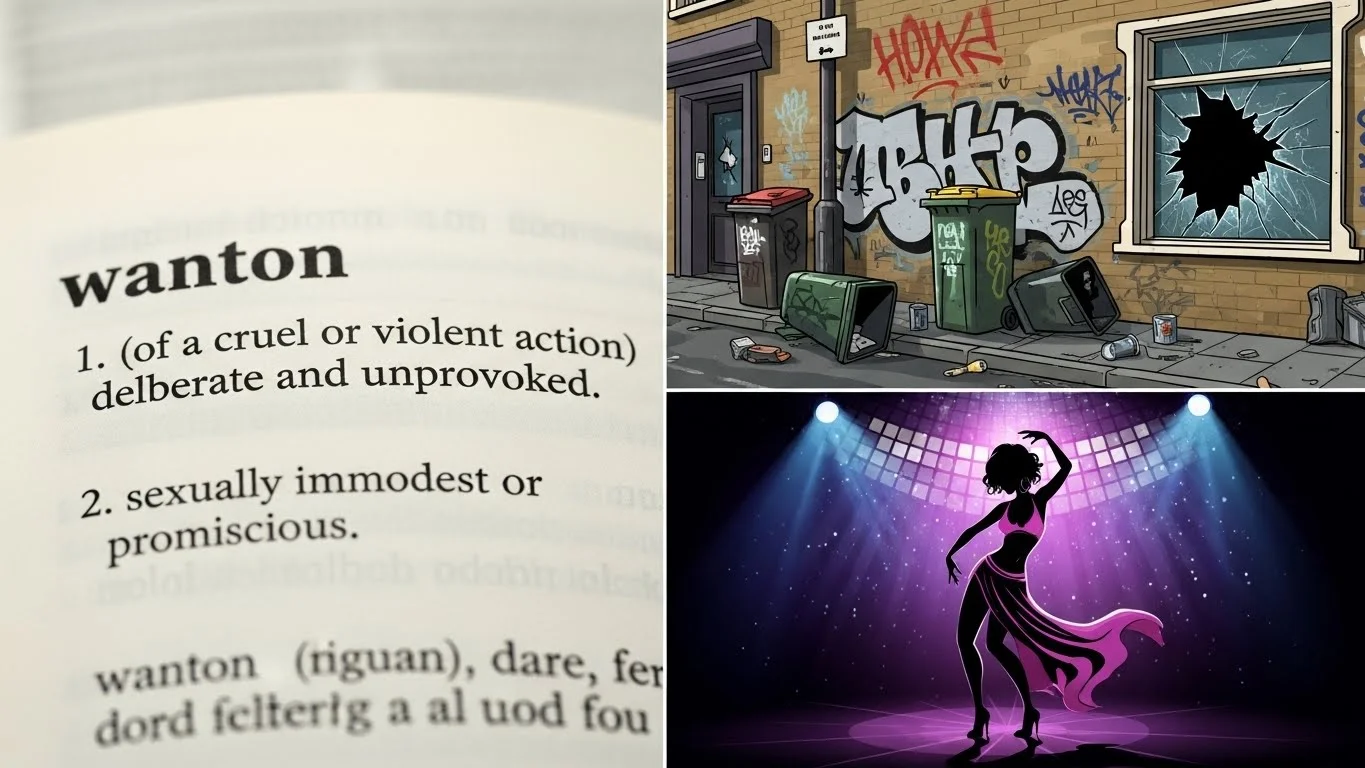
Wanton means showing a reckless lack of care, control, or moral restraint. It often describes actions done deliberately and without concern for the harm they may cause.
In simple words, wanton behavior is careless, uncontrolled, or intentionally irresponsible.
Origin and Background of Wanton
The word wanton comes from older English usage and was originally linked to the idea of being undisciplined or unrestrained. Over time, its meaning expanded to include reckless or intentional disregard for rules, safety, or ethics.
Today, wanton is commonly used in formal writing, law, and literature.
Wanton Meaning in Modern Usage
In modern English, wanton is often used to describe:
-
Reckless actions
-
Unnecessary destruction
-
Deliberate misconduct
-
Lack of respect for consequences
It is frequently paired with nouns like:
-
Wanton behavior
-
Wanton destruction
-
Wanton disregard
Wanton Meaning in Legal and Formal Contexts
In legal or official language, wanton has a specific tone.
It may refer to actions that are:
-
Done knowingly
-
Done without justification
-
Likely to cause harm
For example, wanton damage implies destruction that was intentional and unjustified, not accidental.
Wanton in Everyday Language
While less common in casual speech, wanton may still appear in conversation or media.
Examples:
-
“The wanton destruction shocked the community.”
-
“His wanton disregard for safety caused problems.”
In everyday use, the word carries a strong negative judgment.
Common Misunderstandings About Wanton
People often misunderstand wanton by:
-
Thinking it means accidental
-
Confusing it with simple carelessness
-
Assuming it always refers to moral behavior
In reality, wanton usually implies intent or awareness, not ignorance.
Synonyms and Related Words
Words similar to wanton include:
-
Reckless
-
Careless
-
Unrestrained
-
Deliberate
-
Irresponsible
Each synonym overlaps in meaning but may differ in strength or formality.
Why Understanding Wanton Matters
Knowing the wanton meaning helps you:
-
Understand legal and formal writing
-
Interpret news and literature accurately
-
Use strong descriptive language correctly
It’s a powerful word that adds serious weight to a statement.